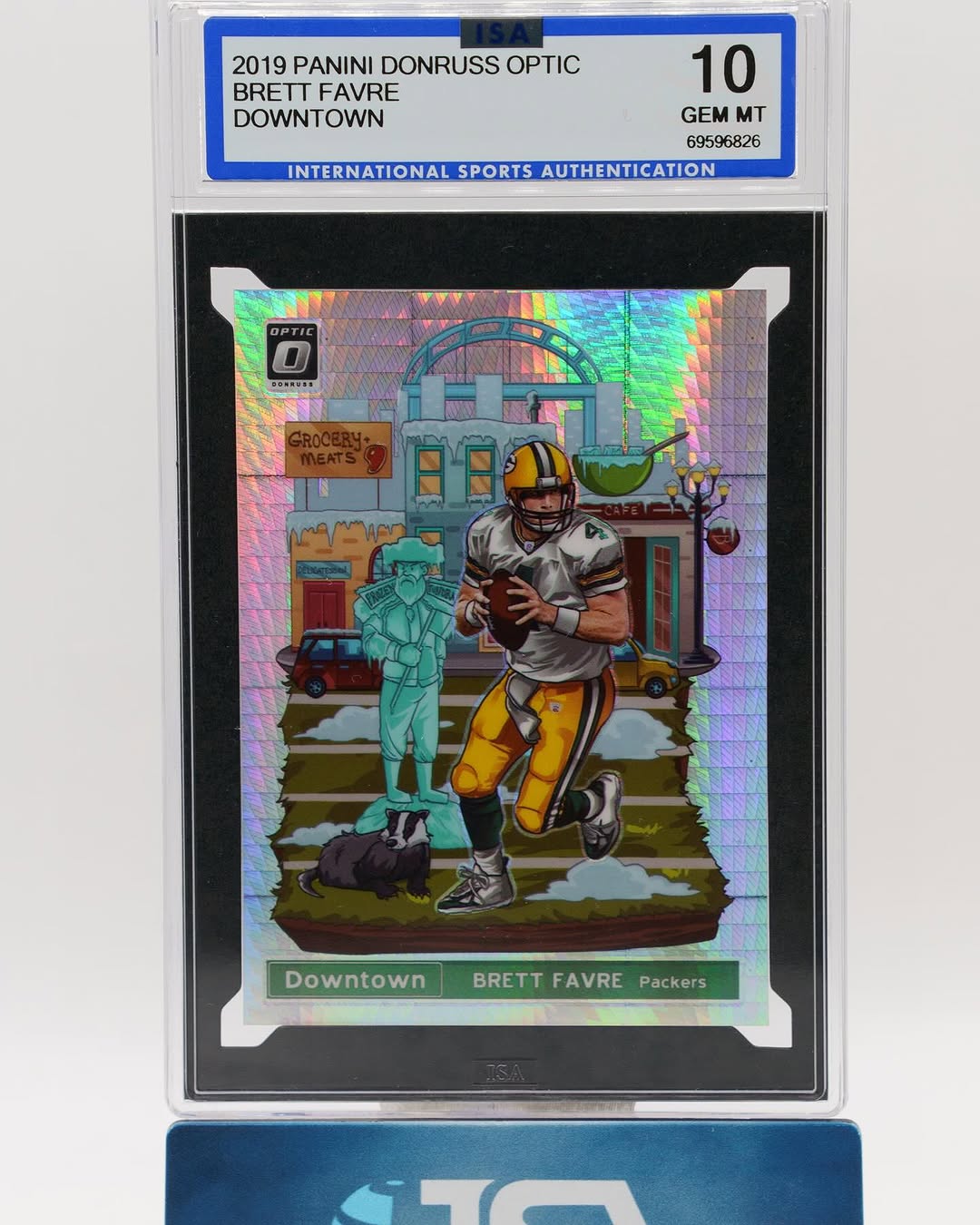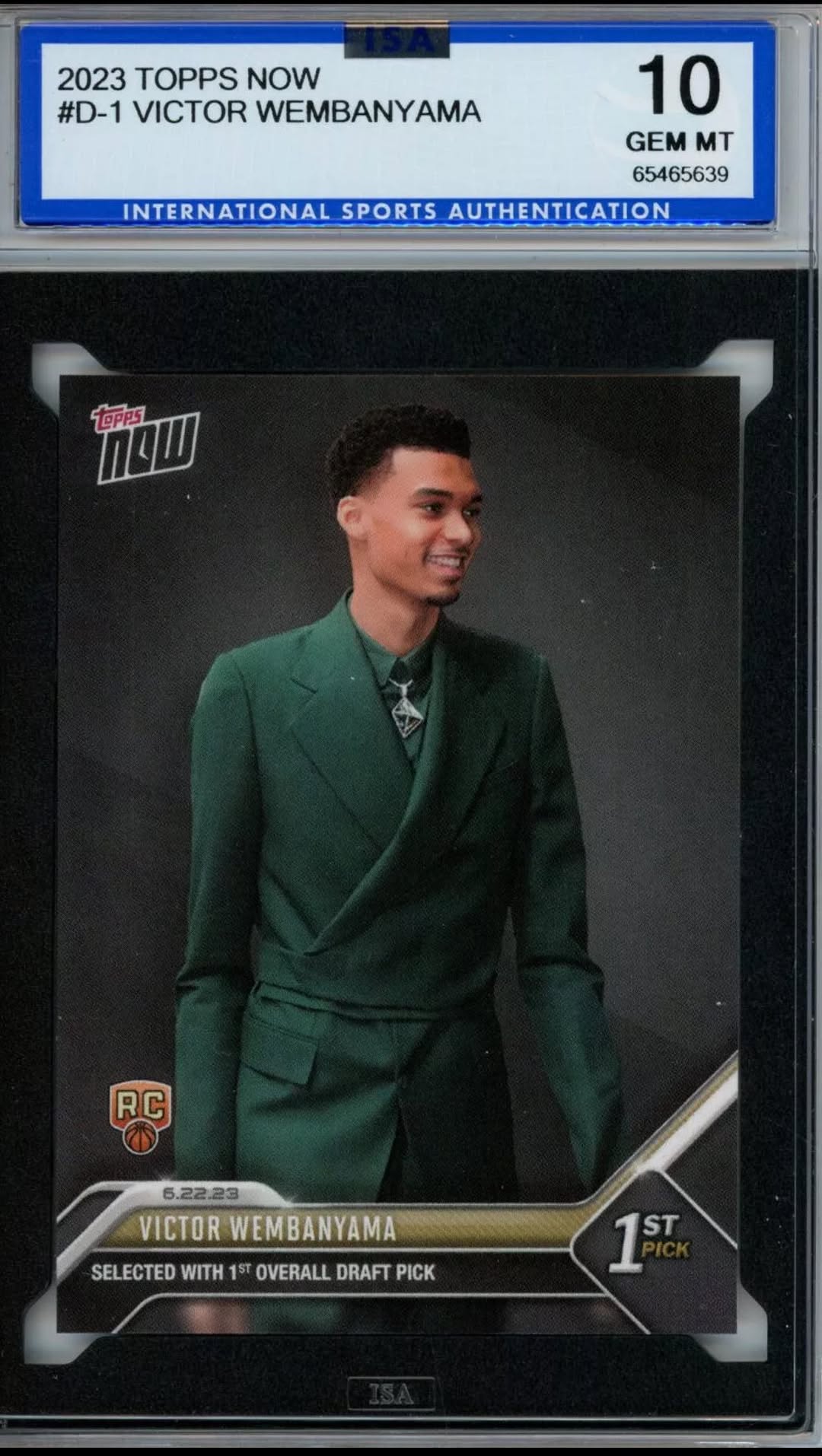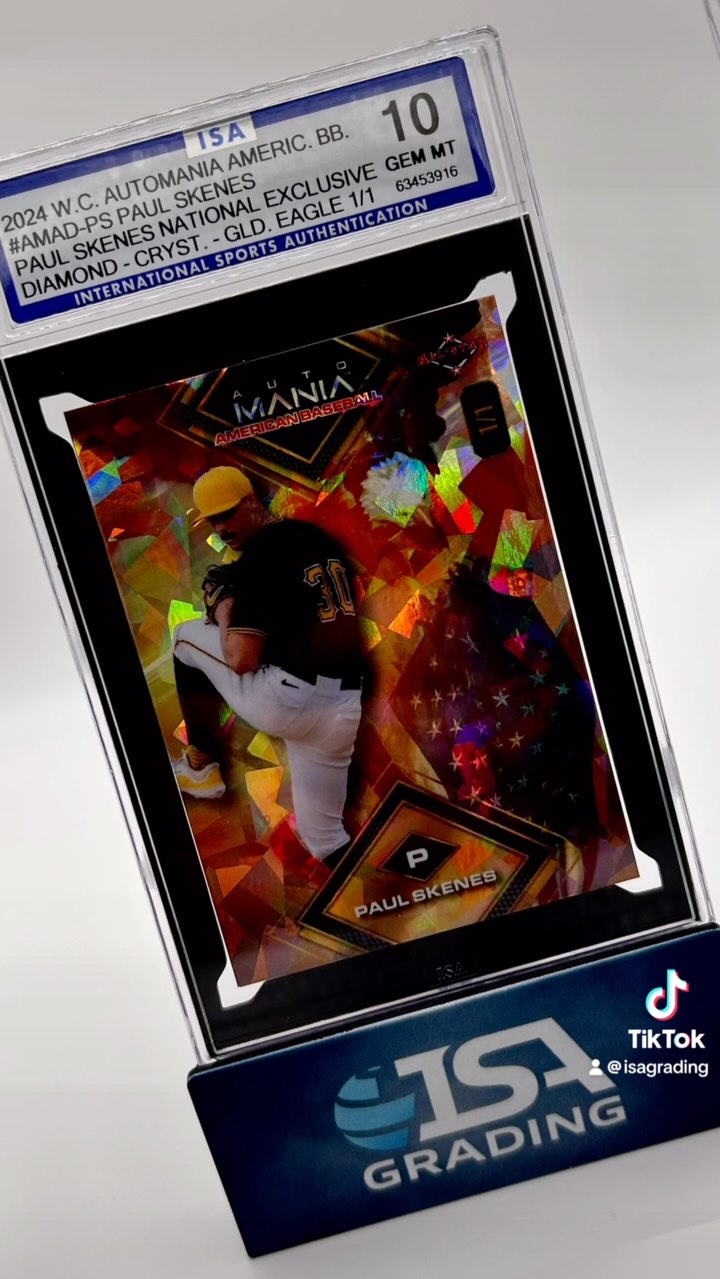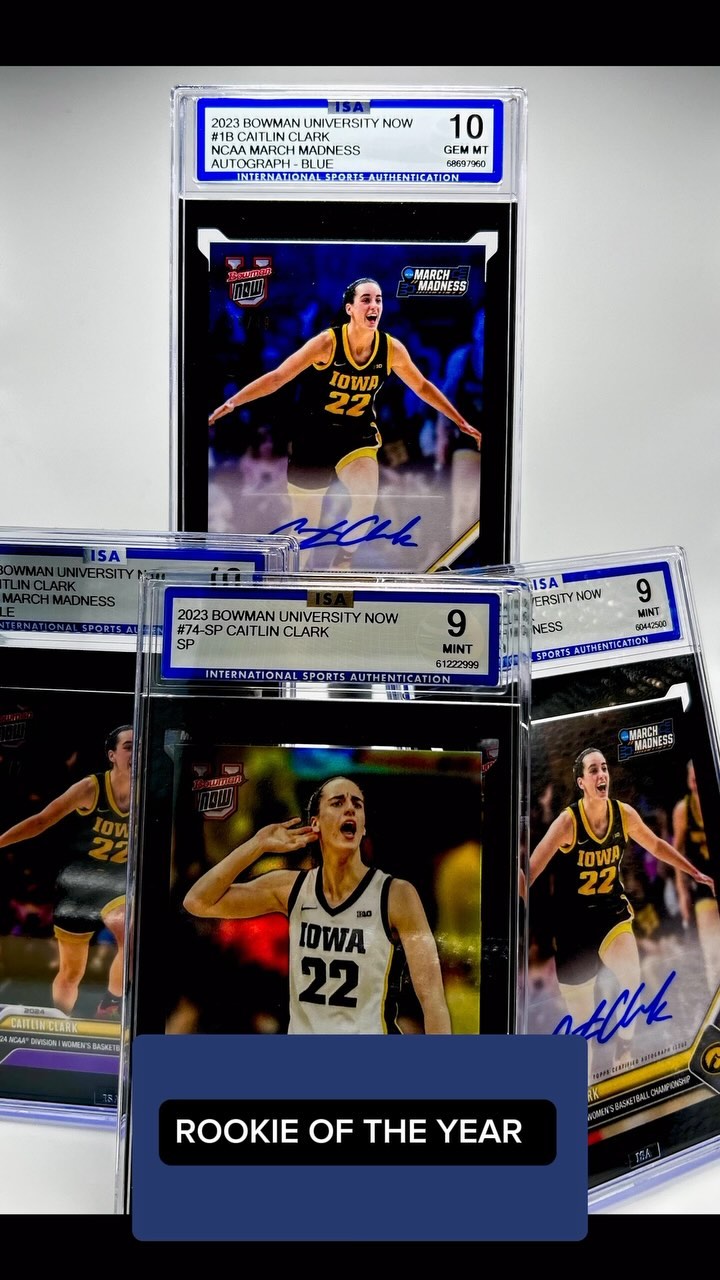
Submitting cards for grading should not feel complicated. Whether you collect modern rookies, vintage stars, football inserts, basketball parallels, or trading card game releases, a careful submission can protect your cards and help the grading process move efficiently.
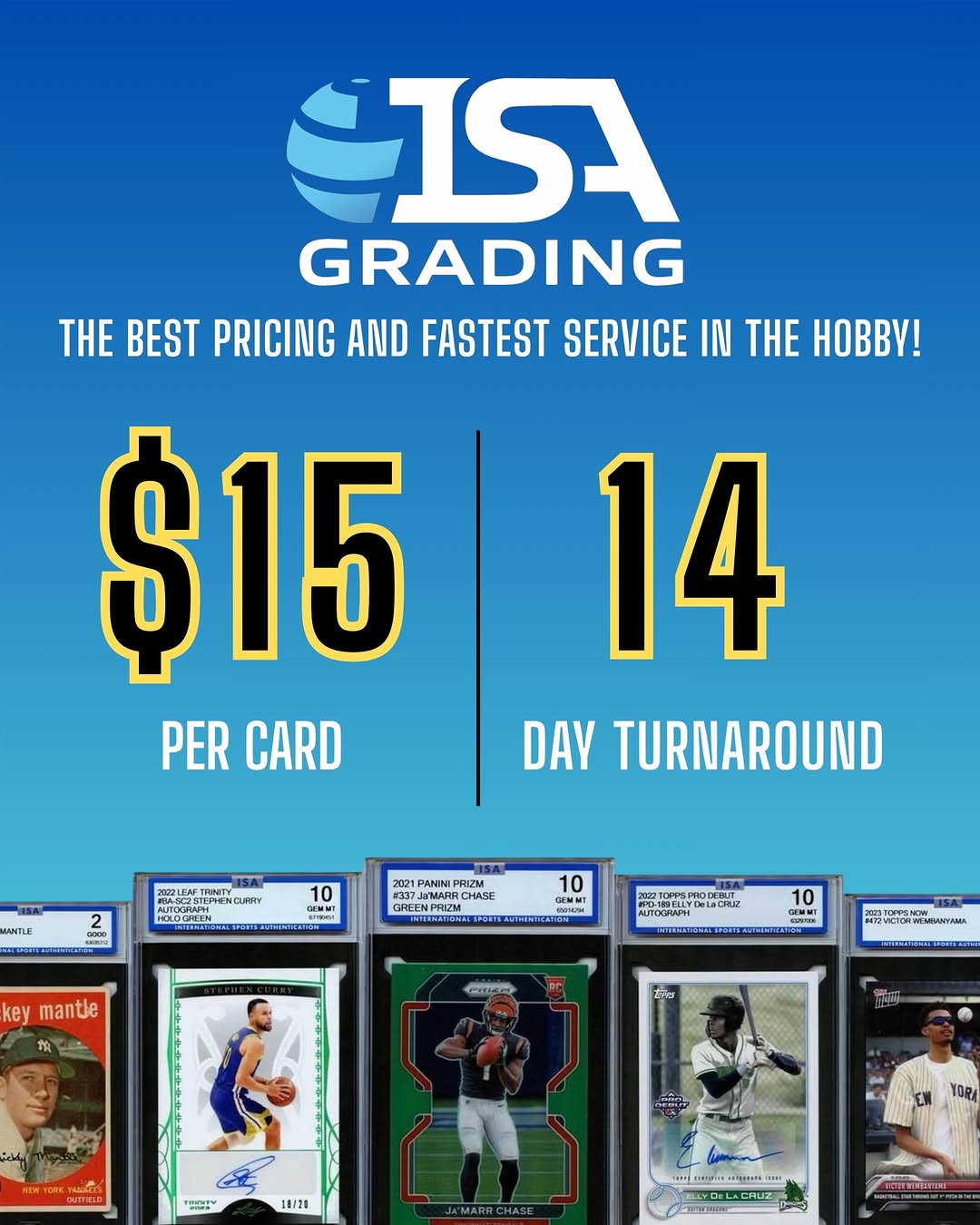
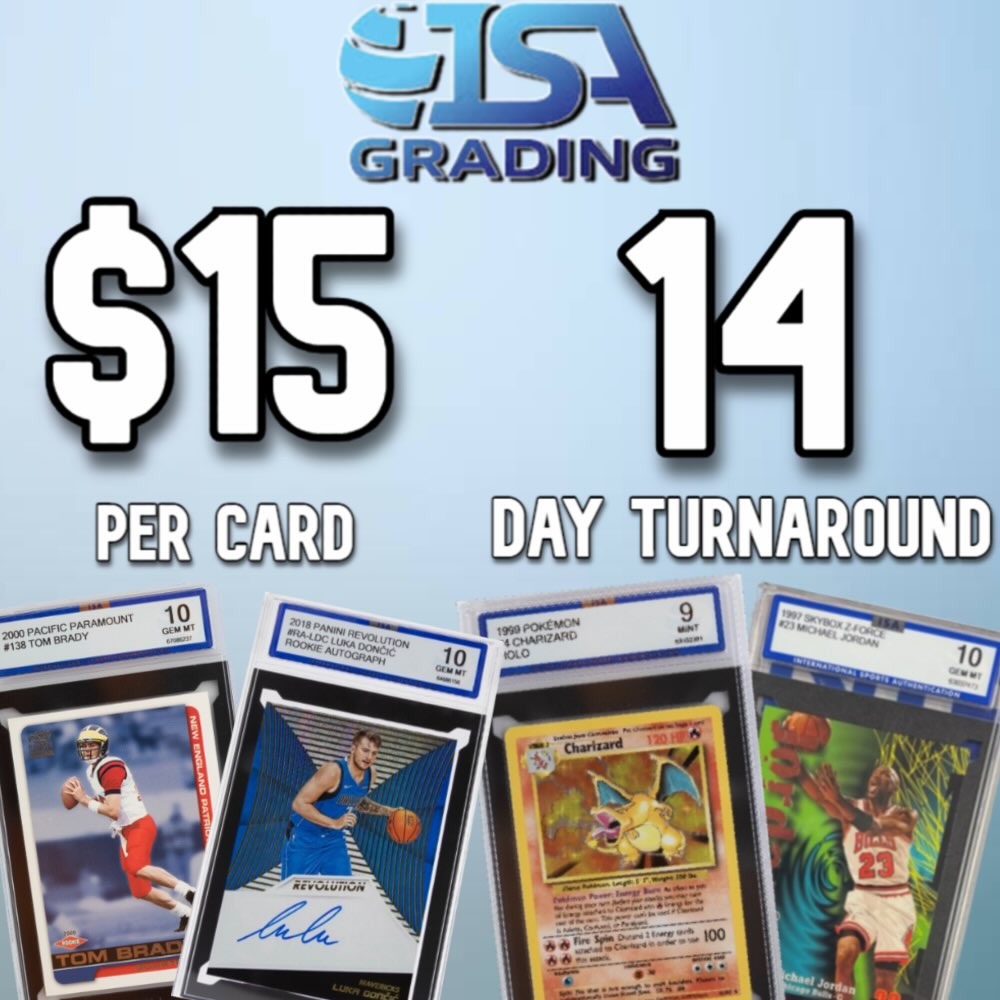
ISA Grading, also known as International Sports Authentication, currently offers grading and authentication for $15 per card with a 14 day turnaround, a 10 card minimum, and no upcharges. This guide explains how to choose cards, inspect them, prepare them for shipping, and submit them through the official ISA card submission page.
Review the Current ISA Grading Service
Before selecting cards, understand the service terms that will apply to your order. ISA currently lists the following active grading service:
- Price: $15 per card
- Turnaround: 14 day turnaround
- Minimum submission: 10 cards
- Upcharges: No upcharges
Pricing clarity matters to collectors, dealers, and hobby sellers who need to estimate the full cost of a submission. With $15 card grading and a 10 card minimum, the grading portion of a qualifying order begins at $150. Shipping, insurance, supplies, and other costs associated with sending or receiving the package should be budgeted separately.
No upcharge card grading also makes planning easier because the grading fee does not increase based on a card receiving a particular grade or having a higher market value. Collectors can read more about this pricing approach in A Clearer Path to the Slab: How ISA Keeps Grading at $15 Per Card.
Service details can change, so review the submission page before shipping. The listed 14 day card grading turnaround provides a clear current timeframe for collectors looking for fast card grading without an open ended wait.
Step 1: Build a Submission of at Least 10 Cards
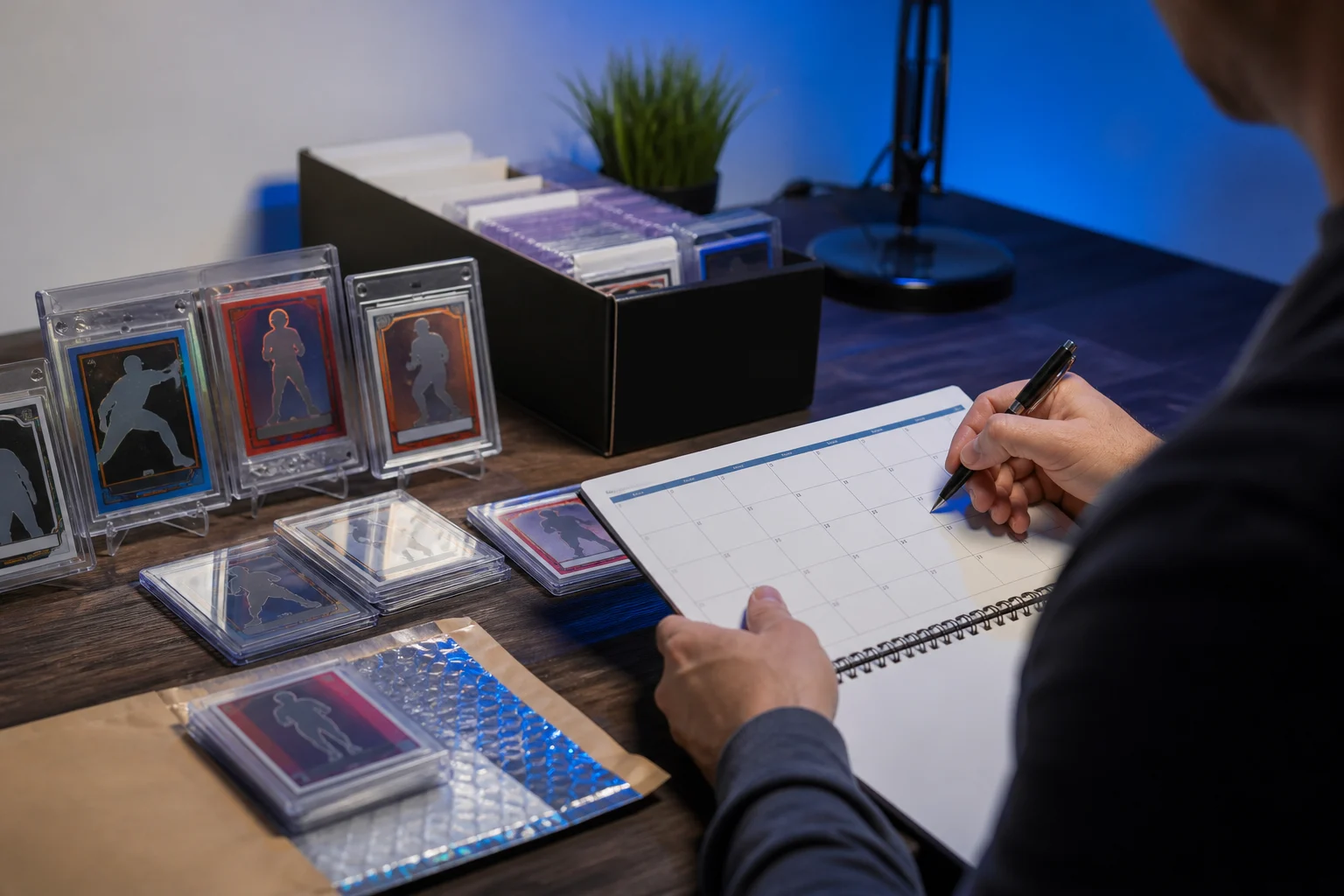
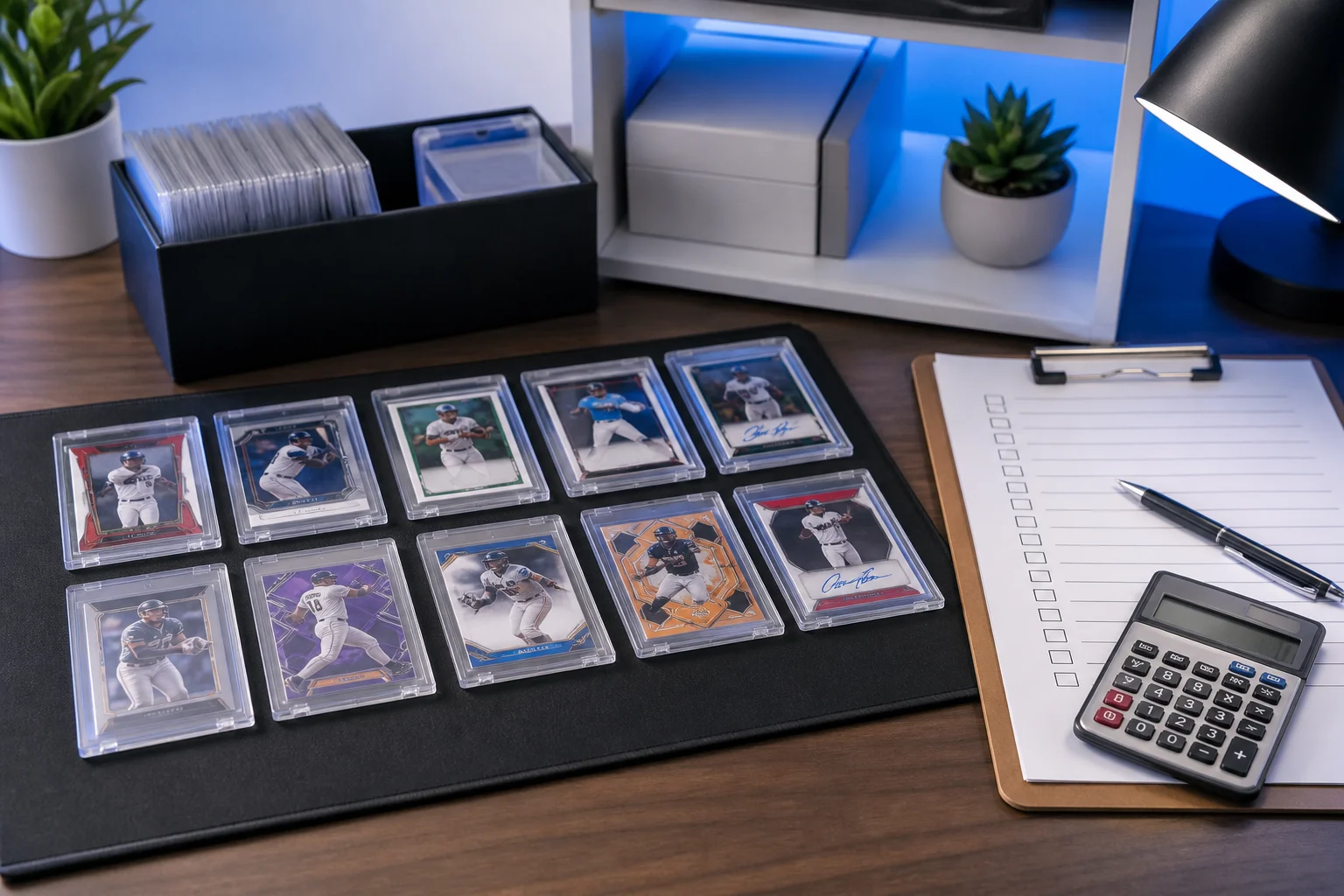
Start by creating a group that meets the 10 card minimum. A submission can be organized around a sport, player, set, selling plan, or personal collection. For example, a dealer might submit ten cards intended for an upcoming show, while a collector might combine football card grading, basketball card grading, and vintage card grading candidates in one order.
Do not select cards based only on perceived market value. Consider why each card should be graded. Common reasons include protecting a favorite card, confirming authenticity, improving buyer confidence, documenting condition, or preparing inventory for sale. A lower value card may still be a sensible candidate if it has personal significance, strong collector demand, or value within a set registry or themed collection.
If you have fewer than ten cards, wait until you have a complete group or coordinate with trusted collecting partners. Keep ownership records clear if multiple people contribute to one order. The detailed guide on preparing a 10 card ISA submission can help you organize the group before packing.
Step 2: Inspect Every Card Under Good Lighting
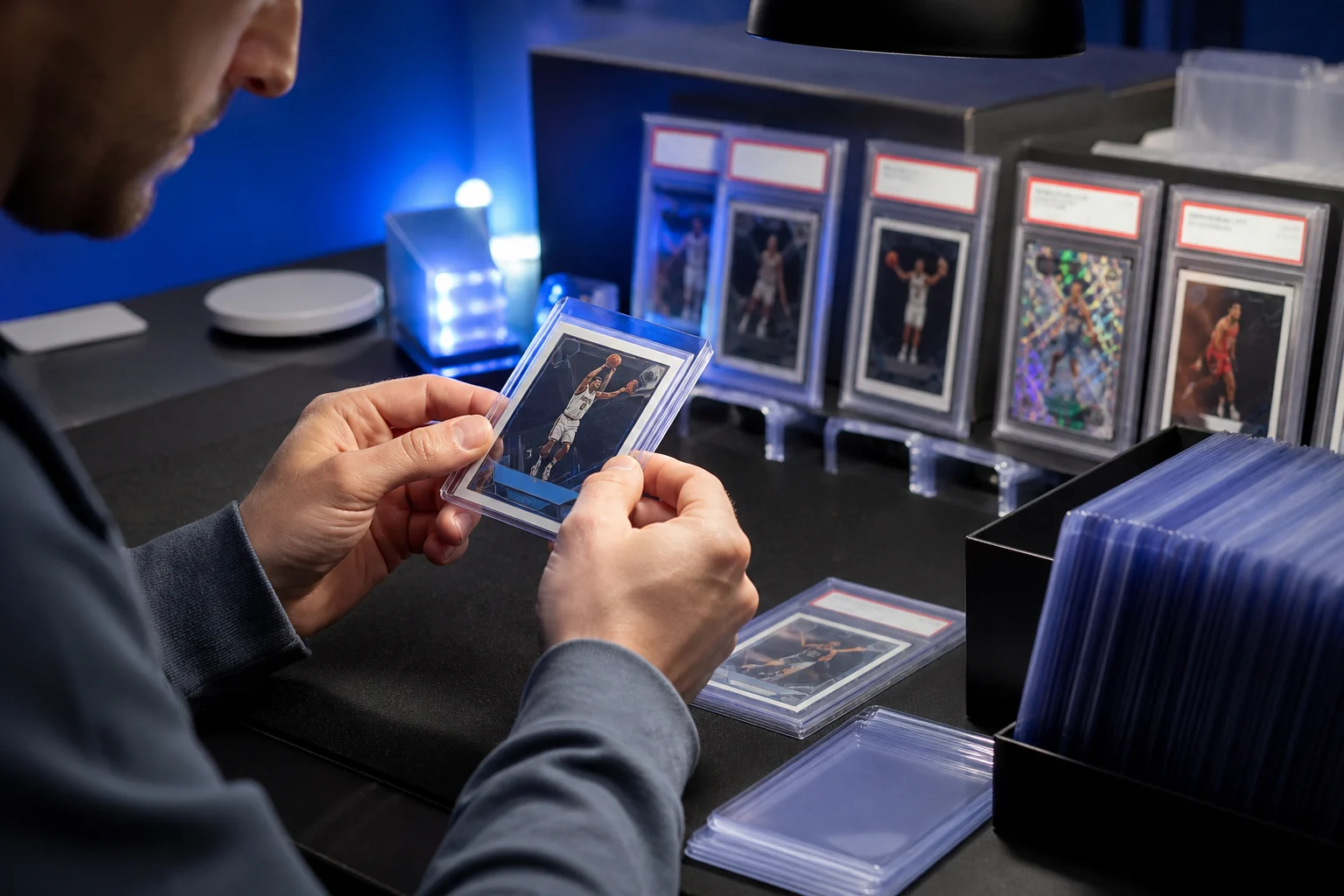
Pregrading does not guarantee a particular result, but it can help you avoid submitting cards with obvious condition issues that do not fit your goals. Use bright, indirect lighting and examine the front, back, corners, edges, and surface. A magnifying tool can be useful, but careful viewing with the naked eye should come first.
Check Card Centering
Card centering describes how evenly the printed image and borders sit within the physical card. Compare the left and right borders, then the top and bottom borders. Also inspect the back because rear centering may differ from the front. Borderless designs can be harder to assess, so use repeated design elements, frames, or text placement as reference points.
Examine Corners and Card Edges
Look at all four corners for whitening, softness, bends, or separation. Then rotate the card and inspect the card edges for chipping, rough cuts, dents, and color loss. Dark bordered cards often reveal edge wear more clearly than cards with white borders.
Study the Card Surface
Card surface issues can be easy to miss. Tilt the card under the light to look for scratches, print lines, indentations, stains, scuffs, wrinkles, or loss of gloss. On chrome and foil cards, fingerprints and fine scratches may become visible only from certain angles. Vintage cards may show wax, gum, paper loss, or creasing.
Do not alter, trim, recolor, press, or otherwise modify a card in an attempt to improve its appearance. Card authentication evaluates whether an item is genuine, and condition grading should reflect the card as it exists. Review the official ISA grading scale to understand how numerical grades correspond with condition.
Step 3: Handle and Prepare Cards Carefully
Clean hands and a clear workspace reduce unnecessary handling risks. Hold each card by its edges and keep food, beverages, adhesive, and loose debris away from the preparation area. Gloves are not always necessary and can reduce dexterity, so careful edge handling is usually more important.
If a card has loose dust, a gentle burst from a hand operated air blower may help. Avoid chemicals, water, polish, abrasive cloths, and aggressive rubbing. Even a soft cloth can create surface marks on delicate foil finishes. Preparation should focus on safe handling, not restoration.
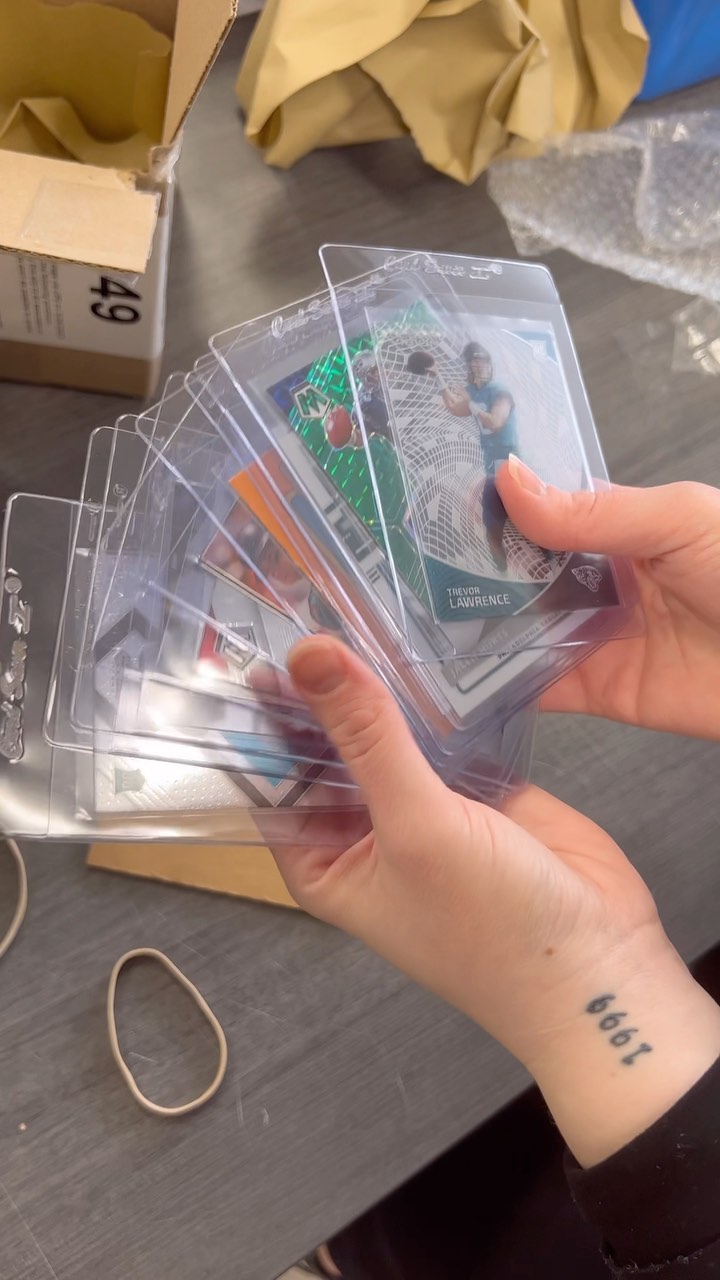
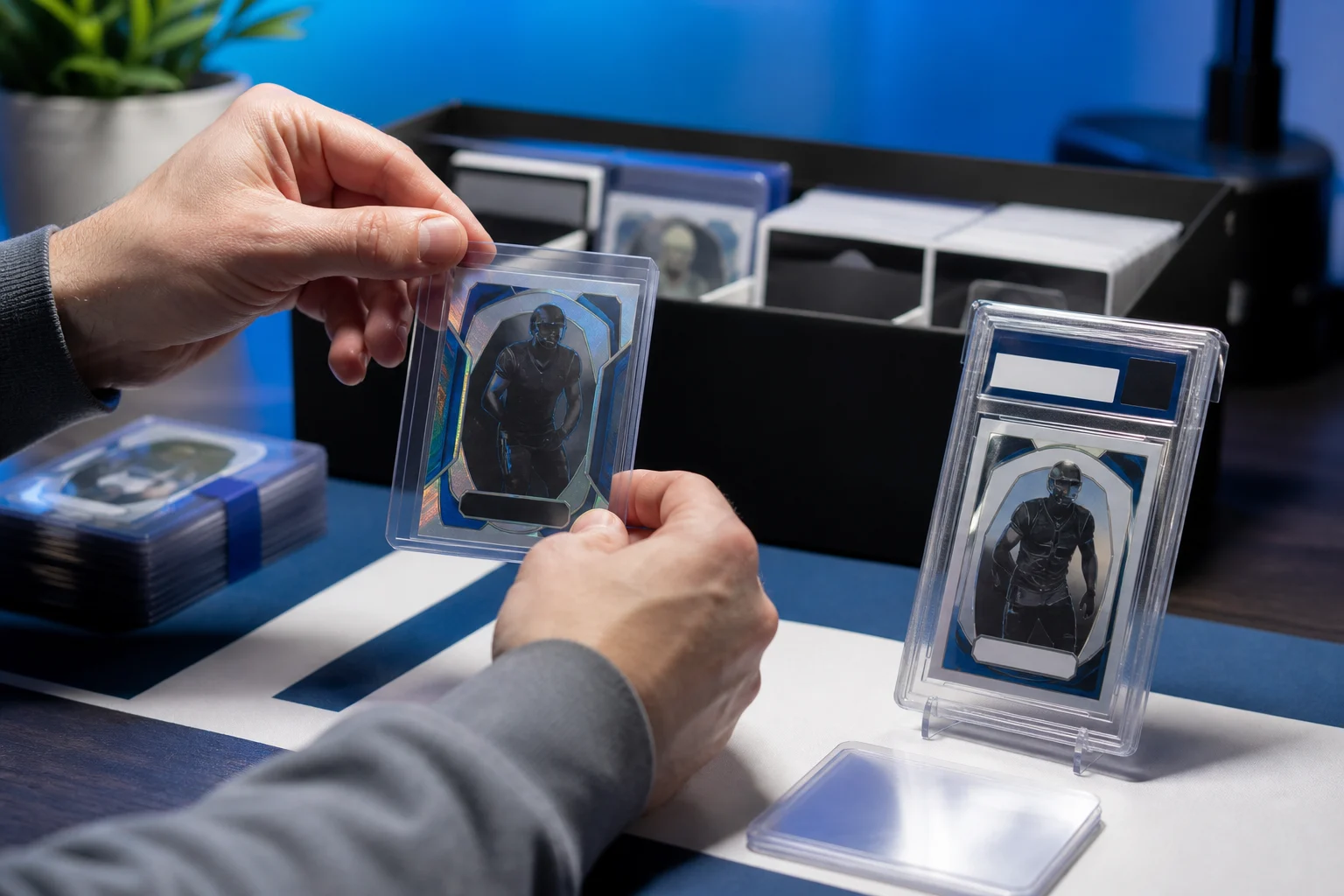
Place each card in a clean penny sleeve, followed by a suitable semi rigid holder or other holder accepted under the current submission instructions. Make sure the sleeve fits properly and does not pinch the corners. Avoid forcing thick memorabilia cards into holders designed for standard card stock.
Do not put adhesive tape directly over an opening where it could touch the card. If you use a removable pull tab, attach it to the outside of the penny sleeve without covering or contacting the card itself. Before packing, check the official submission instructions in case ISA specifies a preferred holder type or preparation method.
Step 4: Complete the ISA Submission Process
Go to the official submission page and follow the current instructions. Enter card and customer information accurately, review the order, and make sure the number of cards in the package matches the number listed in the submission.
Organize the physical cards in the same sequence shown on your paperwork or submission record. This small step makes an order easier to review and reduces the chance of confusion when several similar cards are included. Keep a copy of all submitted information for your records.
Before sealing the package, photograph the cards and the completed arrangement. Images do not replace shipping insurance or professional grading records, but they can provide a useful personal inventory. Record the year, manufacturer, set, player or character, card number, and any serial numbering for each item.
Step 5: Pack the Cards for Shipping
Good card protection begins before card encapsulation. Group the protected cards securely so they cannot slide, bend, or strike each other during transit. A resealable team bag can help keep a stack together. Place rigid cardboard panels around the group, using panels larger than the cards so corners and edges remain protected.
Add cushioning around the protected stack and place it in a sturdy shipping box. Avoid relying on a thin envelope, even when cards are inside rigid holders. Fill empty space so the contents do not move when the box is gently tilted, but do not compress the cards with excessive pressure.
- Confirm that every card is sleeved and held securely.
- Match the card count to the submission record.
- Place paperwork according to the current ISA instructions.
- Protect the stack with rigid support and cushioning.
- Seal every box seam with appropriate packing tape.
- Use a shipping method with tracking.
- Consider insurance and signature service based on the shipment value.
Address the package exactly as directed on the current ISA submission page. Save the tracking number and shipping receipt until the completed order is safely returned.
What Happens During Grading and Authentication?
Professional grading involves evaluating a card and assigning a condition grade under the company’s published scale. Sports card authentication examines whether the submitted item is genuine. Depending on the card, relevant characteristics can include printing, stock, dimensions, design, and production traits.
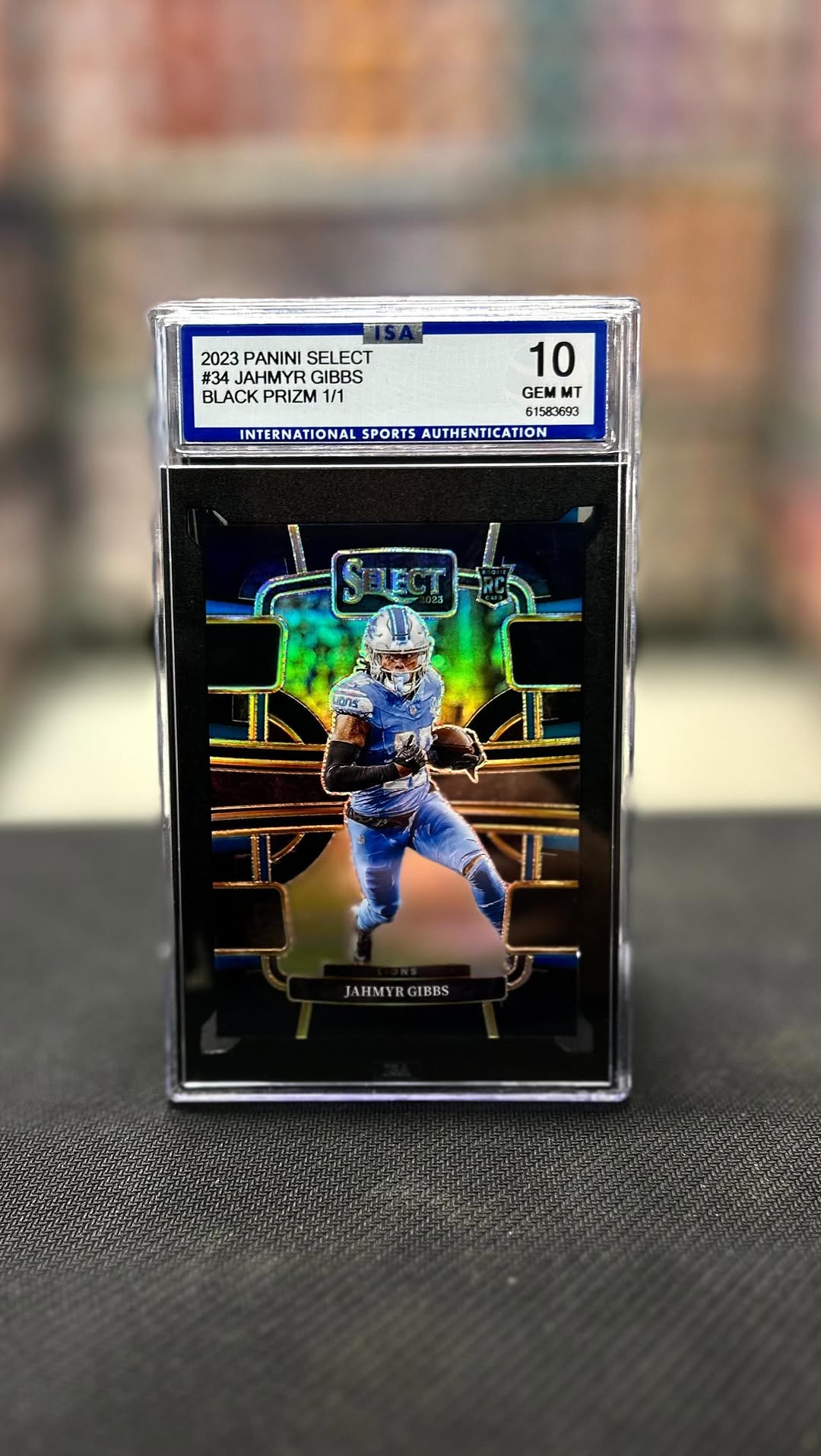
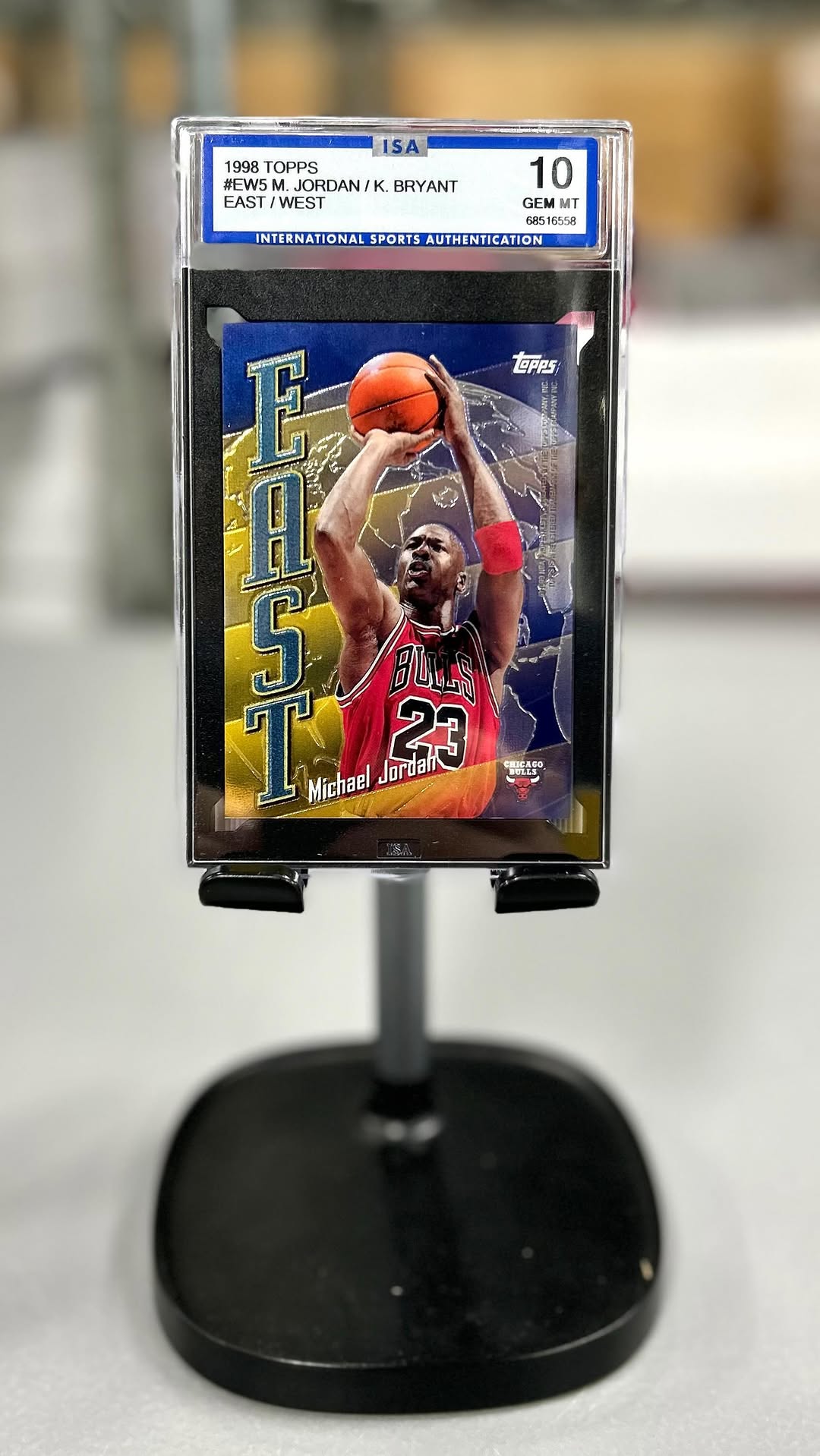
After evaluation, an eligible card is placed in a protective slab with a label identifying the card and its assigned grade. Card encapsulation helps protect against direct handling, dust, and routine environmental exposure. A slab is protective, but it is not a reason to ignore storage conditions. Keep graded cards away from direct sunlight, high humidity, extreme heat, and impact.
Collectors new to slabs can review Understanding Card Slabs, Protection, and Certificate Verification with ISA Grading for more information about storage, protection, and record checking.
Use Certificate Verification After Your Cards Return
Each returned graded card should be reviewed for accuracy. Check the player or character name, year, set, card number, and grade shown on the label. Then use ISA’s online certificate verification tool to look up the certification information.
Certificate verification gives buyers and sellers a direct way to check the record associated with an ISA graded card. When selling online, include a clear photograph of the front and back of the slab, along with a readable certification number. Do not edit images in a way that changes the card, label, or holder appearance.
Verification supports buyer confidence, but it should be part of a complete listing rather than the only information provided. Describe the exact card, disclose visible slab wear, state shipping terms, and use current photographs. Buyers should still compare the certification record with the physical holder and card being offered.
Selling ISA Graded Cards
A graded card listing should be specific and easy to understand. Include the year, brand, set, subject, card number, parallel or variation, grade, and grading company. Mention serial numbering if applicable. For TCG card grading, identify the game, set, card name, card number, language, and edition when known.
Use completed sales of genuinely comparable cards when researching price. Asking prices alone do not establish market value. Differences in grade, variation, autograph status, population, eye appeal, and timing can affect what buyers are willing to pay.
Photograph the slab against a simple background with enough light to show the card without heavy glare. Include close views when needed, but avoid claims that the card is flawless unless the assigned grade and observable condition support that description. ISA customer experiences can also be viewed on the reviews page.
Common Submission Mistakes to Avoid
- Sending fewer than ten cards: The current service requires a 10 card minimum.
- Ignoring surface inspection: Fine scratches, dents, and print lines may affect condition.
- Using damaged holders: Cracked or dirty holders can introduce avoidable risk.
- Packing cards loosely: Movement inside a box can damage corners and card edges.
- Forgetting records: Keep photographs, a card list, order information, and tracking details.
- Assuming a grade: Personal inspection is useful, but only the completed evaluation determines the grade.
- Overlooking current instructions: Check service details and submission requirements before every shipment.
A Practical Option for Collectors and Sellers
Collectors searching for card grading near me are often trying to reduce uncertainty about cost, shipping, and turnaround. Location is only one consideration. Published pricing, clear submission requirements, authentication, protective slabs, verification access, and a defined timeframe are also important when choosing a card grading service.
ISA’s current offer combines $15 per card pricing, a 14 day turnaround, a 10 card minimum, and no upcharges. A successful submission still begins with the collector: select cards thoughtfully, inspect card centering and condition, use proper protection, document the order, and pack the shipment carefully. Once the cards return, verify the certificates and store or list the slabs with accurate information.
Submit Cards to ISA Grading
Collectors ready to use ISA Grading can start on the submission page. The current active service is $15 per card with a 14 day turnaround, no upcharges, and a 10 card minimum.
Frequently Asked Questions
How much does it cost to submit cards to ISA Grading?
ISA Grading currently offers grading and authentication for $15 per card. The current service has a 10 card minimum and no upcharges. Shipping, insurance, and packing supply costs should be budgeted separately.
How long does ISA card grading take?
The current ISA service lists a 14 day turnaround. Collectors should review the submission page before sending cards to confirm the active service terms and current instructions.
What is the minimum number of cards for an ISA submission?
ISA currently requires a minimum submission of 10 cards. The group can include cards selected for a personal collection, resale inventory, protection, grading, or authentication.
How should I protect cards before shipping them to ISA?
Place each card in a clean penny sleeve and a suitable protective holder accepted by the current submission instructions. Secure the group between rigid supports, add cushioning, and ship it in a sturdy tracked box.
Can buyers verify an ISA graded card online?
Yes. ISA provides certificate verification on its website. Buyers and sellers can enter the certification information and compare the result with the card, label, and slab being reviewed.