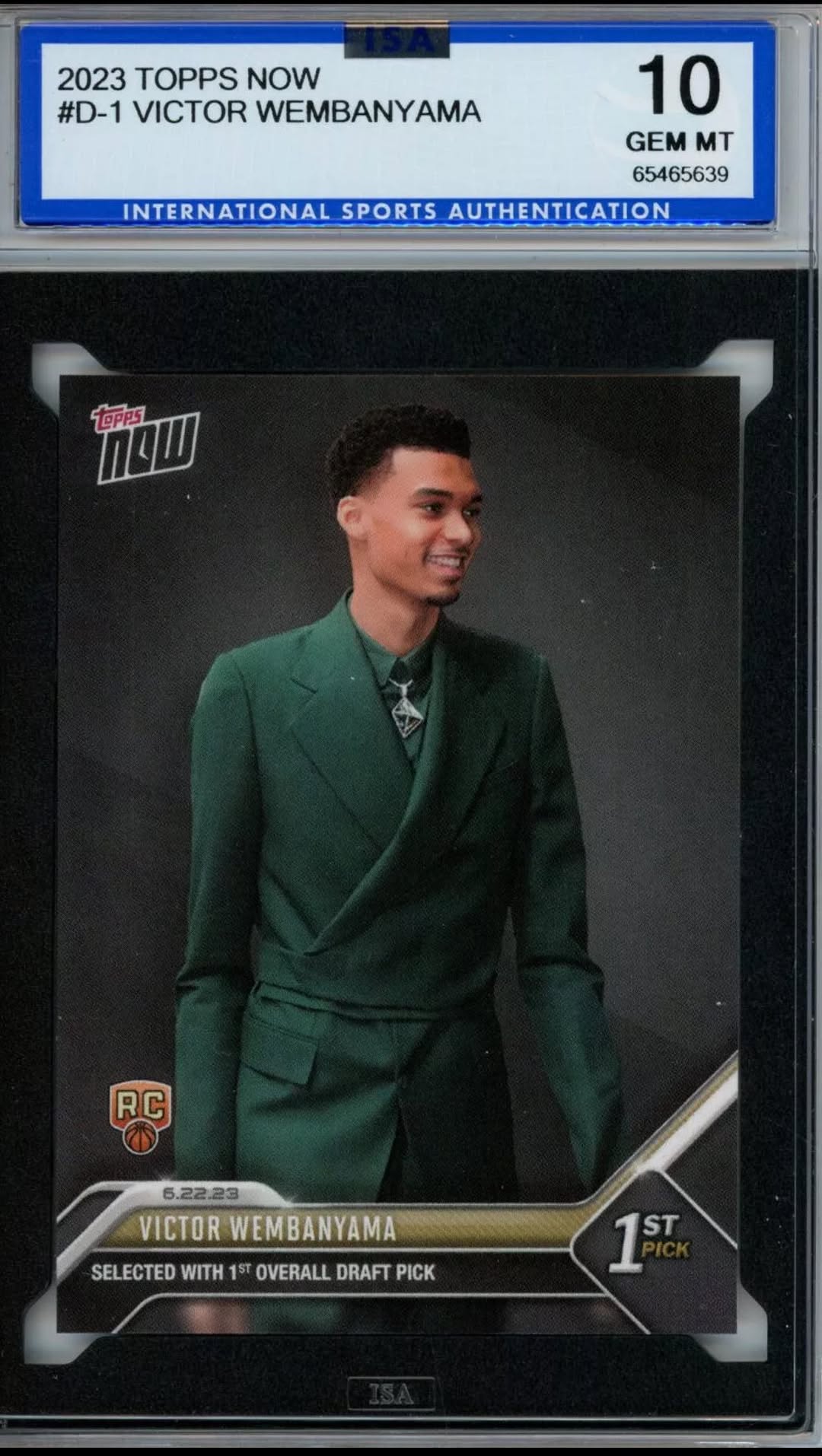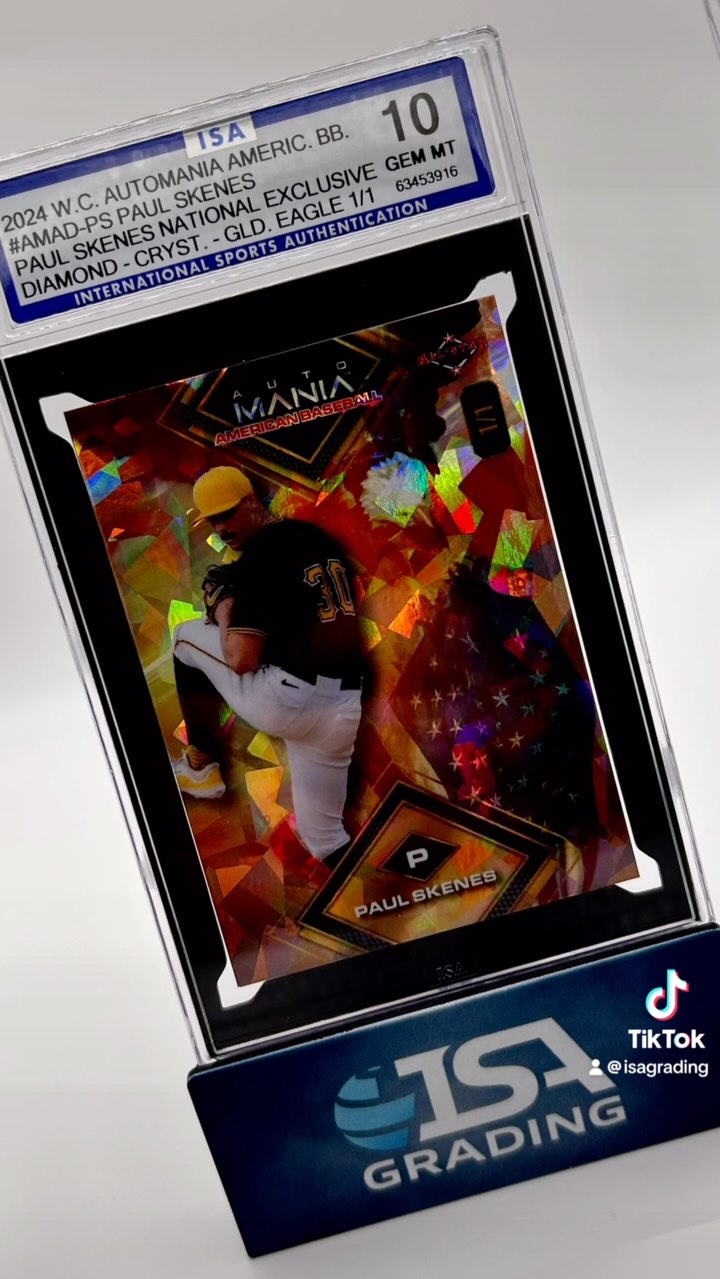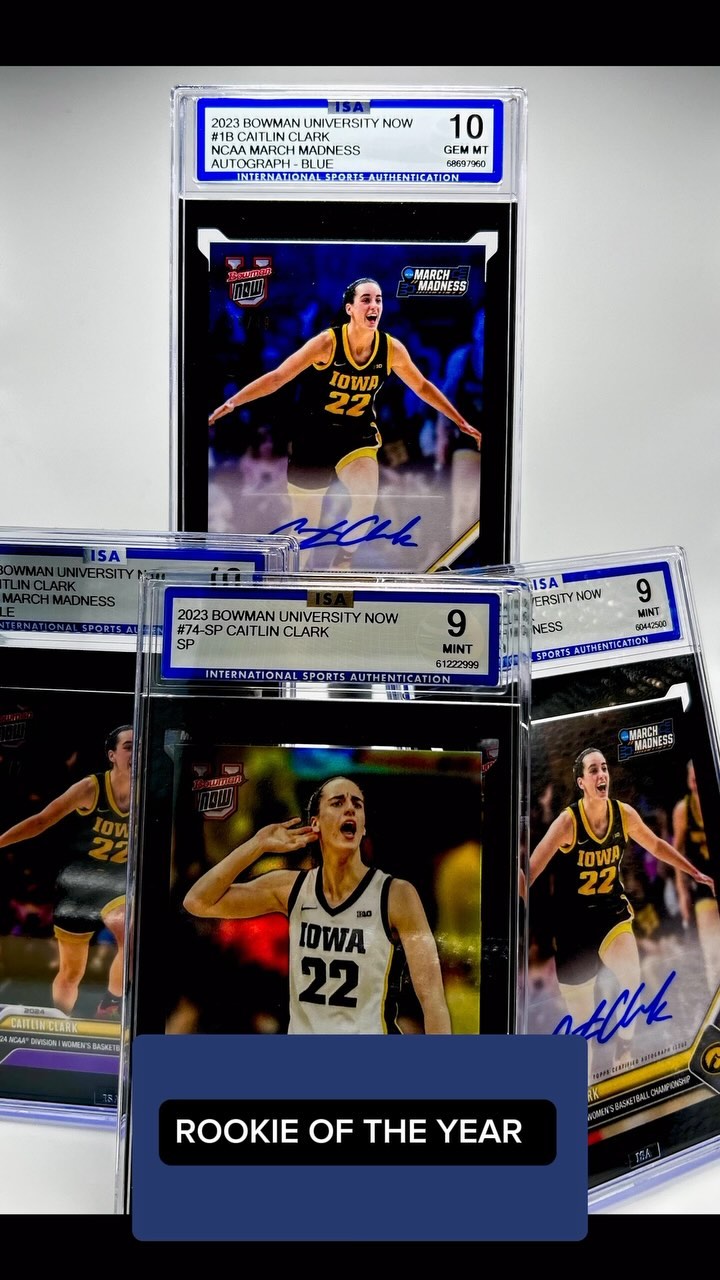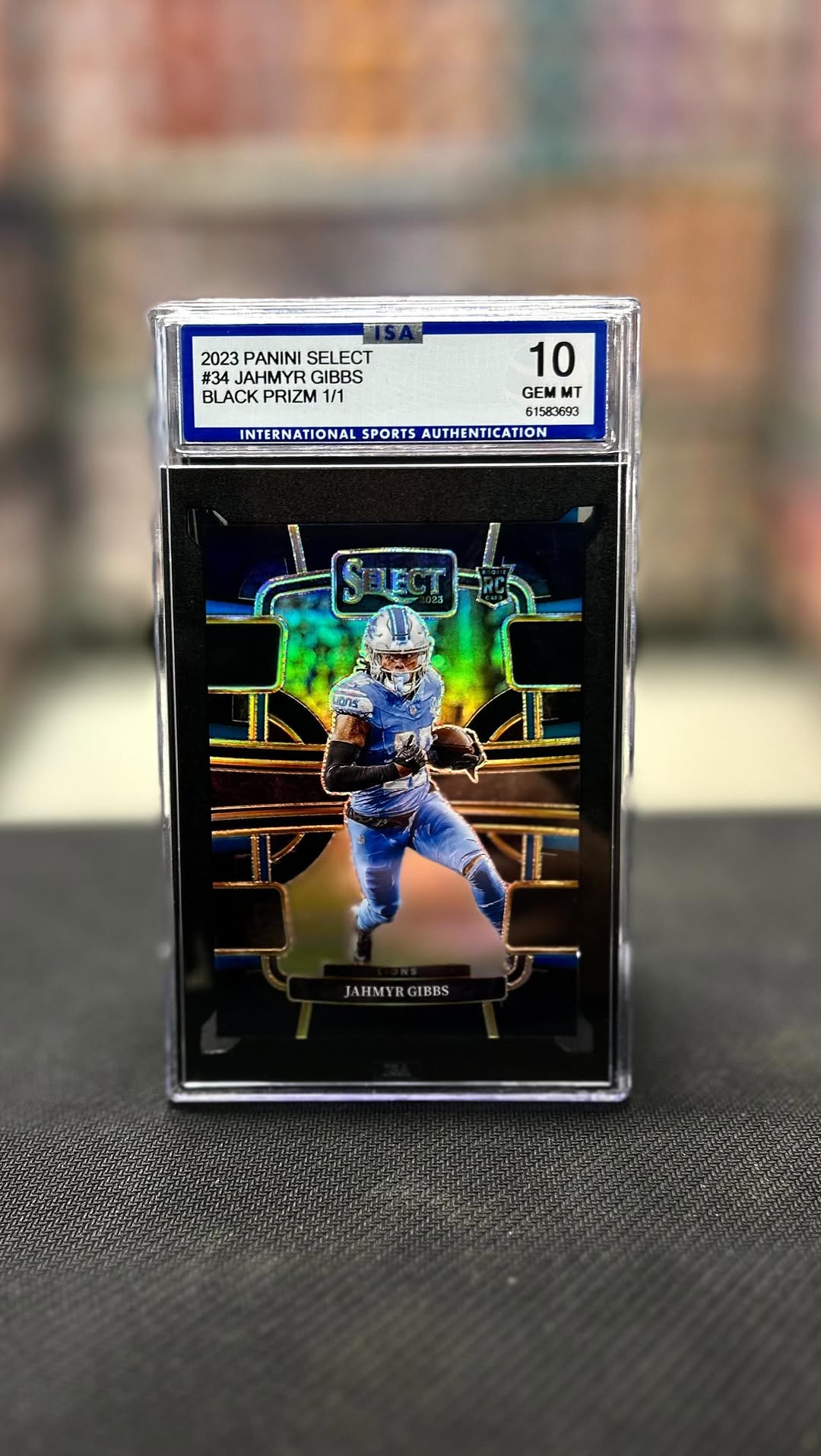
A grading decision often starts with a favorite rookie, a promising vintage find, or a stack of cards that might sell better with an independent condition assessment. Then comes the practical question: what will it cost to submit the group?
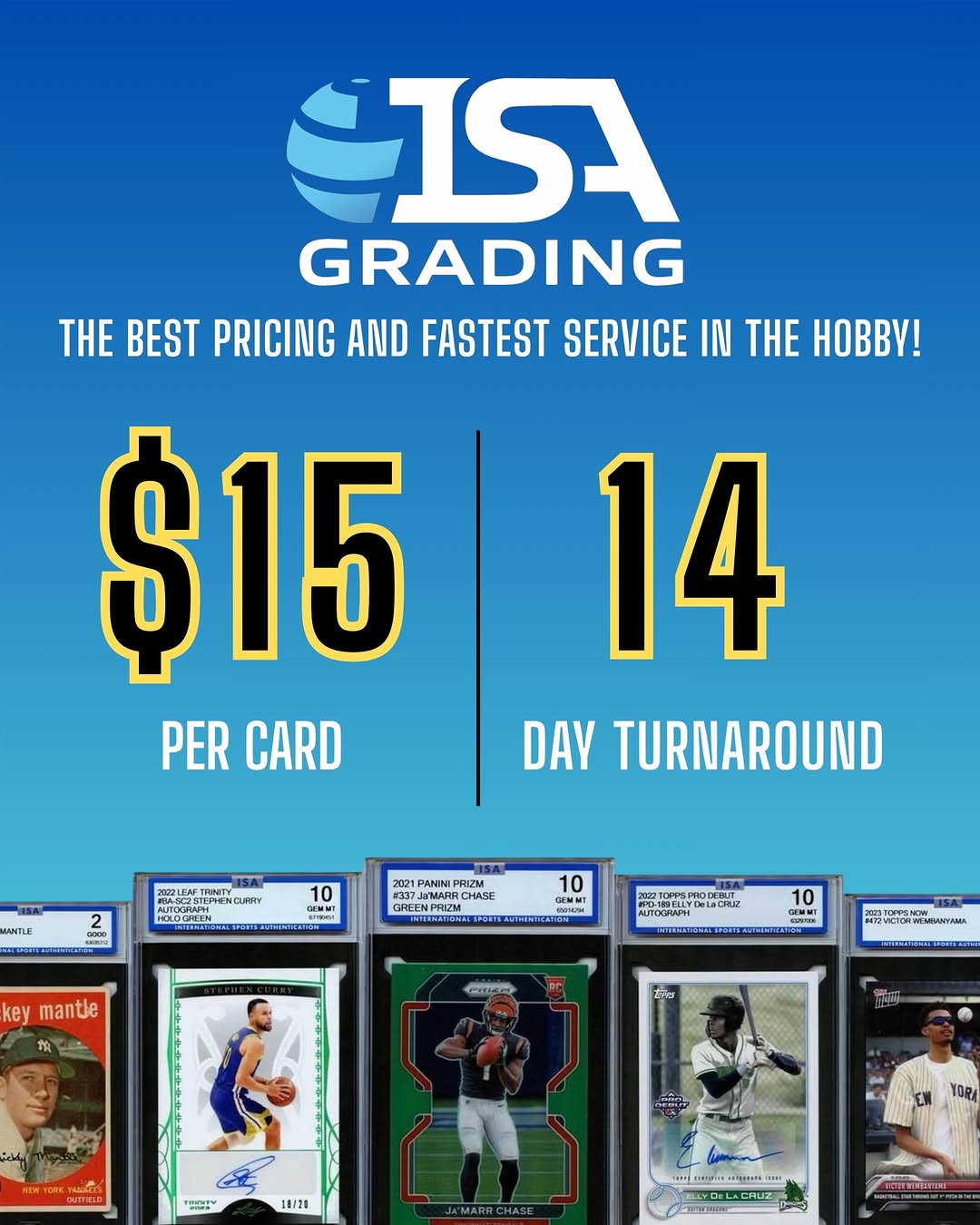
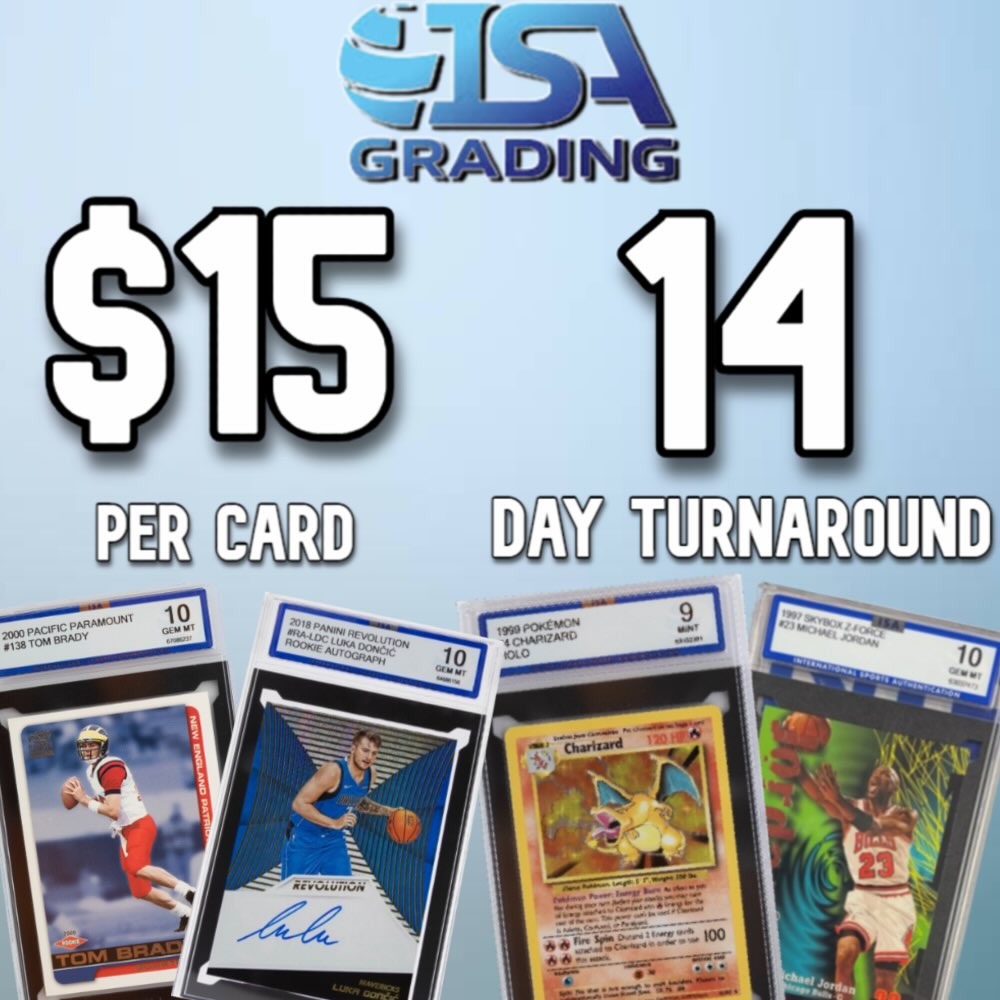
Flat pricing makes that question easier to answer. ISA Grading, also known as International Sports Authentication, currently offers sports card grading and authentication for $15 per card, with a 10 card minimum, a 14 day turnaround, and no upcharges. That gives collectors and dealers a straightforward starting point for planning a submission.
The fee does not determine whether every card is worth grading. It does make the grading portion of your budget easier to calculate, so you can spend more time evaluating your cards and less time working through pricing variables.
What a Flat $15 Grading Fee Means for Your Budget
With flat pricing, the grading calculation is simple: multiply the number of cards by $15. A minimum submission of 10 cards carries $150 in grading fees. Submit 15 cards, and the grading fees total $225. Submit 20, and they total $300.
- 10 cards: $150 in grading fees.
- 15 cards: $225 in grading fees.
- 20 cards: $300 in grading fees.
- 30 cards: $450 in grading fees.
These figures describe grading fees, not necessarily your entire submission expense. Budget separately for shipping, packing materials, insurance where applicable, and any other charges shown during submission. Clear pricing works best when you distinguish the service fee from the cost of getting cards safely to and from the grader.
ISA's no upcharges policy removes another pricing variable from the grading calculation. You can plan around the stated per card fee without building a separate reserve for a grading upcharge.
Why Predictable Costs Help Collectors Make Better Choices
Collectors rarely have identical reasons for submitting cards. One person wants a childhood favorite protected in a slab. Another wants an independent assessment before selling. A third is organizing a player collection with consistent presentation.
A predictable card grading service makes those goals easier to budget for individually. Instead of treating every submission as an open expense, you can set a limit and decide which cards deserve a place within it.
Suppose your grading budget is $150 before shipping and other applicable costs. At $15 per card, that covers the 10 card minimum. You can compare candidates within that fixed group rather than repeatedly recalculating different service fees.
That clarity also helps separate sentimental value from resale expectations. A card can be worth grading to you without being likely to produce a profitable sale. The important distinction is knowing which goal you are funding.
Start With Card Selection, Not the Submission Minimum
A 10 card minimum is a planning requirement, not a reason to submit ten cards indiscriminately. Choose cards because they serve your collection or selling strategy, rather than filling the final few spaces with items you have not evaluated.
For baseball card grading, that might mean reviewing a group of rookie cards alongside established player favorites. For football card grading, it could mean selecting cards with demand beyond a single strong game or short news cycle. Neither category makes condition less important.
Rookie card grading deserves particular care because excitement around a player can encourage optimistic assumptions. Check recent completed sales for the exact card, including its year, set, parallel, and condition. An asking price alone is not evidence of what buyers will pay.
Vintage card grading can involve different priorities. Age, scarcity, authenticity questions, and collecting preferences may matter even when a card shows obvious wear. A lower grade does not automatically make a vintage submission pointless, just as a modern card does not automatically justify grading because it looks new.
Inspect the Condition Before You Spend
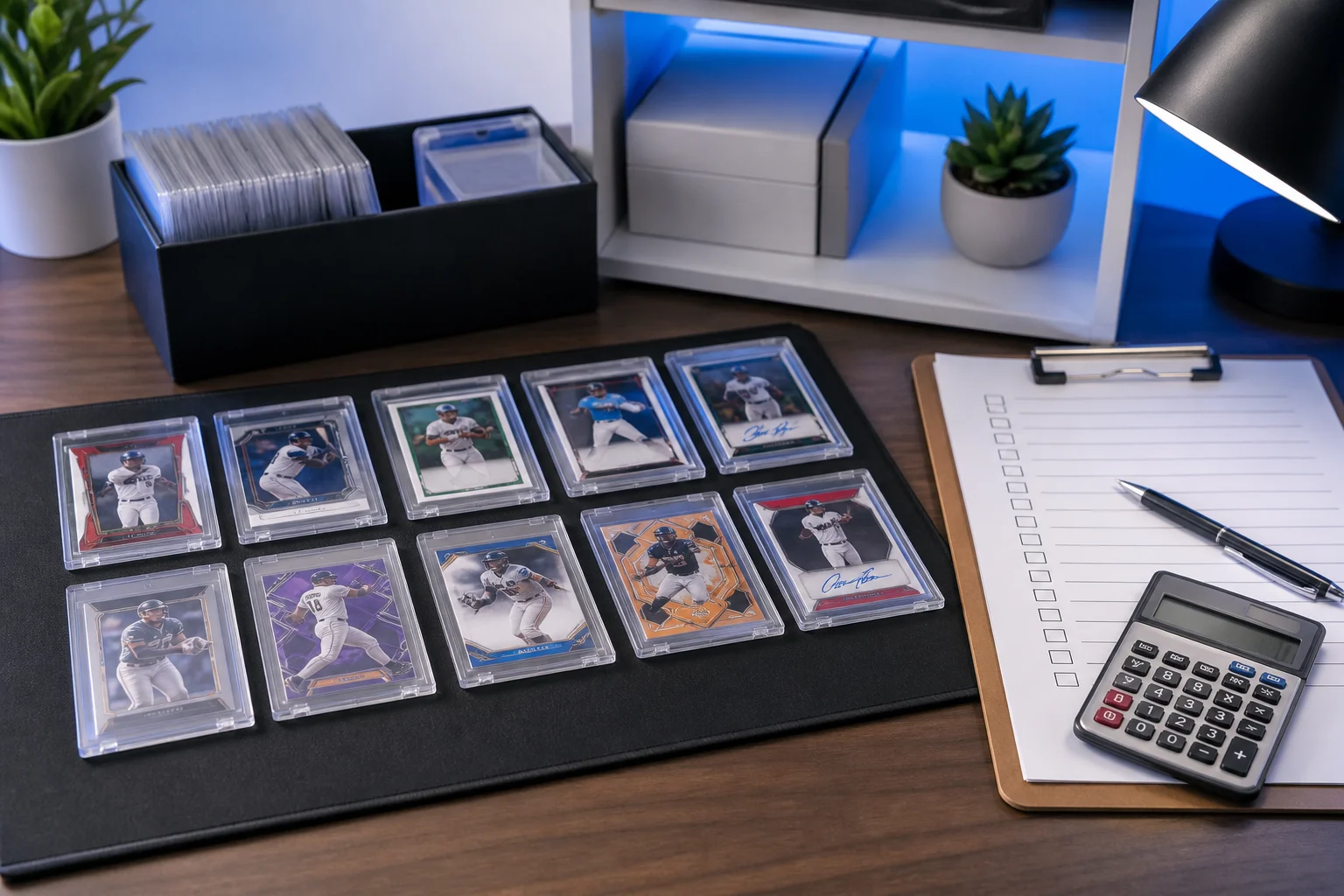
Before asking, Should I grade my cards?, take a close look at what you actually have. Good lighting and careful handling can reveal issues that are difficult to see through a sleeve or in a quick phone photo.
- Card surface: Look for scratches, print lines, indentations, staining, and other visible flaws.
- Card corners: Check for whitening, rounding, bends, or crushed tips.
- Card edges: Examine chipping, roughness, and signs of wear along each side.
- Centering: Compare the placement of borders and design elements on both the front and back.
Use ISA's grading scale to understand how condition is described. Your own inspection is a screening step, not a guaranteed prediction of the final grade.
Avoid altering a card to chase a better result. Trimming, recoloring, or other changes can affect authenticity and grading eligibility. If you are unsure about a card's condition or prior treatment, ask questions before including it in your budget.
Build a Submission Budget That Includes More Than Grading
The strongest argument for $15 card grading is not that every expense disappears. It is that one important expense becomes easy to isolate. From there, you can build a more complete budget.
- Count the cards you intend to submit and multiply that number by $15.
- Estimate outbound shipping and the packing materials needed for safe transit.
- Check return shipping arrangements and any applicable insurance or other charges.
- Keep selling expenses separate if you plan to list the cards afterward.
- Leave room in your overall hobby budget for unexpected needs rather than spending every available dollar.
For a dealer, the next step is allocating shared expenses across the cards in the submission. If packing and transportation add to the batch cost, those expenses affect your actual cost per card even though the grading fee stays flat.
For a collector, the same exercise helps prevent a familiar problem: budgeting for grading alone, then discovering that shipping and supplies require additional spending.
How a 14 Day Turnaround Fits Into Planning
Price is only one part of a grading decision. Time matters when cards are tied to a selling schedule, a collection project, or inventory you want available again.
ISA currently lists a 14 day turnaround. A 14 day card grading turnaround can provide a useful planning reference, but you should confirm how the turnaround is measured and allow separately for shipping time. Do not assume the service window equals the full period between mailing your cards and receiving them back.
For hobby sellers, a clearer schedule can help with photography, listing preparation, and inventory planning. It cannot guarantee that a player remains popular or that market prices hold while the cards are away.
Our article on how faster grading can support a smarter card sale explores the role timing can play without treating speed as a promise of profit.
Card Protection and Slabs Are Part of the Decision
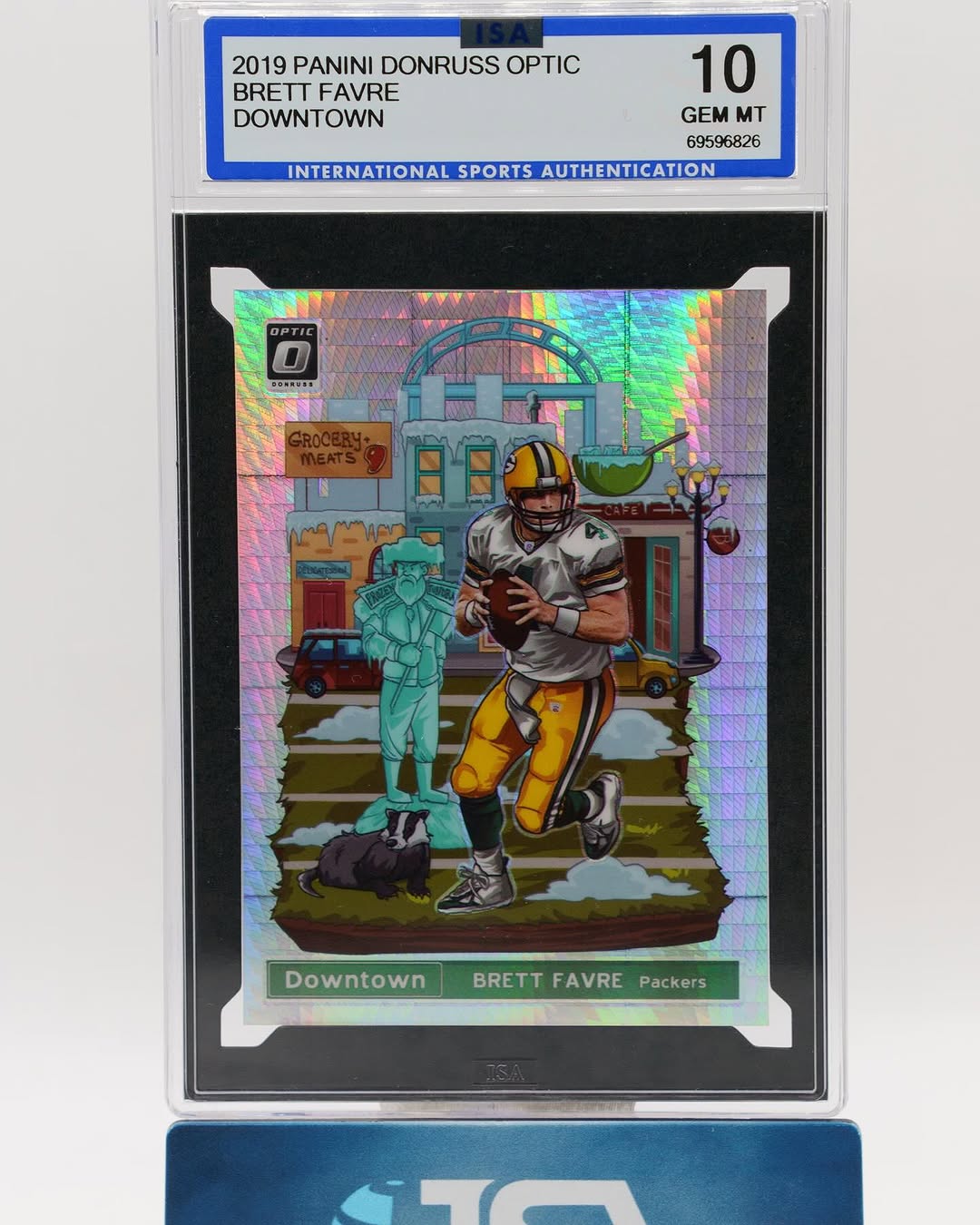
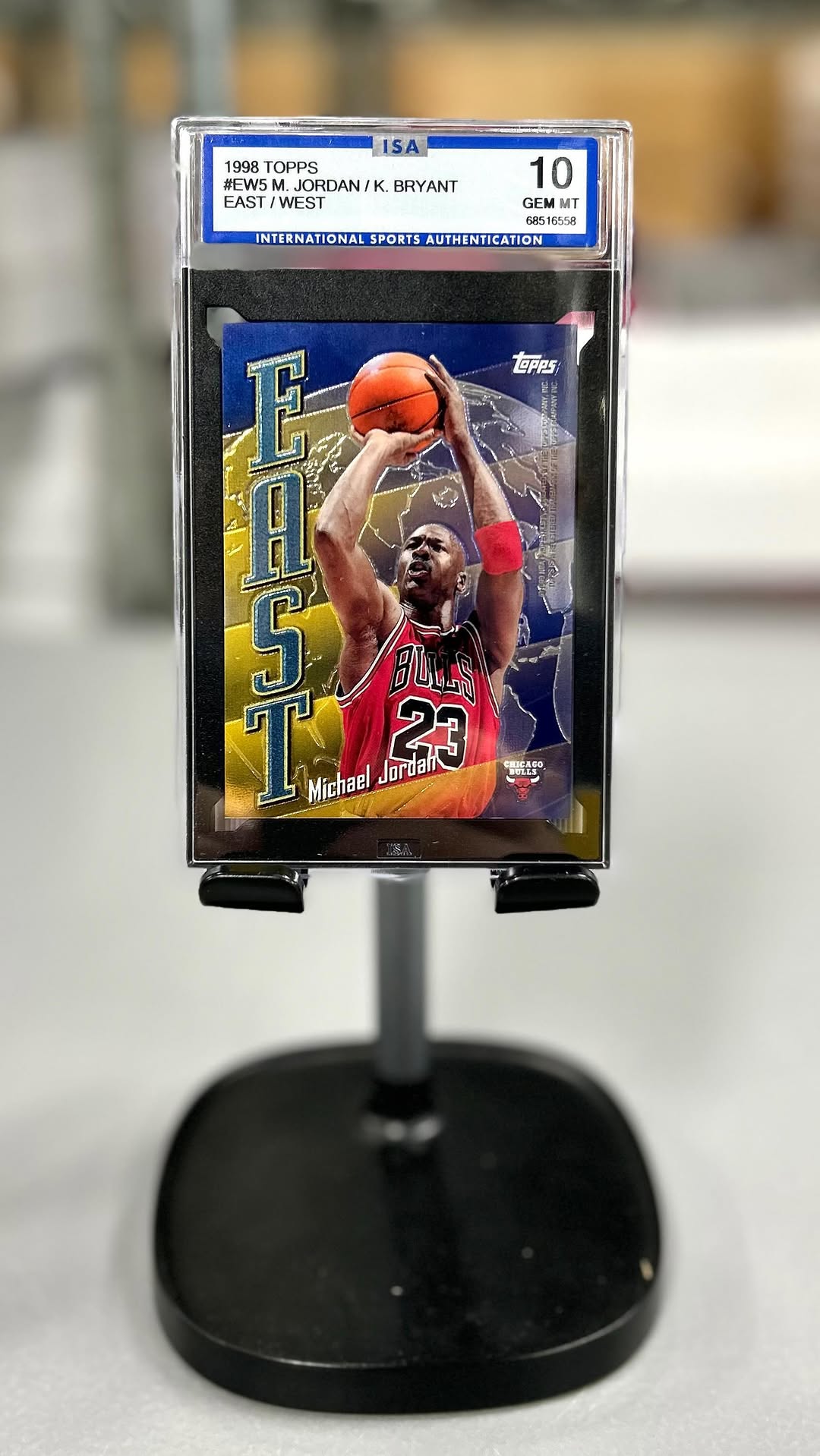
Not every grading benefit needs to be measured through resale. Card encapsulation provides a holder for storage, handling, and presentation after grading. For collectors who regularly organize or display cards, that can be a practical reason to submit.
Trading card slabs reduce direct handling of the card itself, but they should not be treated as indestructible protection. Store encapsulated cards carefully, avoid excessive heat and direct sunlight, and protect holders from impact and scratches.
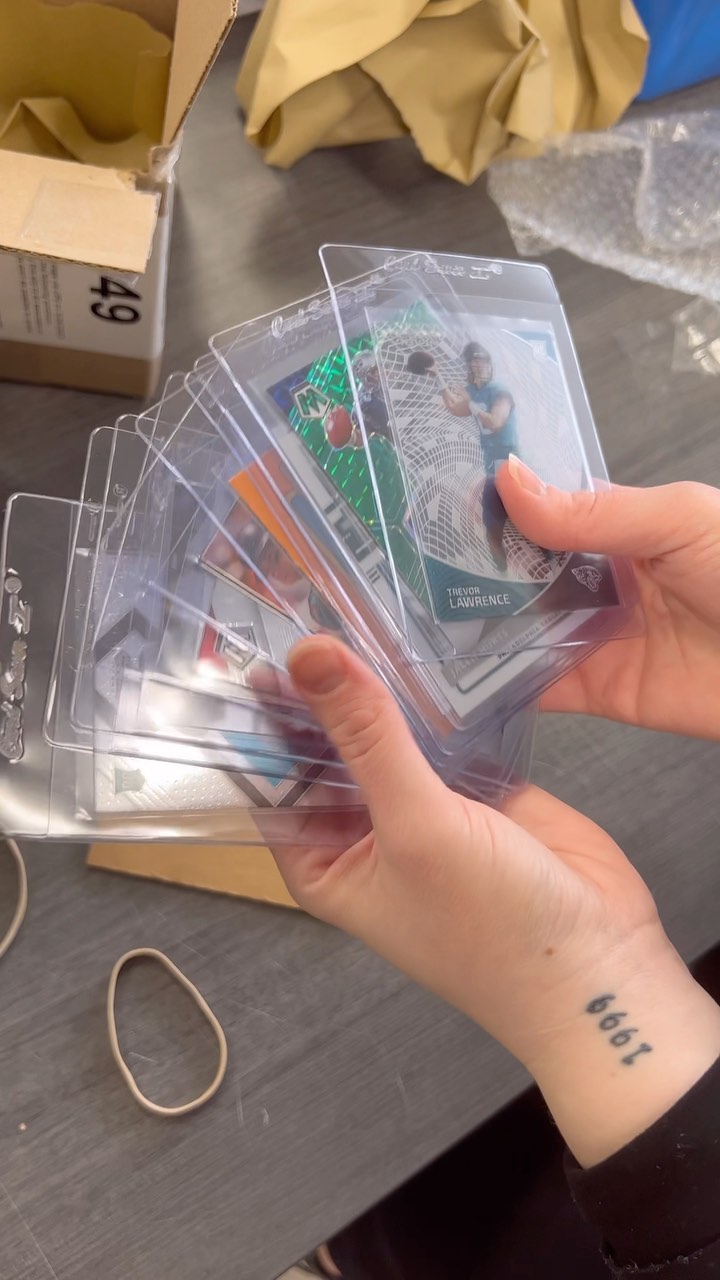
Protection also starts before the cards reach the grader. Follow the current packing instructions, use appropriate protective holders, and secure the contents so they do not shift unnecessarily in transit. Do not assume a loose stack inside a padded envelope is sufficient preparation.
If you are assembling your first batch, read how to prepare your 10 card submission before packing. Preparation is part of protecting both your cards and the money you have set aside.
What Authentication and Verification Add for Buyers
When selling graded cards, buyers need clear information about what is being offered. Card authentication and a condition grade address important questions, while the holder and label help present the result in a consistent format.
ISA offers online certificate verification. Buyers and sellers can use the website to check certificate details. That is a useful research step, not a substitute for examining listing photos and making sure the card and label match the information shown.
For sellers, include clear images of the front and back of the slab, make the label readable, and disclose visible holder damage. Accurate listings support buyer confidence more effectively than exaggerated claims about rarity or future value.
A grade does not establish a guaranteed selling price. Demand, player performance, card scarcity, eye appeal, marketplace conditions, and seller reputation can all affect what a buyer is willing to pay.
Test the Resale Math Before You Submit
If resale is your main goal, work backward from realistic completed sales. Consider more than one possible grade, especially when your condition assessment is uncertain.
Imagine a card you purchased for $20. Adding the $15 grading fee brings your investment to $35 before allocated shipping, packing, and selling expenses. A sale at $40 would not necessarily represent a $5 profit once those additional costs are included.
This example is not a prediction of any card's value. It illustrates why flat grading fees are useful without making every card a good financial candidate.
Run a cautious scenario as well as an optimistic one. Would you still want the card graded if it received a lower grade than you hoped? Would you be comfortable keeping it if it did not sell quickly? Those questions can prevent a submission from depending entirely on the best possible outcome.
Confirm the Details, Then Submit With a Clear Plan
Before sending cards, review the current submission requirements and confirm eligibility for anything unfamiliar. Collectors researching Pokemon card grading, unusual formats, or other categories should verify acceptance rather than assume every card uses the same service terms.
ISA's FAQ page is a useful place to check service information and identify questions to resolve before shipping. Confirm packing requirements, turnaround details, and applicable costs while your cards are still in your possession.
Then finalize your card list and visit the ISA submission page. With a flat $15 per card fee, no upcharges, a 10 card minimum, and a current 14 day turnaround, you have a clear framework for the grading portion of your plan.
The useful advantage is straightforward: you can calculate the fee first, evaluate each card honestly, and choose a submission that fits your collection or business budget.
Submit Cards to ISA Grading
Collectors ready to use ISA Grading can start on the submission page. The current active service is $15 per card with a 14 day turnaround, no upcharges, and a 10 card minimum.
Frequently Asked Questions
How much does a 10 card submission cost at ISA Grading?
ISA's current grading fee is $15 per card, so a 10 card submission totals $150 in grading fees. Budget separately for shipping, packing materials, insurance where applicable, and any other charges shown during submission.
Does ISA charge grading upcharges?
ISA's current service has no upcharges. The grading fee is $15 per card with a 10 card minimum. Shipping and other applicable submission expenses should still be included in your overall budget.
What is ISA's current card grading turnaround?
ISA currently lists a 14 day turnaround. Confirm how that period is measured before submitting, and allow separately for shipping to and from ISA.
Does a flat grading fee mean every card is worth grading?
No. A flat fee makes the grading expense easier to calculate, but suitability still depends on condition, collecting goals, likely demand, and total costs. If you intend to sell, review completed sales and consider several possible grades rather than assuming the highest result.
How can buyers verify an ISA certificate?
Certificate verification is available on ISA's website at /certificate-verification. Check the certificate details and compare them with the card and label shown in the seller's photos. Verification does not establish a guaranteed market value.