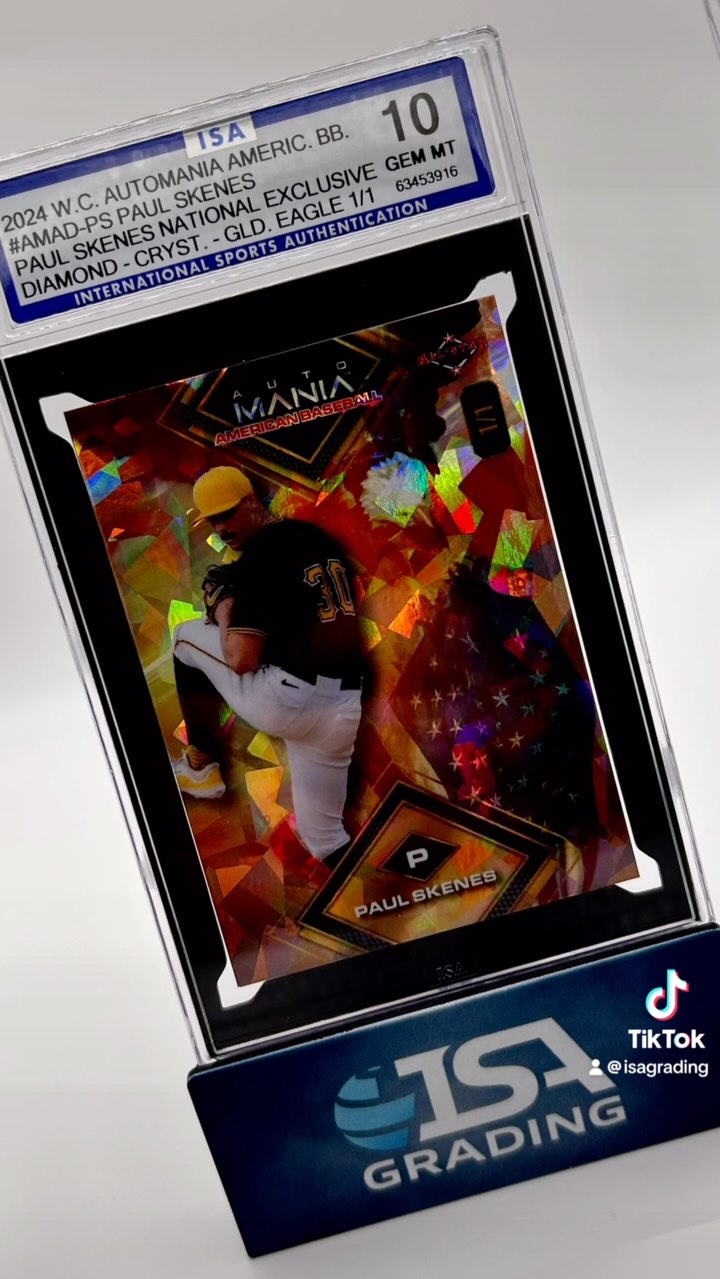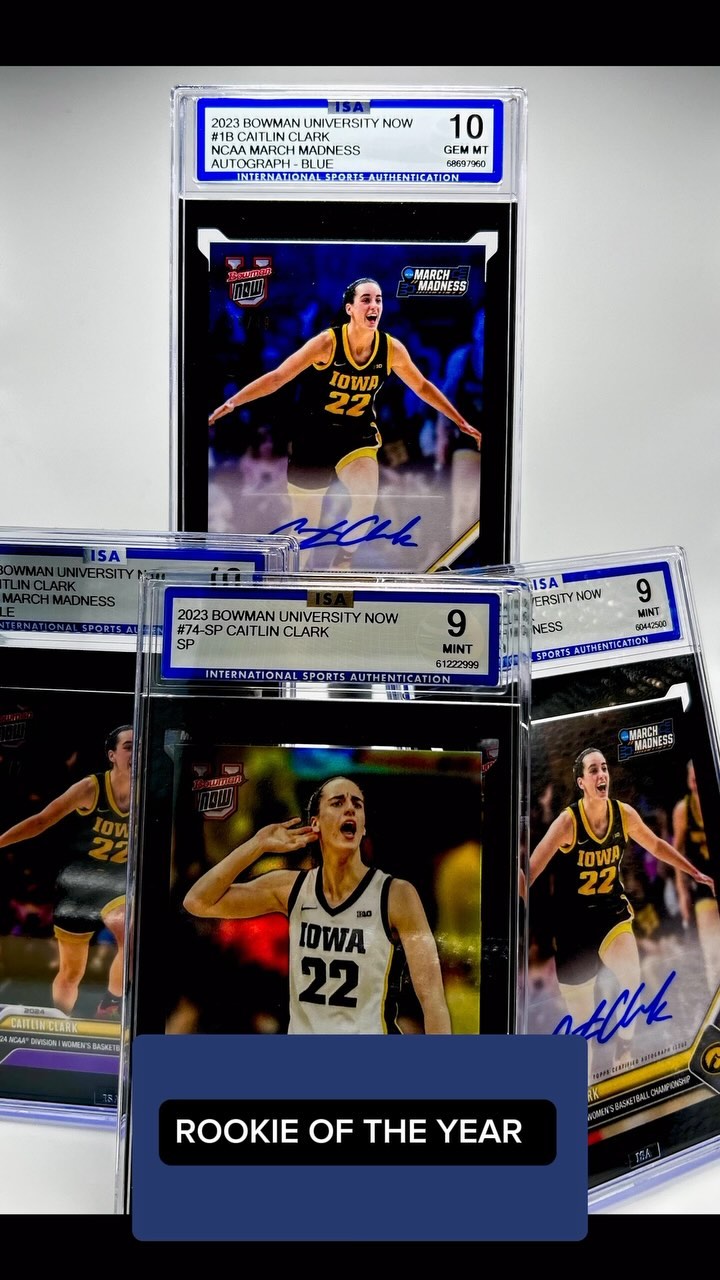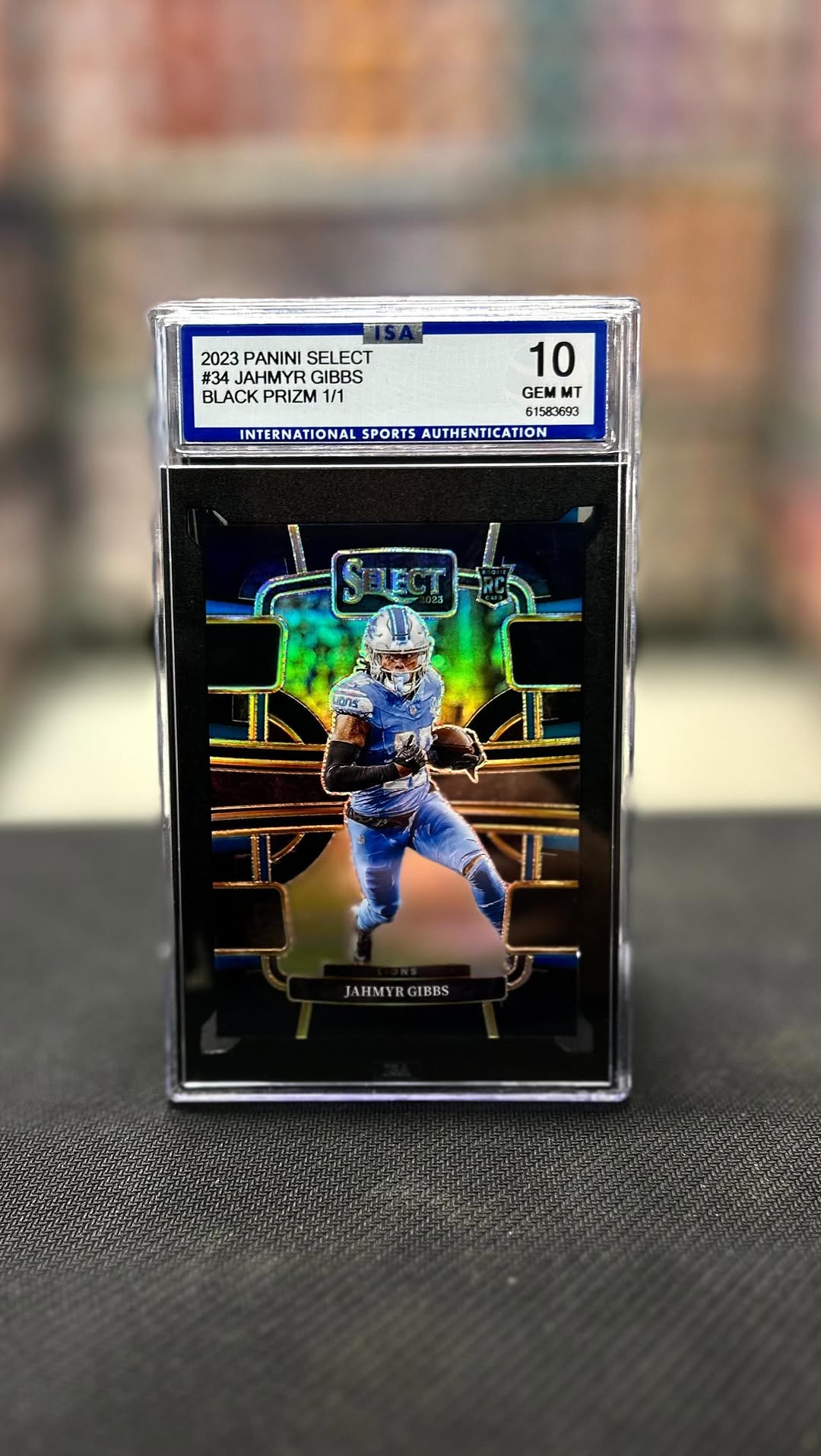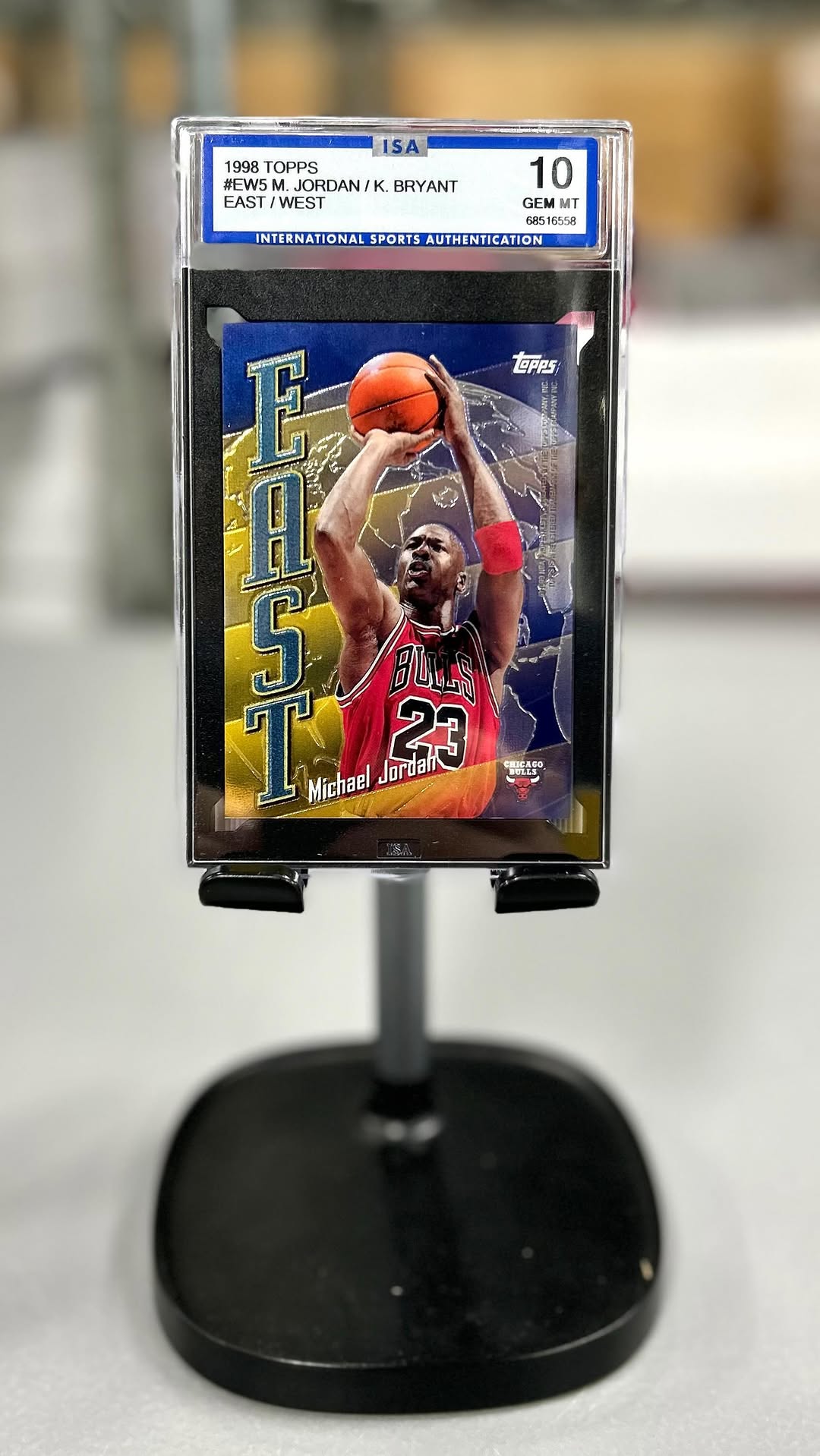
Submitting cards for professional grading involves more than estimating potential grades. Collectors also need to know how much the order will cost, when the cards may return, and whether unexpected fees could affect the budget. Clear pricing is especially important for dealers, hobby sellers, and collectors who submit cards regularly.
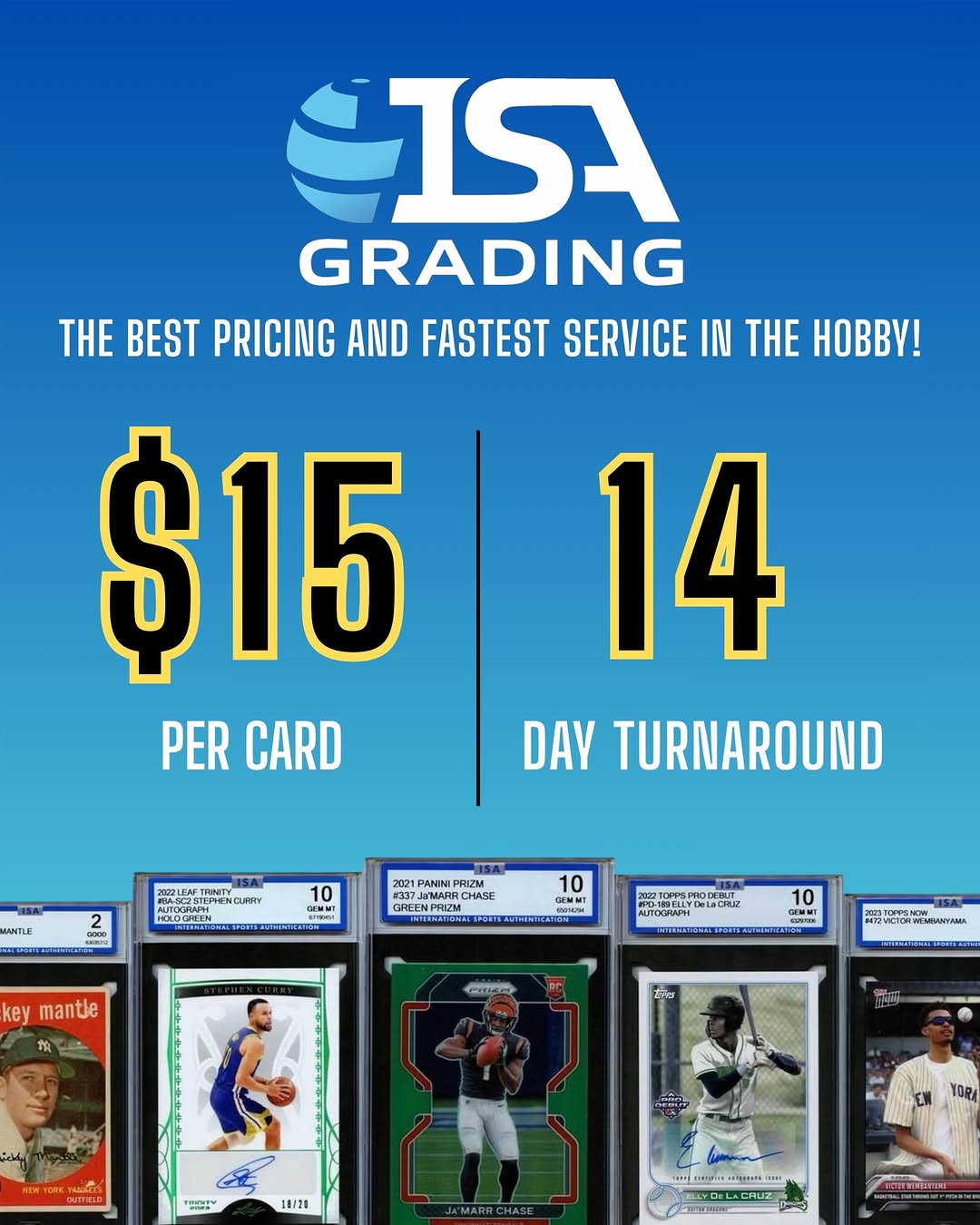
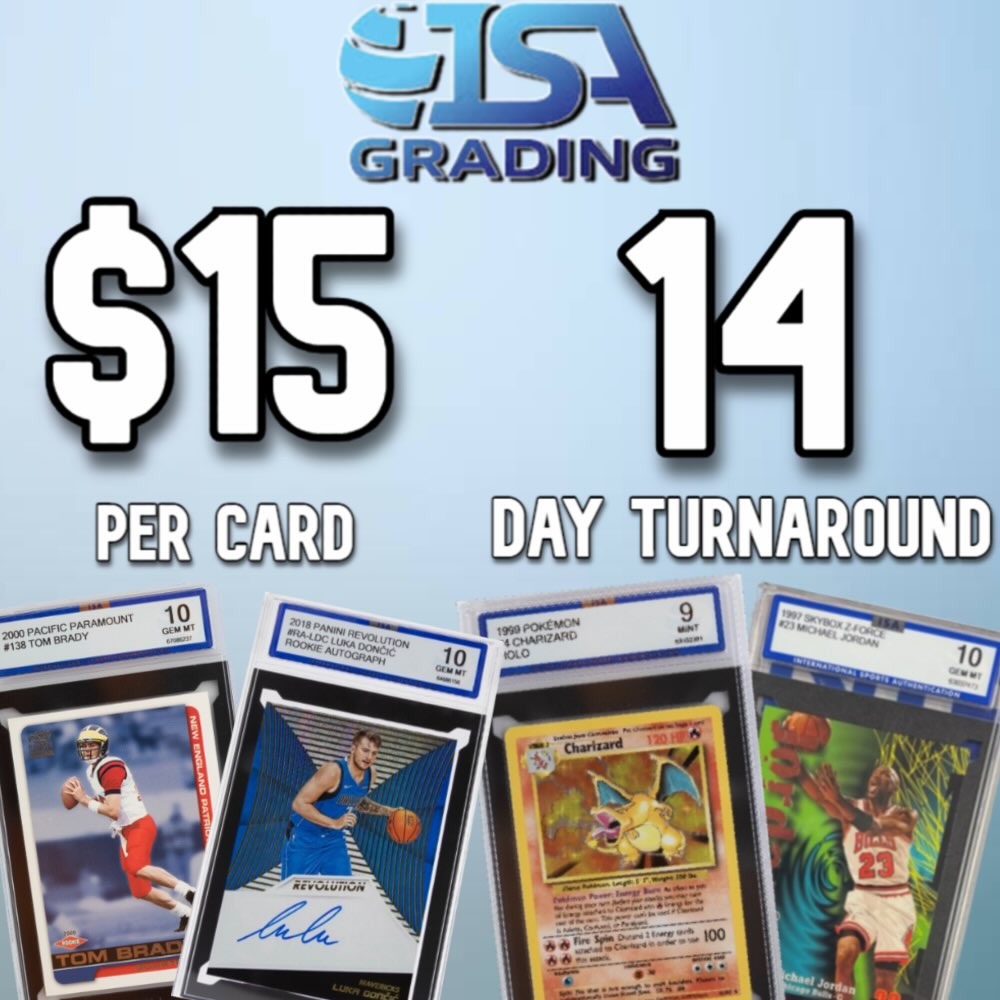
ISA Grading, also known as International Sports Authentication, currently offers sports card grading and authentication for $15 per card, with a 14 day turnaround, a 10 card minimum, and no upcharges. Those defined terms give submitters a practical starting point for deciding which cards to grade and how much money to allocate to an order.
Why no upcharges make grading costs easier to calculate
An upcharge can make a submission more expensive than expected when the final value or grading result places a card into a different service tier. With no upcharge card grading, collectors can calculate the grading portion of an ISA order before sending their cards.
At the current $15 card grading rate, the basic grading cost is straightforward:
- 10 cards: $150 in grading fees
- 20 cards: $300 in grading fees
- 50 cards: $750 in grading fees
These examples cover grading fees. Submitters should still account for shipping, insurance, packaging supplies, and any other applicable order expenses. The key budgeting benefit is that a card receiving a strong grade or proving more valuable than anticipated does not create an ISA grading upcharge.
This pricing structure can be useful for rookie card grading, vintage submissions, modern parallels, and TCG card grading. A collector sending a mix of baseball card grading, basketball card grading, and football card grading candidates can apply the same current per card rate across the submission.
Collectors who want more detail about the service model can read A Clearer Path to the Slab: How ISA Keeps Grading at $15 Per Card. Before submitting, it is also helpful to review the official ISA grading scale so that expectations are based on the standards used during evaluation.
Predictable pricing supports better card selection
Not every card needs to be graded. A fixed service price helps collectors compare the grading cost with the reasons for submitting each card. Those reasons may include protection, authentication, personal significance, set building, inventory preparation, or a future sale.
For each card, consider several questions:
- Is card authentication important because of the issue, age, source, or value?
- Would card encapsulation make the card easier to store, display, or handle?
- Is there enough buyer demand for graded examples of this card?
- Does the visible condition support the cost of grading and shipping?
- Is the card part of a personal collection even if resale value is not the primary goal?
A predictable fee does not mean every card becomes a profitable submission. Market demand, the assigned grade, player performance, scarcity, and recent comparable sales can all influence value. No upcharges simply remove one variable from the service cost. Collectors still need to make informed choices about the cards they send.
Using the 10 card minimum strategically
ISA's current service has a 10 card minimum. Instead of adding random cards just to reach that number, collectors can build a focused submission. One approach is to sort candidates into three groups: cards intended for a personal collection, cards likely to be offered for sale, and cards requiring authentication or long term protection.
A baseball collector might submit several vintage stars, a few modern rookies, and cards from a personal team collection. A hobby seller might combine popular basketball rookies, football inserts, and sealed collection finds. Pokemon card grading candidates can also be grouped with sports cards when planning the overall order, provided the cards meet current submission requirements.
The minimum can also encourage disciplined scheduling. Rather than sending individual cards whenever they are acquired, a collector can maintain a submission box and review the group once 10 strong candidates have been identified.
Turnaround time is part of the budget
Cost planning is not limited to the grading fee. Time matters because cards are unavailable for display, trade, or sale while they are being graded. ISA's current active service lists a 14 day turnaround, giving collectors a defined timeline to consider when preparing an order.
For sellers, turnaround can affect inventory planning. A dealer preparing cards for a show or online sales period needs to consider submission transit, the grading timeline, and return shipping. A collector may also want a card back before a birthday, a signing event, or a major point in a player's season. Schedules should include a reasonable shipping cushion rather than treating the grading turnaround as the entire door to door timeline.
Fast card grading can also help sellers respond to current interest without committing cards to a lengthy absence. However, market timing is never guaranteed. Player demand and card prices can change while any submission is in progress. The practical advantage of a stated turnaround is better planning, not a promise about future value.
For a closer look at this issue, see Why Turnaround Time Is Crucial When Grading Your Sports Cards with ISA Grading.
Preparing cards before paying the grading fee
Careful grading preparation can help protect cards in transit and prevent unsuitable candidates from taking up space in an order. Begin by examining each card under clear, neutral lighting. Review the front and back without assuming that a visually attractive card will receive a particular grade.
Check the major condition areas
- Card centering: Compare the borders and design position on the front and back. Some cards make centering easier to judge than others.
- Card corners: Look for whitening, softness, bends, or compression. Dark borders often make corner wear easier to see.
- Edges: Inspect for chipping, rough cuts, peeling, and areas of visible wear.
- Card surface: Use angled light to look for scratches, print lines, dents, stains, creases, or impressions.
- Overall integrity: Watch for evidence of trimming, recoloring, restoration, or other alteration concerns.
Home inspection is only a screening step. It is not a substitute for professional card condition grading, and collectors should avoid guaranteeing themselves a particular result. A card can have subtle issues that are difficult to identify without professional evaluation.
Do not attempt aggressive cleaning, trimming, pressing, recoloring, or restoration. These actions can damage a card or create authentication concerns. Keep food and drinks away from the work area, handle cards carefully, and follow ISA's current packaging and holder instructions.
Once the final group is selected, place the cards in the order required for the submission and confirm that the paperwork matches. The ISA submission page is the appropriate place to review current instructions and begin an order. Collectors working with older issues can also read Vintage Cards, Clear Standards: What to Expect Before Grading.
Protection and confidence after encapsulation
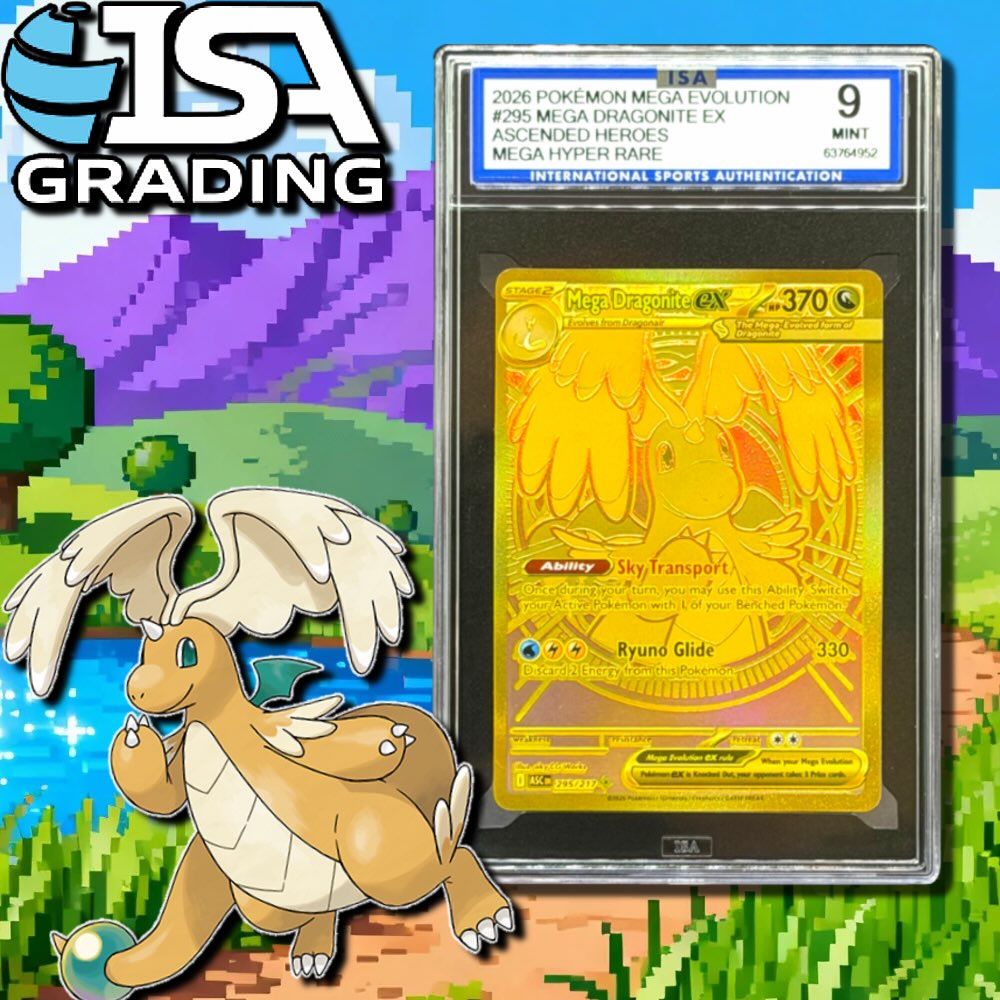
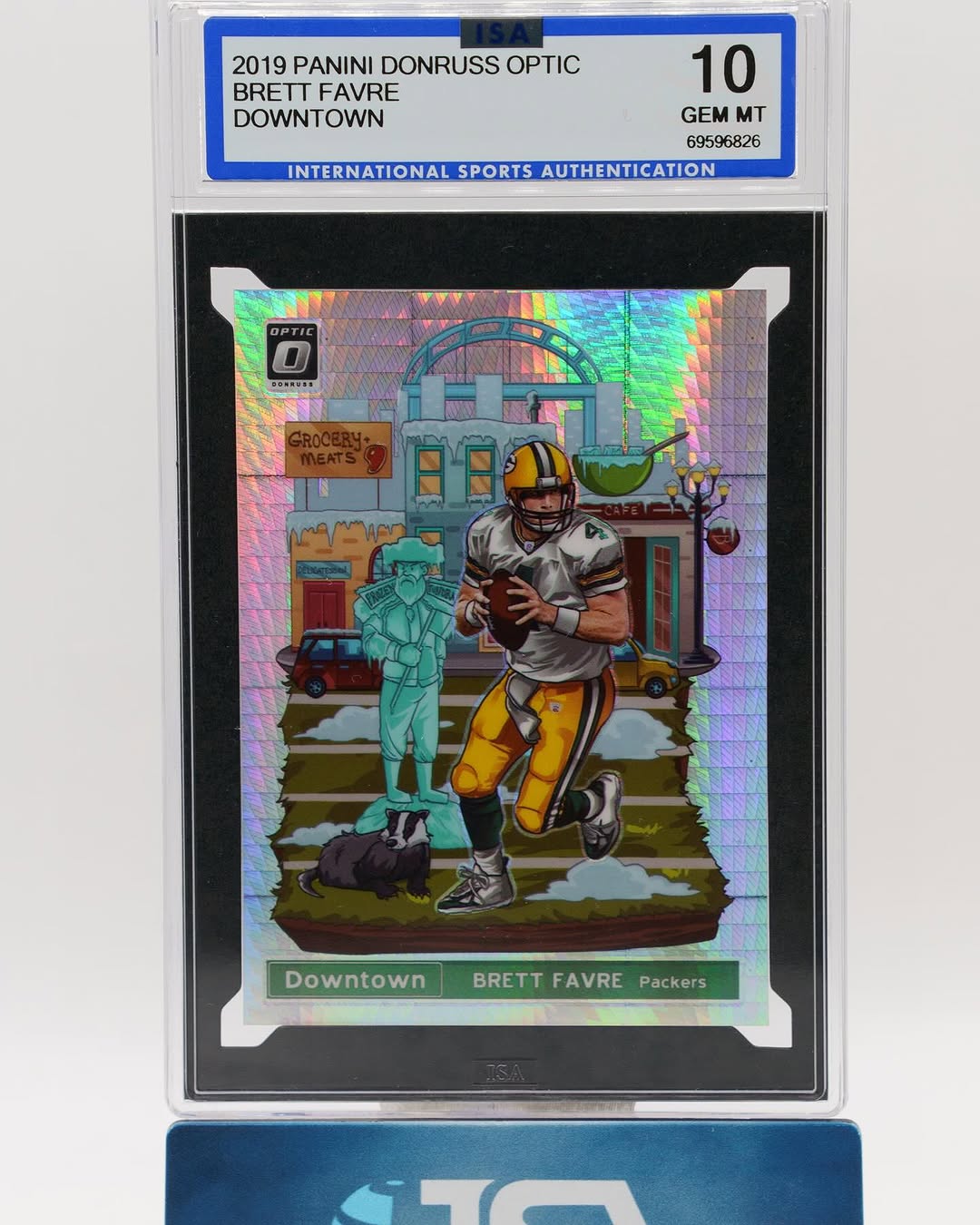
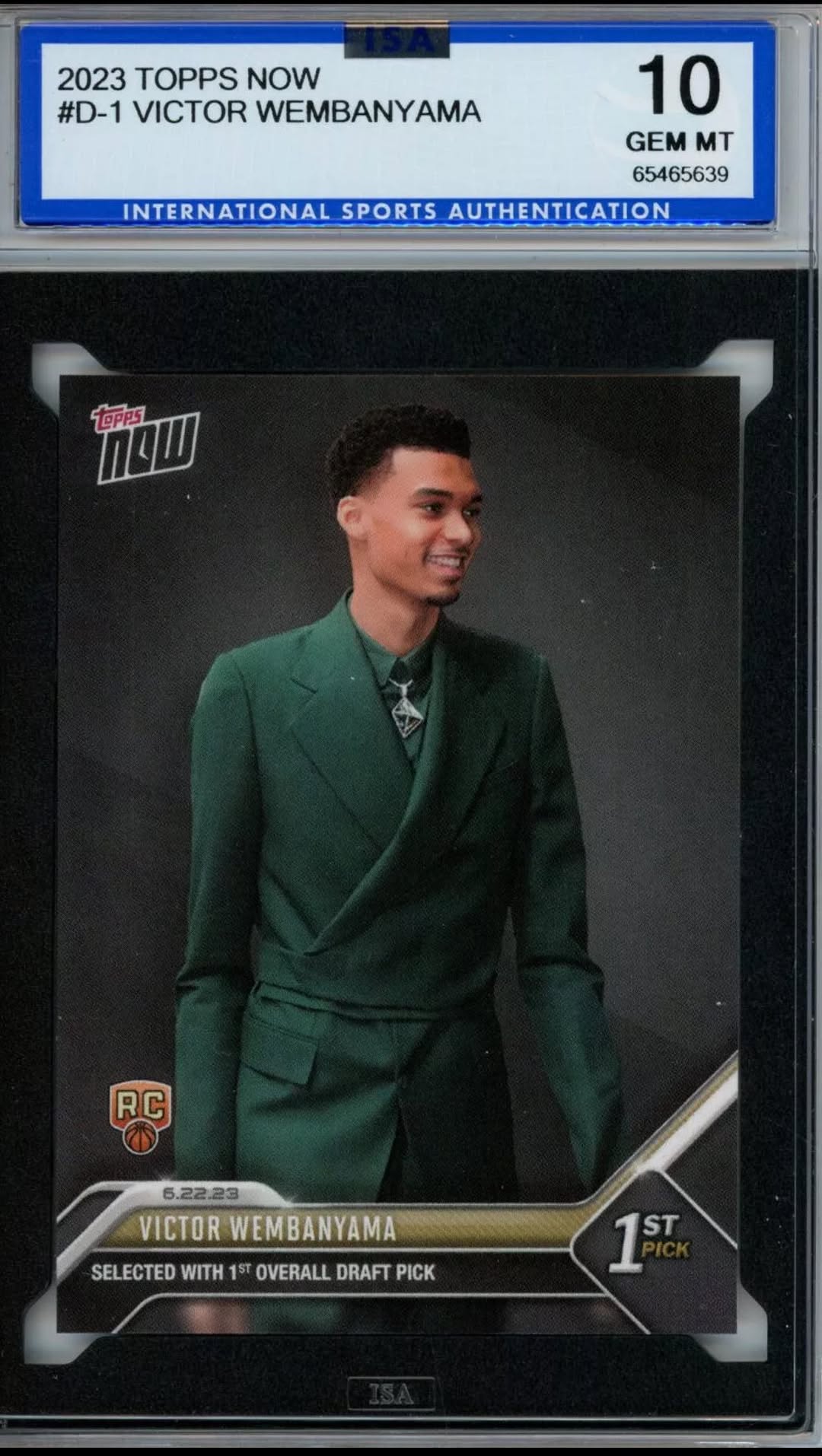
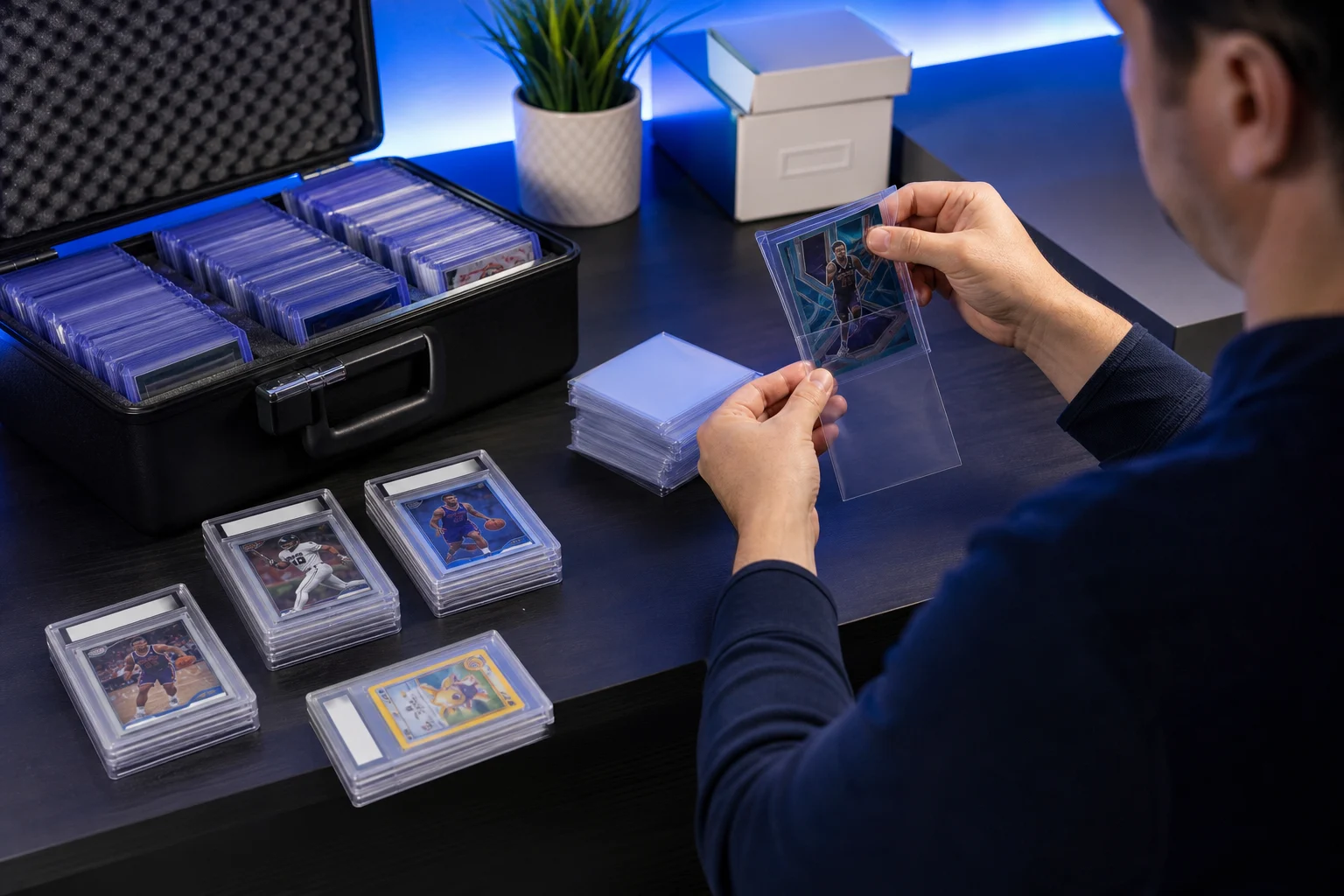
Grading provides more than a number on a label. After evaluation, card encapsulation places the card in a rigid holder designed to limit routine handling and provide a consistent presentation. Trading card slabs are easier to organize in compatible storage boxes, display cases, and dealer inventory systems than loose cards in mixed holders.
A slab does not make a card immune to damage. Graded cards should still be protected from drops, direct sunlight, excessive heat, moisture, and rapid environmental changes. Collectors should store slabs upright or in a stable position where they will not rub against hard or abrasive surfaces.
For buyers, a graded card also presents a documented grade and certification number. ISA makes certificate verification available through its website. A buyer or seller can enter the relevant information on the certificate verification page to confirm that the certification corresponds with ISA's records.
Verification can support buyer confidence, particularly in online transactions where the customer cannot inspect the card in person. Sellers should provide clear photographs of the front and back of the slab, make the label readable, and avoid hiding scratches or damage to the holder. Certificate verification is a useful check, but buyers should still review the entire listing, seller terms, images, and return policy.
How predictable grading costs help hobby sellers
A seller needs to understand the cost basis of inventory before setting an asking price. No upcharges make the grading component easier to record. If 20 cards are submitted at $15 each, the grading fees total $300. The seller can then allocate outbound shipping, return shipping, insurance, supplies, marketplace charges, and acquisition costs separately.
This does not mean each card should carry the same share of every expense. A dealer may use a consistent accounting method across the order or track higher value inventory individually. What matters is using a repeatable method instead of guessing after the cards return.
When selling graded cards, describe the card and slab accurately. Include the year, set, player or character, card number, variation when confirmed, assigned grade, and certification number. Avoid calling a card rare unless the production information or recognized market evidence supports that description.
Recent sold listings are generally more useful than unsold asking prices when evaluating the market. Compare the same card, variation, and grade whenever possible. If exact comparisons are limited, disclose that uncertainty rather than presenting an estimate as a guaranteed value.
Customer experiences may also help prospective submitters understand the service process. ISA publishes collector feedback on its reviews page. Reviews can provide context, but every submission is evaluated on its own cards and condition.
A simple planning workflow for an ISA submission
- Set the total budget. Include the $15 per card grading fee plus estimated shipping, insurance, and supplies.
- Build a candidate group. Gather more than 10 cards so weaker candidates can be removed without falling below the 10 card minimum.
- Inspect condition. Review card centering, card corners, edges, and card surface under good lighting.
- Confirm the purpose. Decide whether each card is being graded for protection, card authentication, collection organization, or resale.
- Research the market. Check relevant sold results without assuming a specific grade or future price.
- Follow submission instructions. Package the cards carefully and make sure the order information matches the cards.
- Plan around the timeline. Account for the current 14 day turnaround as well as shipping time in both directions.
- Verify and document returned cards. Record grades and certification numbers, then store or list the slabs responsibly.
Clarity before the cards leave your hands
No upcharge card grading helps collectors replace an uncertain grading variable with a known service price. ISA's current $15 per card service, 14 day turnaround, and 10 card minimum make it possible to estimate costs before a submission is sent.
That clarity is most useful when paired with careful card selection, realistic condition expectations, secure packaging, and responsible sales research. Whether the order includes modern rookies, vintage baseball, basketball inserts, football stars, or Pokemon cards, a defined budget creates a more organized route from the collection to professionally graded slabs.
Submit Cards to ISA Grading
Collectors ready to use ISA Grading can start on the submission page. The current active service is $15 per card with a 14 day turnaround, no upcharges, and a 10 card minimum.
Frequently Asked Questions
What does no upcharge card grading mean at ISA?
ISA's current service does not add a grading upcharge when a card receives a higher grade or is more valuable than expected. Collectors should still budget for shipping, insurance, supplies, and any other applicable order costs.
How much does it cost to submit the 10 card minimum?
At the current rate of $15 per card, the grading fees for 10 cards total $150. Shipping, insurance, packaging, and other applicable expenses are separate considerations.
What is ISA Grading's current turnaround time?
ISA's current active service lists a 14 day turnaround. Collectors should also allow time for shipping to ISA and return delivery when planning around a sale, show, or personal deadline.
How should collectors prepare cards for grading?
Inspect centering, corners, edges, and surfaces under good lighting, avoid altering or aggressively cleaning cards, and follow ISA's current submission and packaging instructions. Home inspection cannot guarantee a particular grade.
Can buyers verify an ISA graded card online?
Yes. Certificate verification is available on the ISA website. Buyers and sellers can use the certification information from the slab to confirm that it corresponds with ISA's records.