Searching for a PSA alternative does not have to mean choosing one grading company for every card. Collectors, dealers, and hobby sellers often compare services because they have different priorities, including turnaround time, pricing clarity, card protection, resale plans, and access to certificate verification.
The right choice depends on the cards being submitted and the collector’s goals. A practical comparison should focus on published service details rather than rumors, brand arguments, or assumptions about what every buyer prefers.
Why collectors search for a PSA alternative
Collectors may explore other sports card grading options when they want a different combination of cost, speed, submission minimums, holder design, or customer service. Some are preparing lower cost inventory for a card show. Others want to protect personal collection cards without paying fees that could change because of a card’s value.
Search phrases such as PSA shutting down can also appear when collectors hear a rumor, experience a temporary service disruption, or worry about a possible submission pause. That search phrase should not be treated as proof that PSA is permanently closing. Before making a submission decision, verify current information directly with the company involved.
A search for card grading near me can help identify local submission resources, but physical proximity is only one consideration. A grading provider should also be evaluated for transparent terms, grading standards, protection, certificate tools, and whether its service fits the intended market for the card.
Start with the purpose of the submission
Before comparing labels and slabs, decide what the submission needs to accomplish. A personal collection may prioritize consistent presentation and long term protection. A dealer may care more about predictable costs and inventory timing. A seller preparing for an online marketplace may focus on buyer confidence, clear card identification, and accessible certificate records.
The category of card matters too. Baseball card grading can include modern rookies, vintage issues, and mass produced sets with very different condition challenges. Football card grading often involves foil surfaces, dark borders, and thick memorabilia cards. TCG card grading may require close inspection for edge wear, print lines, surface scratching, and centering. Vintage card grading can involve age related wear, paper stock differences, and signs of alteration.
Compare pricing beyond the advertised rate
A low starting fee is useful only when collectors understand the complete pricing structure. Check whether the published rate changes based on declared value, final grade, card age, card type, autograph status, or service level. Also review the submission minimum and any applicable shipping or handling terms before estimating the total cost.
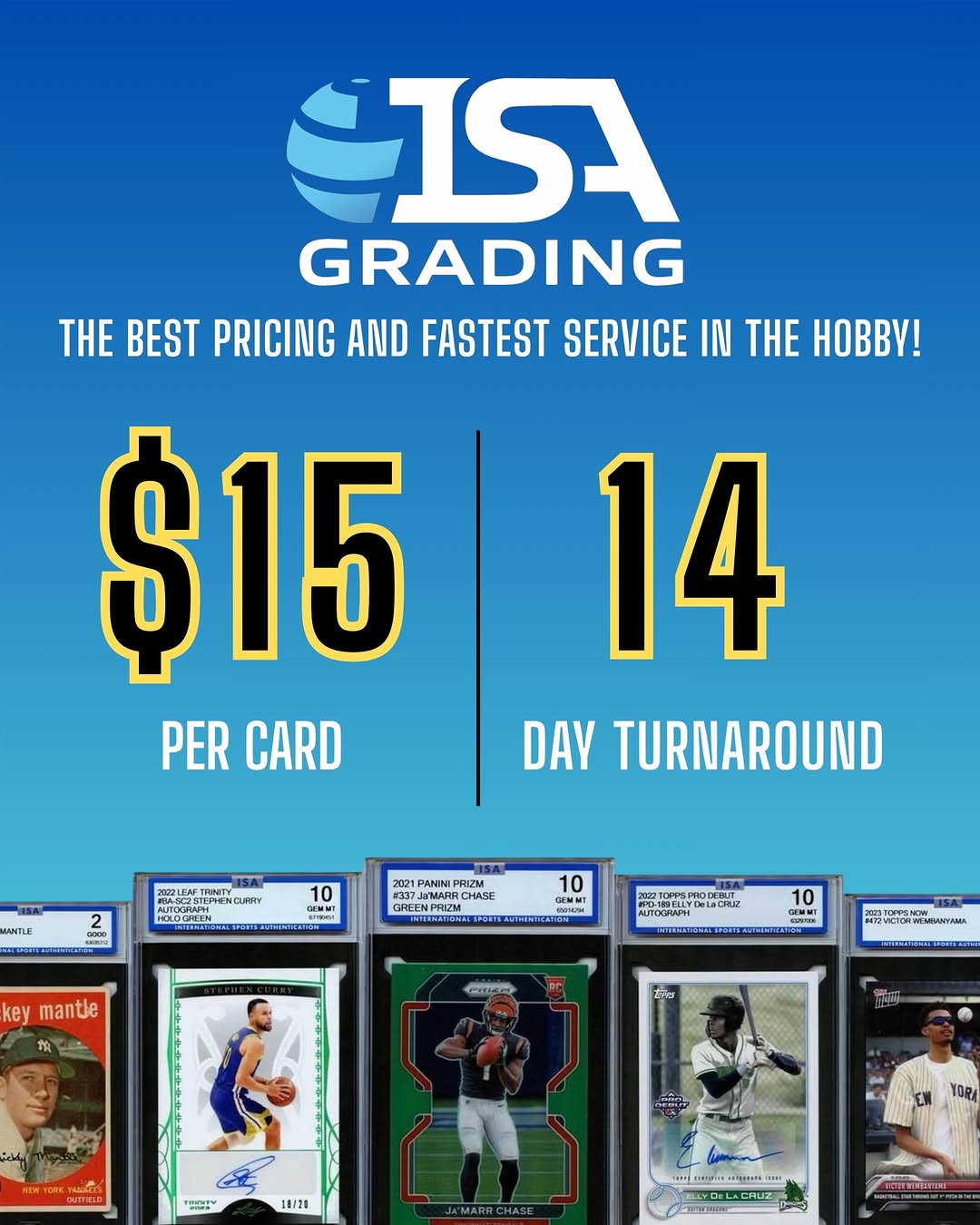
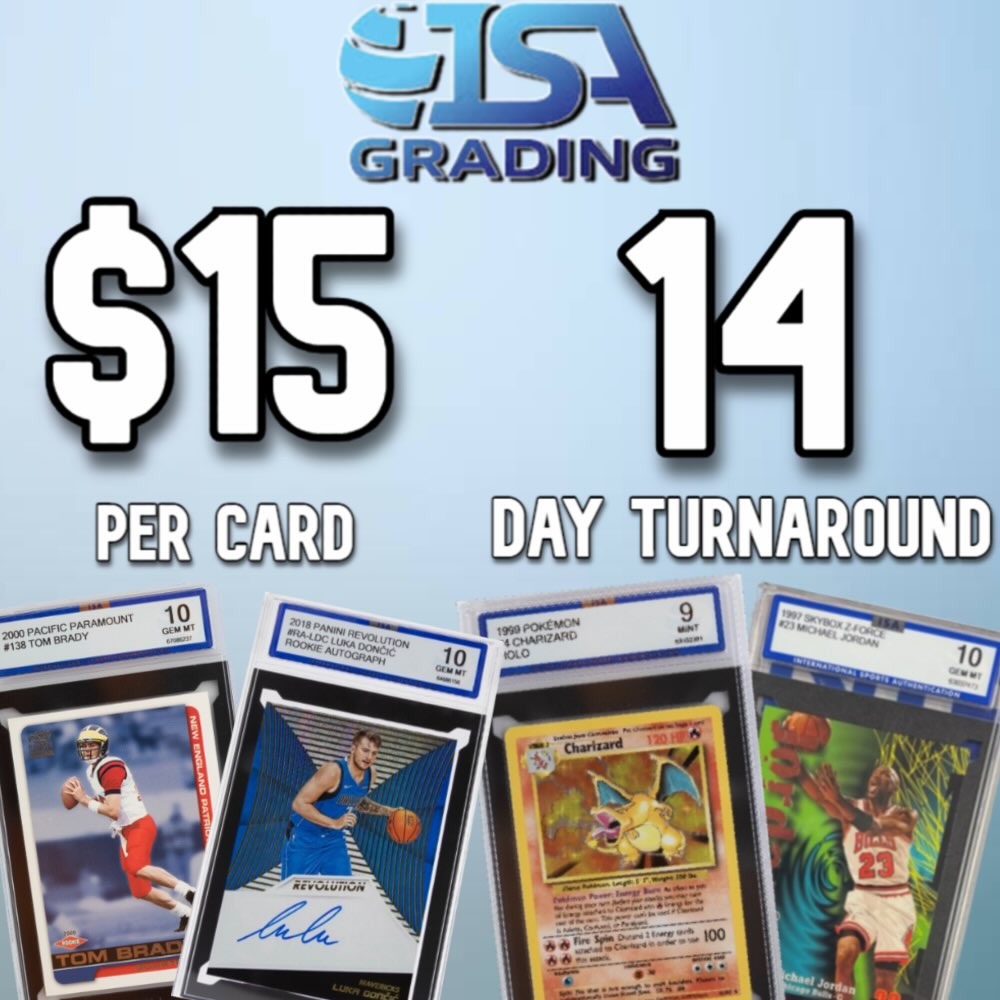
ISA Grading’s current active service is $15 per card, with a 10 card minimum, a 14 day turnaround, and no upcharges. That straightforward structure can help collectors calculate grading expenses before sending a group of cards. Collectors interested in the pricing model can read more about the value of no upcharge card grading.
No upcharges can be particularly relevant when submitting a card that might receive a strong grade or attract greater buyer interest. The benefit is budgeting clarity, not a guarantee of a particular grade or resale result. Grading fees are only one part of a card’s potential profitability.
Evaluate turnaround time realistically
Turnaround is important when cards are being prepared for a show, an upcoming season, or a planned sales campaign. Look for the provider’s currently published turnaround rather than relying on an old forum post or social media comment. Service levels can change as submission volume and company capacity change.
ISA currently offers a 14 day card grading turnaround through its active $15 service. Collectors seeking fast card grading should still plan for transit time before and after grading. The grading turnaround and the total time a card is away from the owner are related, but they are not necessarily identical.
Read the grading scale before submitting
Every collector should understand how a company evaluates card condition grading. Review the provider’s scale, terminology, and grade descriptions before choosing cards for submission. ISA publishes its standards on the grading scale page.
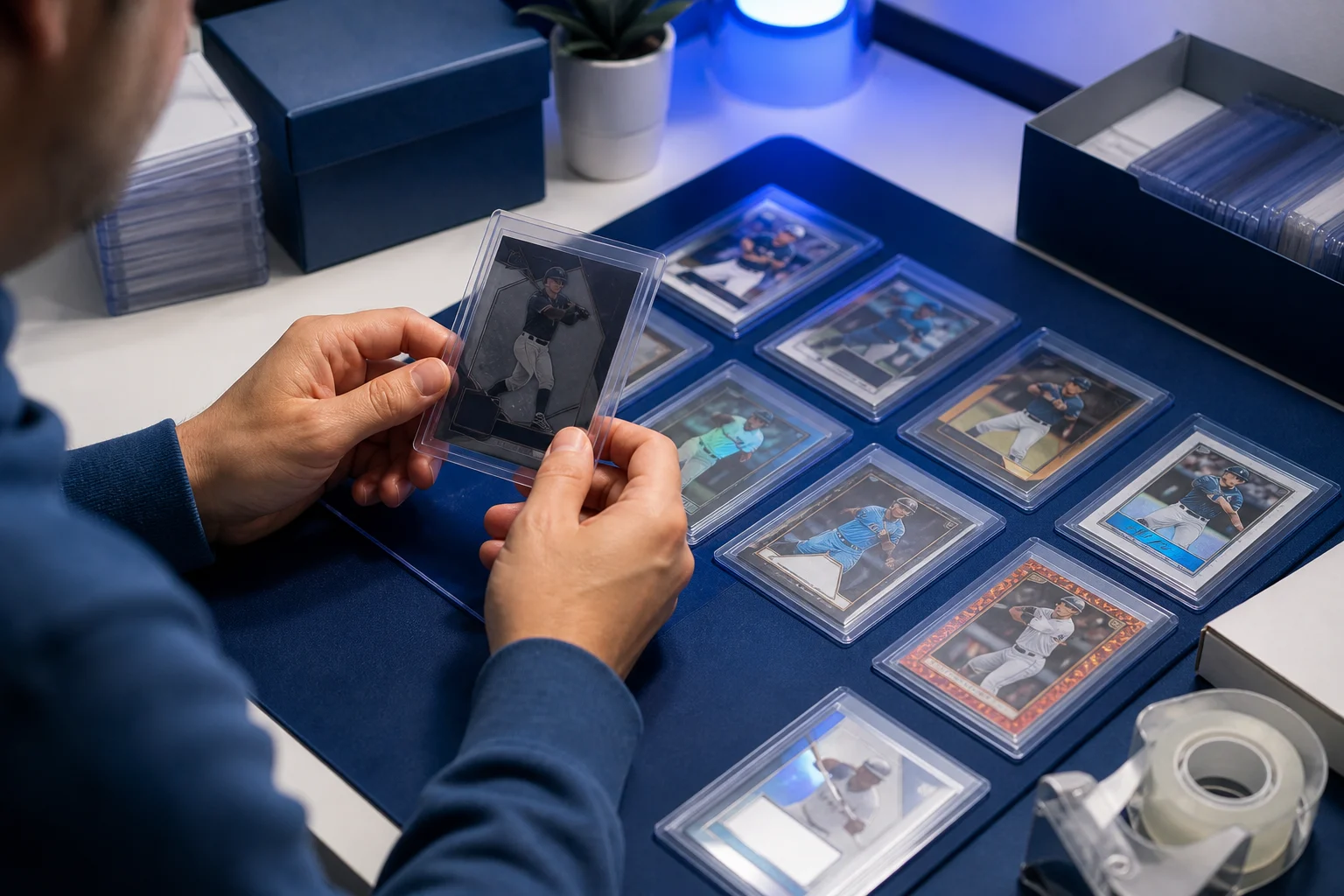
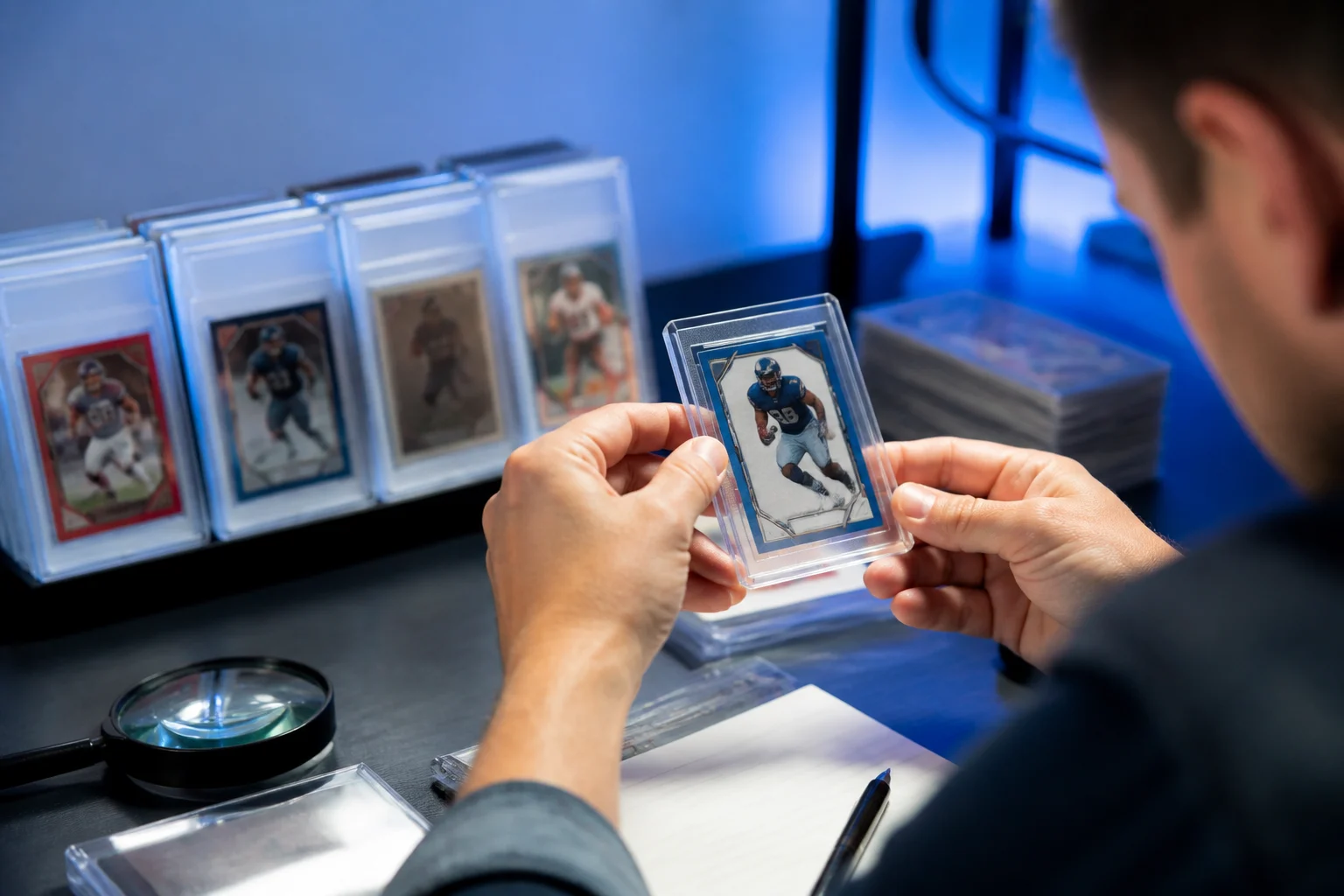
Pregrading at home does not ensure that a professional grader will assign the same result. It does, however, help identify visible issues and avoid submitting cards that do not fit the collector’s goals. Examine centering, surfaces, print quality, card corners, and card edges under bright, indirect light. Tilt glossy cards carefully to reveal scratches, dents, dimples, or roller marks that may disappear when viewed straight on.
Vintage cards require additional caution. Natural aging is not the same as damage, and older production methods can create characteristics that differ from modern cards. Avoid trimming, recoloring, pressing, adding gloss, or attempting other alterations. If a card’s history or condition is uncertain, preserve it as found and let the grading and sports card authentication process evaluate it.
Consider card protection and slab presentation
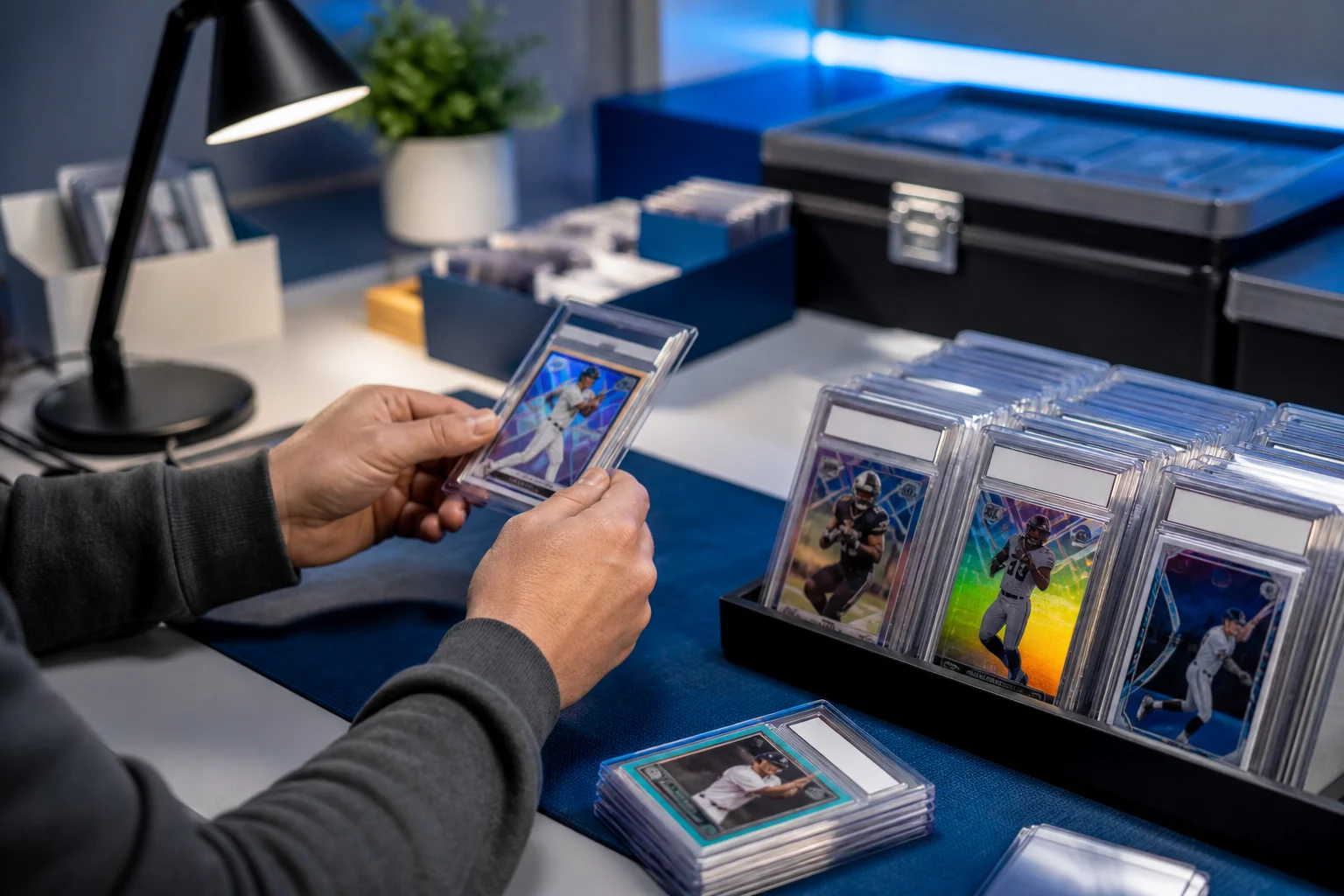
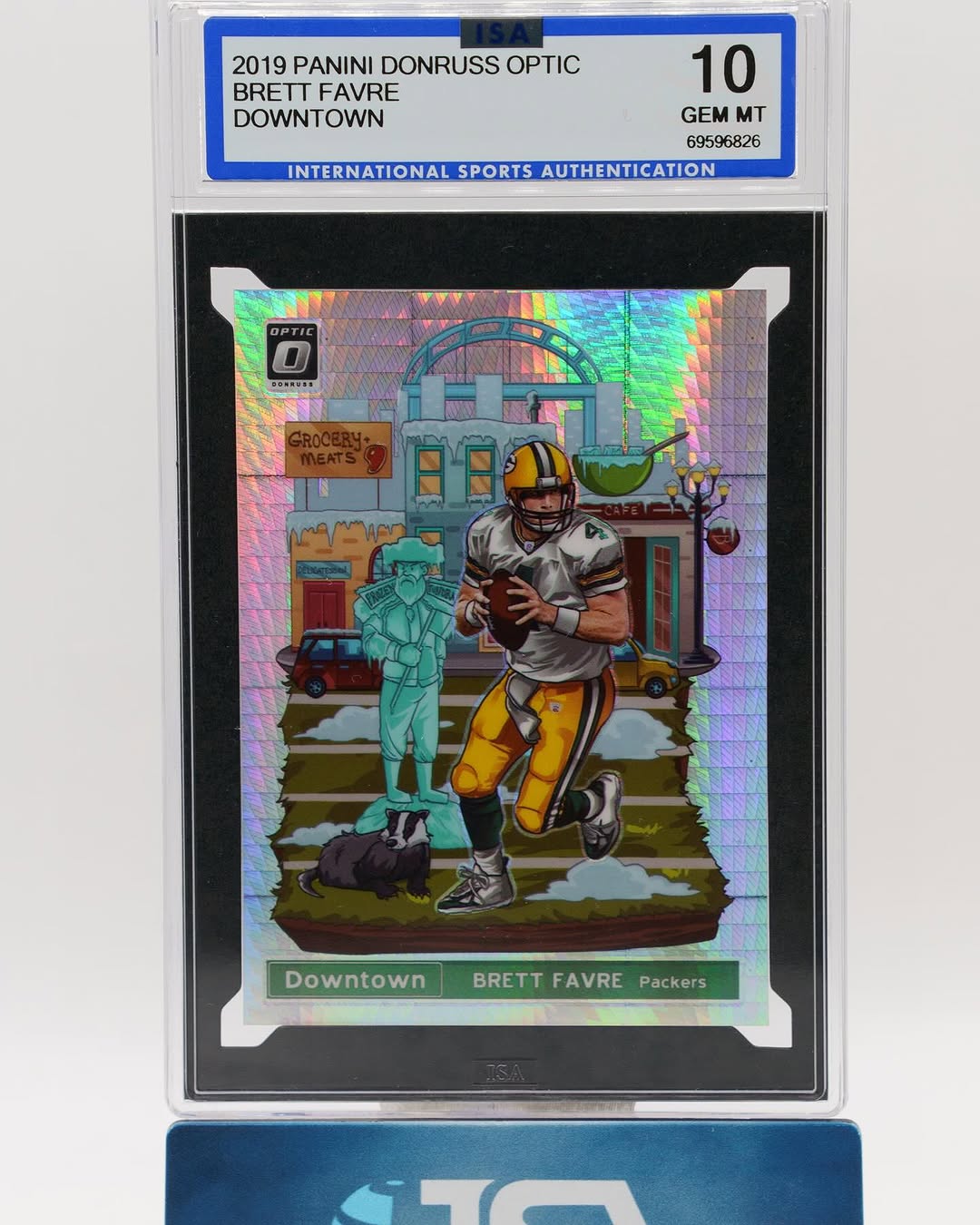
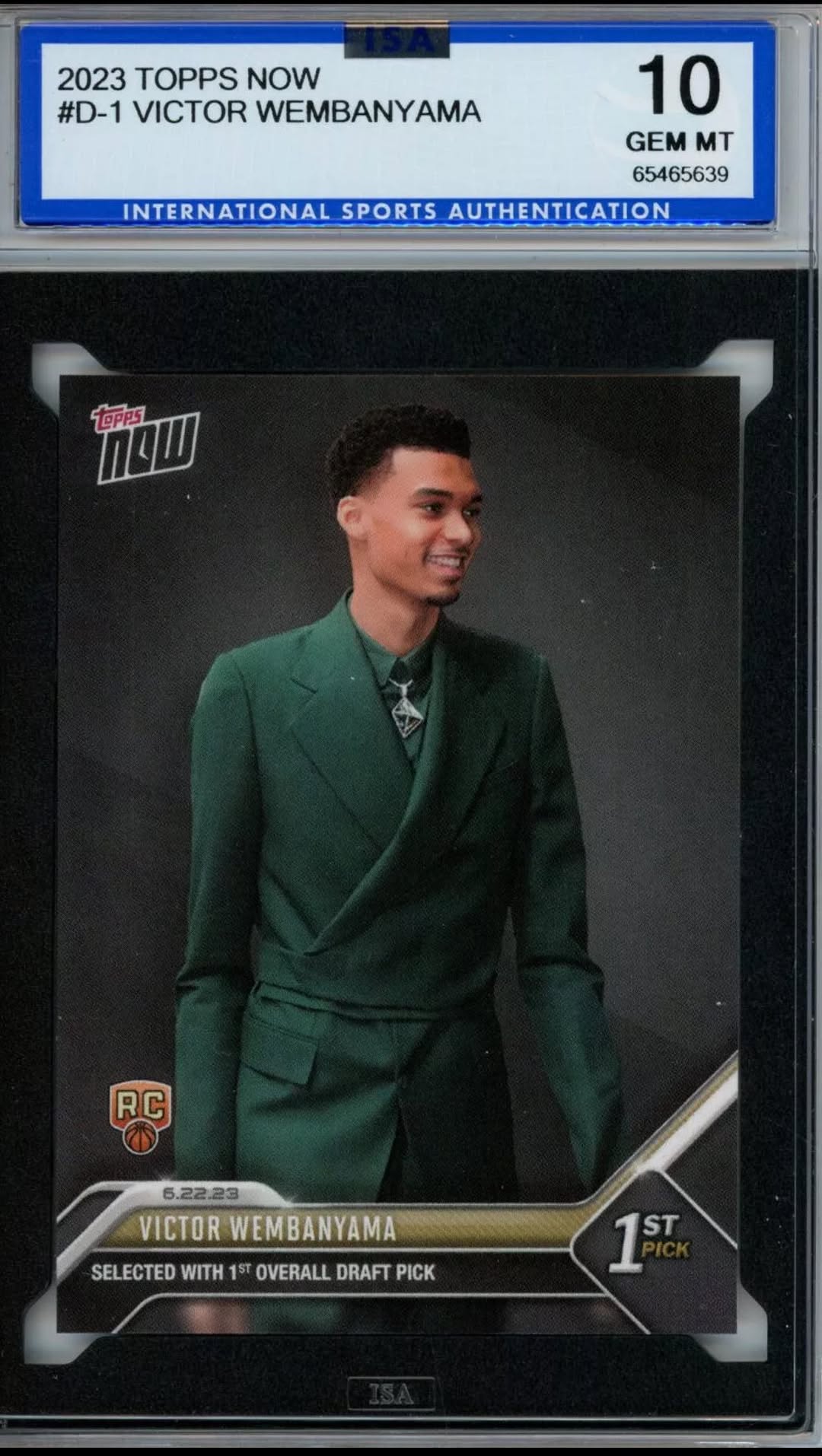
Trading card slabs should protect the enclosed card while making its identity and grade easy to read. When comparing holders, look at card stability, label clarity, construction, and how the slab fits the storage boxes, display stands, or cases you already use.
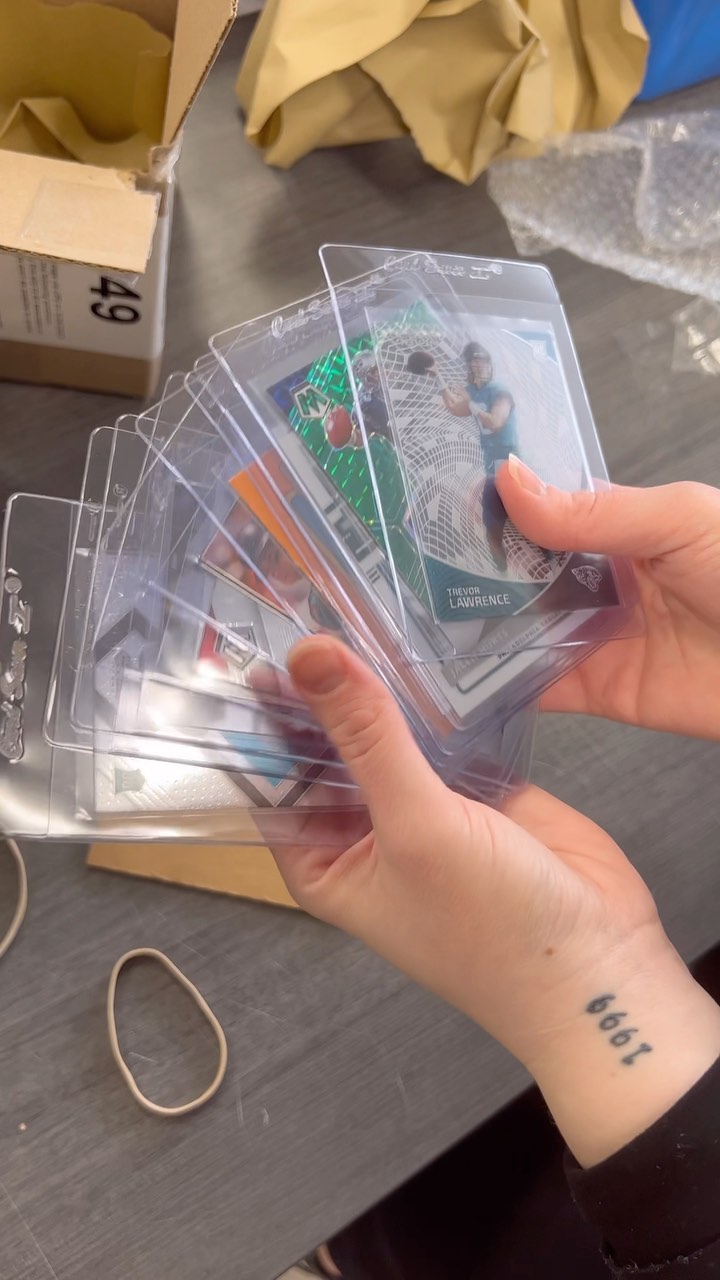
Protection also starts before the card reaches the grading company. Use clean hands, work on a clear surface, and avoid forcing a card into a tight sleeve. A clean penny sleeve and an appropriately sized semi rigid holder are commonly used for submissions, but collectors should always follow the grading company’s current packaging and shipping instructions.
Do not place adhesive directly on a card sleeve where it could catch the card during removal. Thick cards, die cut cards, and delicate vintage issues may need extra attention. The goal is to limit movement and pressure without making the card difficult to remove safely.
Check certificate verification tools
Certificate verification gives collectors and prospective buyers a way to compare a slab’s certification number with the grading company’s record. ISA provides a certificate verification page on its website.
Verification is useful when buying or selling graded cards, but it should be used carefully. Confirm that the certification details align with the card and label in front of you. Review the player or subject, year, set, card number, variation, and grade when those details are available. A certificate lookup supports due diligence, but it is not a substitute for inspecting the actual slab and card.
Understand what ISA currently offers
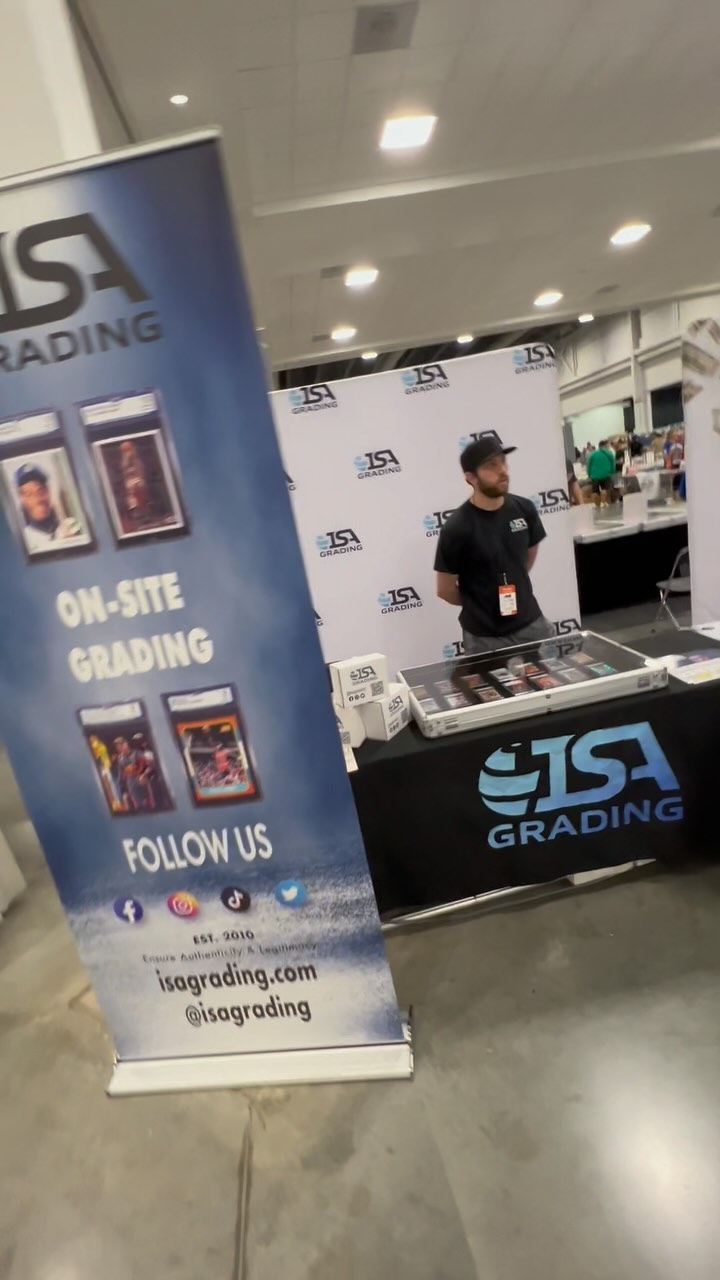
ISA Grading, also known as International Sports Authentication, provides sports card grading and authentication for collectors, dealers, and sellers. Its current active service offers $15 card grading, a 14 day turnaround, a 10 card minimum, and no upcharges.
Those details can make ISA worth comparing when predictable grading costs and a published turnaround are important. For a broader framework, collectors can review how to choose the right sports card grading company. A company’s fit should be evaluated card by card and submission by submission.
Collectors ready to review the current process can visit the ISA submission page. Read all active instructions before packaging a shipment, even if you have submitted cards previously. Current terms are more dependable than saved instructions or advice from an older video.
Prepare a focused grading submission
A disciplined submission begins with sorting. Separate cards into personal collection pieces, likely sales inventory, uncertain candidates, and cards that need more research. This prevents an exciting pull or popular player from automatically becoming a grading candidate without a condition review.
- Identify the card accurately. Record the year, manufacturer, set, card number, parallel, variation, and player or character.
- Inspect the front and back. Check centering, surfaces, card corners, card edges, print defects, stains, creases, dents, and writing.
- Research the likely market. Compare recent sales of the same card in raw and graded condition. Avoid using unsold asking prices as the only measure.
- Estimate total costs. Include the grading fee, shipping, insurance choices, marketplace fees, and supplies relevant to the submission.
- Protect each card. Follow the current submission instructions and avoid unnecessary cleaning or handling.
- Document the shipment. Keep an inventory and take clear images of higher importance cards before packaging them.
This process works for sports cards and trading card grading submissions alike. It also helps collectors avoid grading every card simply because it appears clean. Magnification and angled lighting frequently reveal flaws that are not visible in a binder or top loader.
Plan for selling graded cards
A grade can make a card’s condition easier to communicate, but it does not guarantee a sale, a profit, or a particular price. Demand still depends on the player or character, set, scarcity, timing, eye appeal, and the buyers active in that market.
When listing a graded card, use the exact information shown on the label. Include clear photographs of the front and back of both the card and slab. Show the certification number unless there is a specific security reason not to do so, and direct buyers to the appropriate certificate verification tool. Avoid descriptions that imply a grading company guarantees future value.
Market acceptance can differ by card category, price level, and selling venue. Some buyers collect a particular holder, while others focus on the card, assigned grade, and total price. Dealers should study completed sales in the marketplace where they expect to list. ISA’s collector reviews can provide additional perspectives, but individual experiences and resale outcomes can vary.
Use a repeatable decision process
A productive PSA alternative search should end with a comparison based on current facts. Confirm the per card price, minimum quantity, turnaround, upcharge policy, grading scale, holder, verification system, and submission instructions. Then match those details to the card’s value, condition, purpose, and likely buyer.
ISA’s current $15 per card service, 14 day turnaround, 10 card minimum, and no upcharges offer a clear set of terms to evaluate. Collectors who still have questions about eligible cards, preparation, or the submission process can consult the ISA FAQ page before sending their cards.
Submit Cards to ISA Grading
Collectors ready to use ISA Grading can start on the submission page. The current active service is $15 per card with a 14 day turnaround, no upcharges, and a 10 card minimum.
Frequently Asked Questions
What should collectors compare when searching for a PSA alternative?
Compare the current grading fee, submission minimum, turnaround, upcharge policy, grading scale, slab design, certificate verification tools, submission instructions, and acceptance within your intended sales market.
What is ISA Grading’s current service price and turnaround?
ISA Grading’s current active service is $15 per card with a 14 day turnaround, a 10 card minimum, and no upcharges. Review the submission page before sending cards to confirm current instructions.
Does searching for PSA shutting down mean PSA is closing permanently?
No. That phrase may reflect a rumor, concern, hypothetical planning scenario, temporary disruption, or submission pause. Collectors should verify current information directly with PSA rather than treating a search phrase as confirmed news.
How should I prepare cards for grading?
Inspect the front and back under good lighting, check centering, surfaces, corners, and edges, and avoid alterations or aggressive cleaning. Follow the grading company’s current instructions for sleeves, holders, packaging, and shipping.
What does certificate verification tell a buyer?
Certificate verification allows a buyer to compare a slab’s certification number with the grading company’s record. Buyers should also inspect the slab and confirm that the card details, label information, and certification record align.