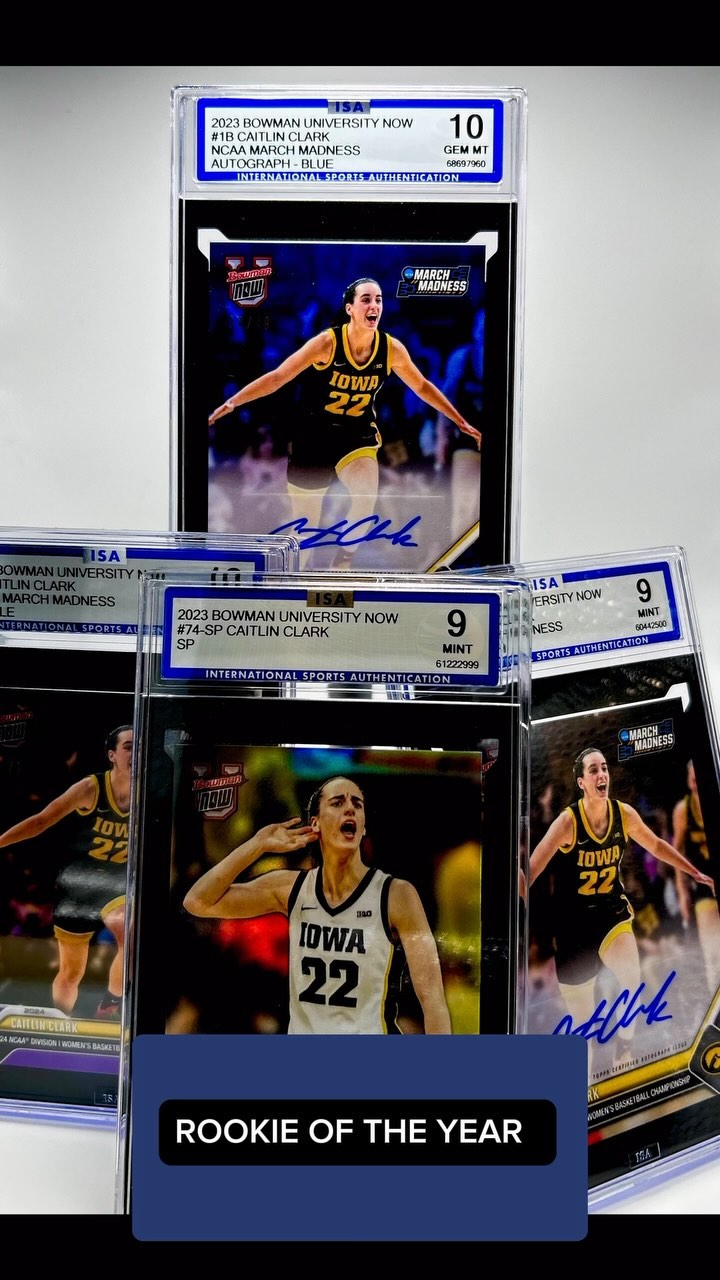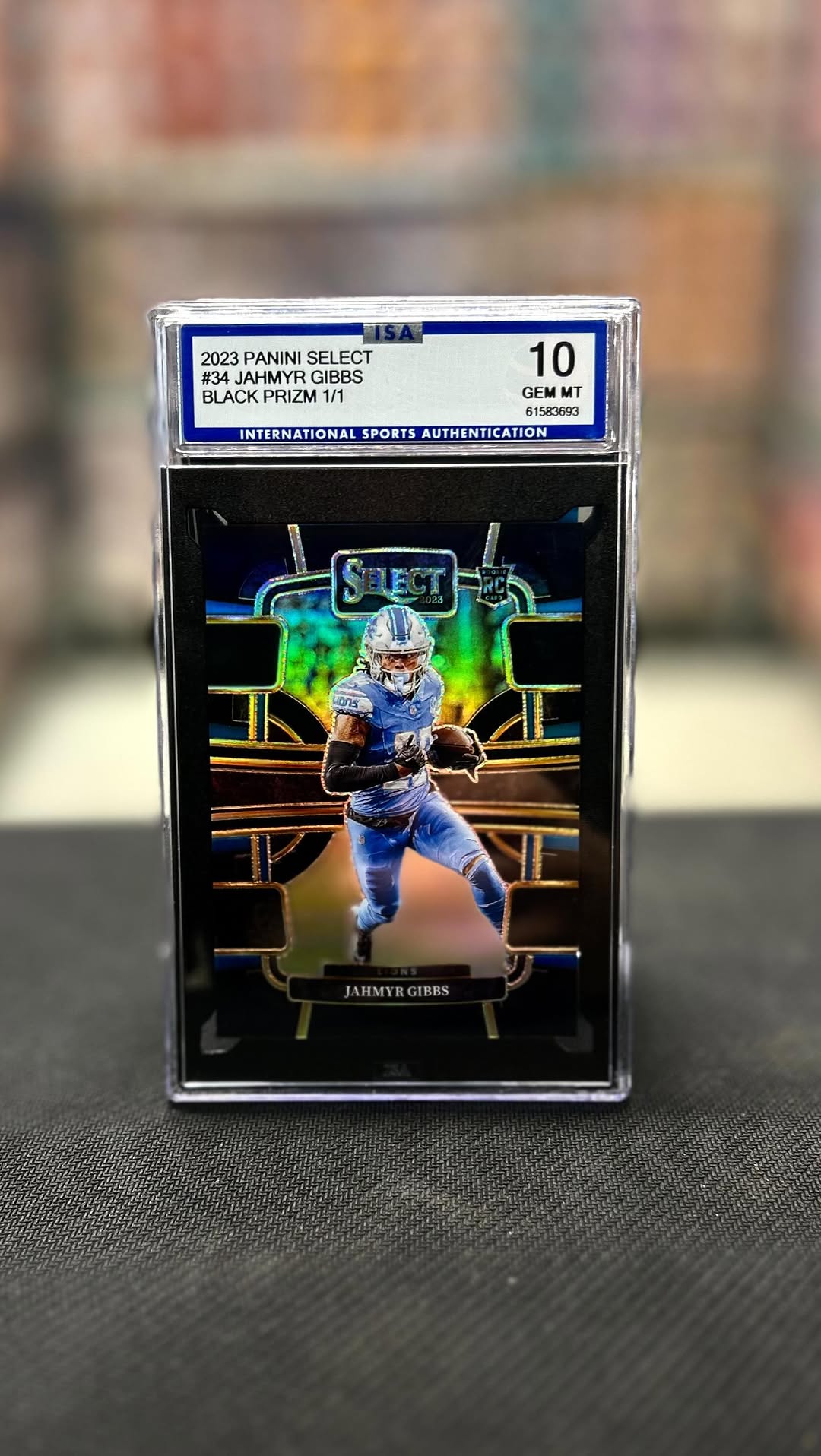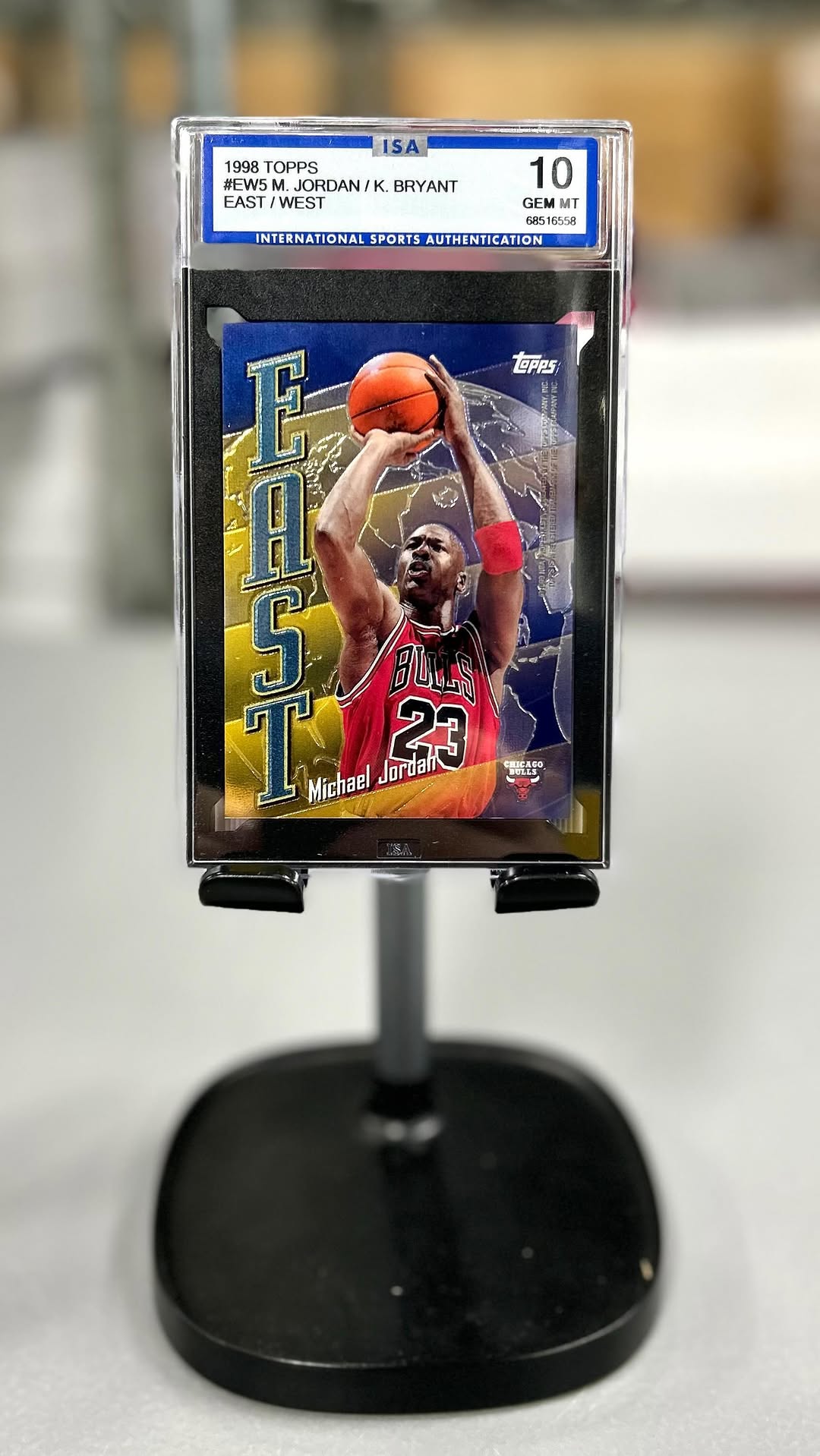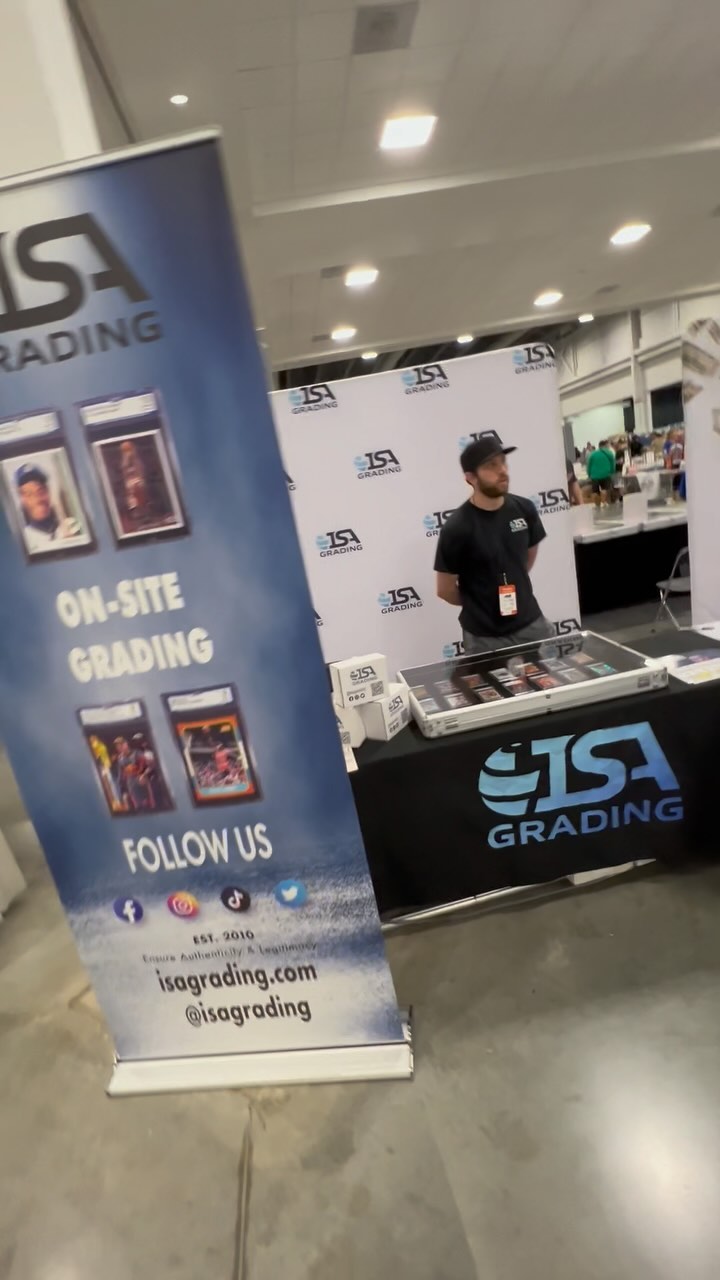
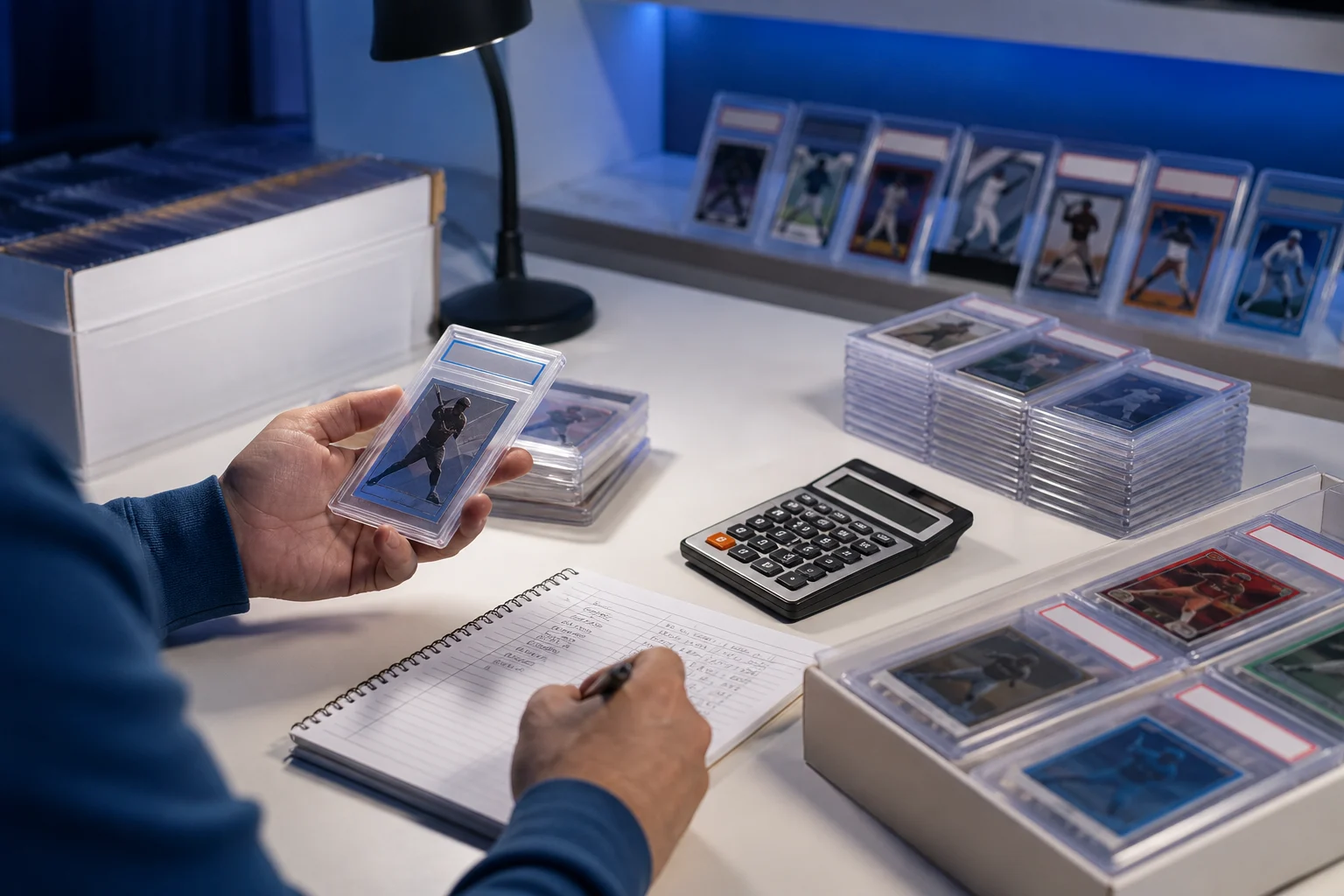
A grading submission starts with decisions: which cards to send, how much to spend, and when you need them back. Those decisions become harder when you cannot confidently calculate the grading fee before shipping your cards.
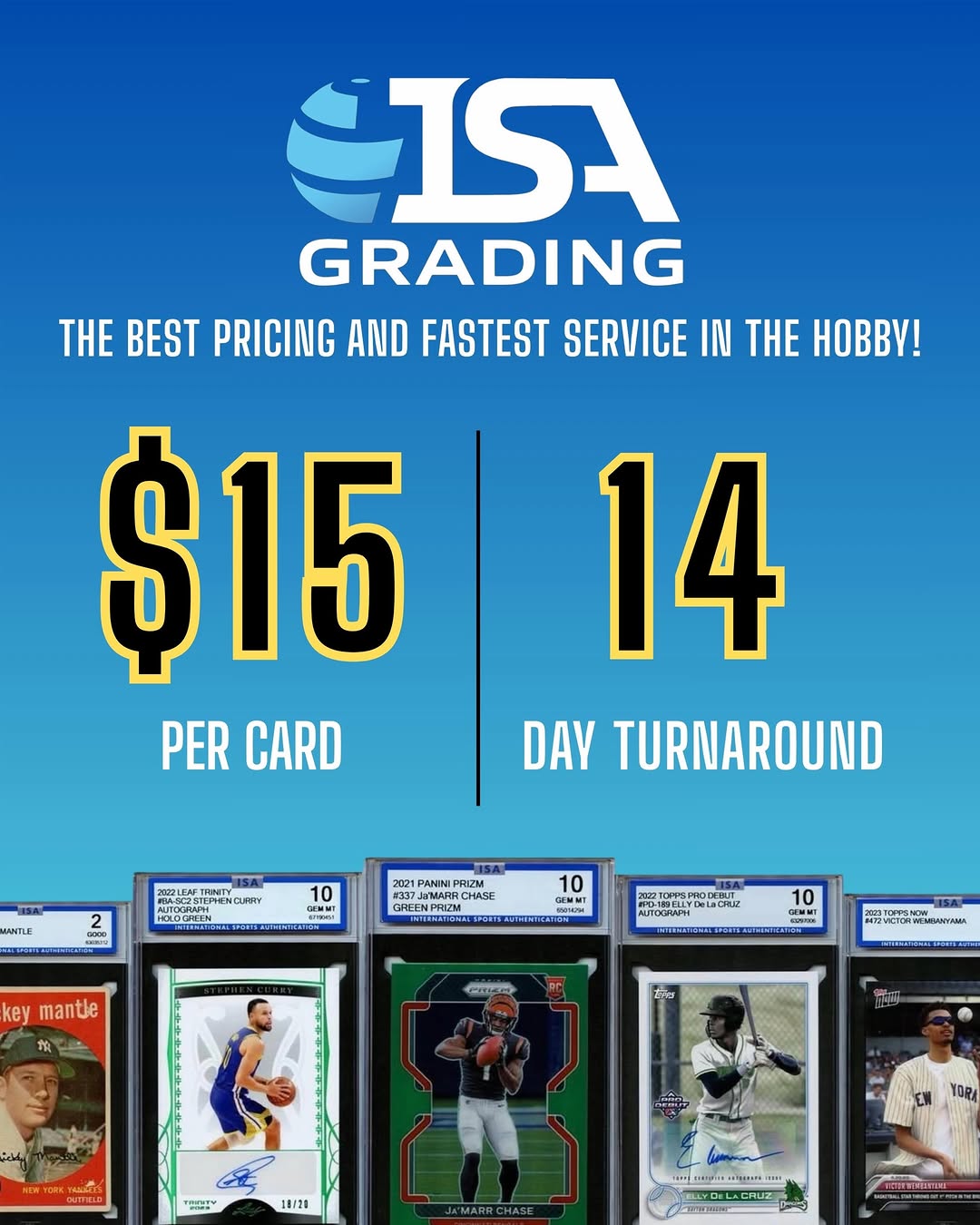
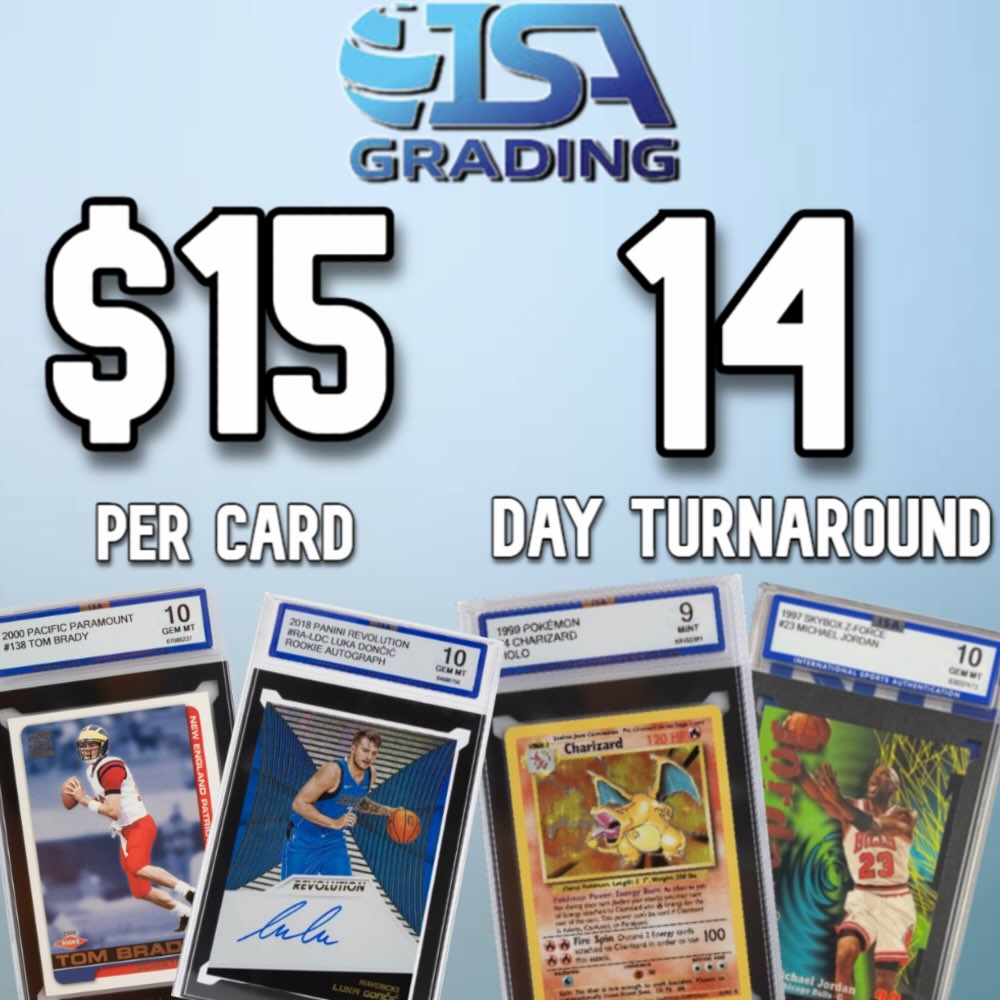
No upcharge card grading removes one variable from that process. ISA Grading, also known as International Sports Authentication, currently offers sports card grading and authentication at $15 per card, with a 10 card minimum, a 14 day turnaround, and no upcharges. That gives collectors and dealers a straightforward starting point for budgeting.
The grading fee is not the entire cost of a submission or sale. Shipping, packing materials, and selling expenses still deserve attention. But knowing the per-card charge makes it easier to evaluate those other costs without guessing at the core service fee.
What No Upcharge Grading Means for Your Budget
An upcharge is an additional grading charge that can arise under a service's pricing rules, such as rules tied to a card's assessed value. Not every card grading service uses the same pricing structure, so collectors should always read the terms of the service they select.
With ISA's current no upcharge offering, you can calculate the grading portion of your submission by multiplying the number of cards by $15. You do not need to build a value-based grading surcharge into that calculation. A stronger-than-expected grade does not trigger an ISA grading upcharge.
This distinction is useful for cards with uncertain value. A rookie may have limited sales history, or a parallel may have few comparable transactions. No upcharges do not make those cards easier to price, but they keep uncertainty about market value separate from the grading fee.
Start With Simple Submission Math
- 10 cards: $150 in grading fees.
- 15 cards: $225 in grading fees.
- 20 cards: $300 in grading fees.
- 30 cards: $450 in grading fees.
These totals cover grading fees only. Review the current ISA submission instructions for applicable shipping charges, payment details, and other requirements before sending cards. Keeping service fees separate from delivery and preparation costs prevents a clear price from becoming an incomplete budget.
Build a Budget Around the Full Submission
For a collector, the goal may be preserving favorite cards in holders. For a dealer, it may be moving inventory at a workable margin. Both benefit from a written budget that accounts for more than the advertised grading rate.
Use a worksheet with the card name, acquisition cost, grading fee, allocated shipping expense, and intended outcome. If you already own the card, its purchase cost may not affect today's cash requirement, but it still matters when calculating profit from a later sale.
- Count eligible cards. Build a submission that meets ISA's current 10 card minimum.
- Calculate grading fees. Multiply the card count by $15.
- Add submission expenses. Include packing materials, shipping, and any insurance you choose to purchase.
- Allow for selling costs. Consider marketplace fees, delivery to a buyer, and other relevant expenses.
- Keep cash available. Avoid committing money you need for other purchases or obligations while cards are away.
For example, if your separately calculated submission expenses total $40 for a 10 card order, that adds $4 per card. Your grading and submission allocation becomes $19 per card before acquisition and selling costs. The $40 figure is illustrative, not an ISA shipping quote.
Choose Cards for Their Purpose, Not Just Their Potential Grade
A predictable fee helps you compare candidates, but it does not mean every card should be graded. A useful selection process starts by asking what you want the holder and condition assessment to accomplish.
For personal collections, documentation and card protection may matter more than resale. For inventory, compare recent completed sales of the same card in relevant grades. Asking prices alone do not show what buyers have actually paid. Account for differences in grading company, card variation, and sale date.
Whether you are considering baseball card grading, football card grading, or basketball card grading, examine each card individually. A popular player does not erase condition issues, and a less expensive card may still be worth grading for a collector who values organized, protected presentation.
Rookie card grading requires the same discipline. Do not calculate your entire budget around the highest possible grade. Compare several plausible outcomes, including a lower grade or a resale result that does not recover your expenses.
Inspect Condition Before You Commit
Good preparation is not about changing a card. It is about recognizing visible condition issues before you spend money. Card condition grading considers multiple characteristics, and a quick glance at the front rarely tells the whole story.
- Card corners: Look for whitening, rounding, bends, and small touches that may be easier to see against a contrasting background.
- Edges: Check for chipping, rough areas, and visible wear along both sides.
- Surface: Inspect for scratches, print lines, stains, indentations, and other marks under suitable lighting.
- Card centering: Compare the borders and image placement on the front and back where the design allows.
Use ISA's grading scale to understand its published grade descriptions. A home inspection can help you sort candidates, but it is not a guarantee of the grade a professional examination will produce.
Avoid abrasive cleaning, pressing, trimming, or other attempts to improve a card's appearance. These actions can damage or alter the card. For a broader preparation checklist, read Before You Grade: A Collector's Guide to Sports and Pokemon Cards.
Use the 10 Card Minimum as a Planning Threshold
ISA's current minimum is 10 cards, making the minimum grading-fee commitment $150. Treat that as a threshold to plan around, not a reason to send weak candidates just to fill an order.
If you have six cards you genuinely want graded, consider waiting until you have four more suitable candidates. Adding cards with little personal or commercial purpose can cost more than the convenience is worth. A fixed price is most useful when you remain selective.
Dealers can group submissions by inventory goals, such as a set of baseball prospects or cards intended for an upcoming show. Keep an itemized list and photographs so you can reconcile the returned cards with your records.
Plan Around Turnaround Without Promising a Sale Date
Price is only one part of a grading budget. Time matters because cards in a submission are not available to photograph in their finished holders, display at a show, or ship immediately to a buyer.
ISA currently lists a 14 day turnaround. When evaluating a 14 day card grading turnaround, confirm how the service measures that period and allow additional time for shipping in both directions. Do not assume the stated service turnaround equals the total time from your doorstep back to your doorstep.
Fast card grading can support inventory planning, but it cannot guarantee favorable market timing. Player performance, collector demand, and competing listings can change while cards are away. Avoid promising delivery to a buyer before you have the graded card in hand.
For more on connecting submission timing to a selling plan, see The Timing Edge: How Faster Grading Can Support a Smarter Card Sale.
Account for Card Protection Before and After Grading
Card protection begins before a slab is involved. Follow the current packing instructions, use appropriate individual holders, and secure the shipment so cards cannot shift freely. Avoid packing methods that put adhesive directly against a card or require unnecessary handling to remove it.
Trading card slabs provide a rigid holder for handling, storage, and presentation. They are not a reason to ignore storage conditions. Keep graded cards away from excessive heat, moisture, and direct sunlight, and protect slab surfaces from scratches during transport.
When budgeting for trading card grading, remember the finished collection too. Storage boxes, protective sleeves for holders, and suitable display arrangements may be useful expenses, especially if you plan to transport inventory regularly.
Use Certificate Verification to Support Buyer Confidence
A buyer should be able to understand what is being offered. Clear photographs of the card, its holder, and the label make a listing easier to evaluate. Accurate descriptions help buyers distinguish the issue, player, variation, and assigned grade.
ISA offers certificate verification on its website. Buyers and sellers can use this resource to check certificate information. When purchasing, compare the available verification details with the card and label shown in the listing.
Verification is a useful reference, not a replacement for reviewing the actual item and the seller's terms. It also does not establish a market price or guarantee that a listing is legitimate. Treat it as one part of a careful buying process.
Calculate Net Proceeds Before Selling Graded Cards
A higher sale price is not automatically a higher profit. When selling graded cards, subtract the acquisition cost, grading fee, allocated submission expenses, selling fees, and delivery costs from the amount received.
Consider a hypothetical card purchased for $20 with a $15 grading fee and $4 in allocated submission expenses. Your investment is $39 before selling costs. If it sells for $50, the apparent $11 difference still needs to cover marketplace fees and any buyer-delivery expenses you pay.
No upcharges make one part of that calculation predictable. They do not promise a premium, a quick sale, or a return on your investment. Use completed sales and conservative assumptions when deciding which cards belong in your next batch.
Make the Next Submission a Deliberate Choice
If your search starts with “card grading near me” or “where should I grade my cards,” compare the actual service terms rather than proximity alone. Review pricing, minimums, turnaround, submission instructions, and the information available to buyers afterward.
The same budgeting discipline applies when researching Pokemon card grading or vintage card grading, but confirm eligibility and any special submission requirements for your specific cards before shipping. ISA's frequently asked questions are a useful starting point for reviewing submission details.
ISA's current $15 card grading service gives you a clear grading-fee calculation: choose at least 10 cards and multiply by $15, with no upcharges. Add your other expenses, allow realistic transit time, and select cards that fit your collecting or selling goals. If a detail remains unclear, contact ISA before submitting so the budget you write is based on the service you actually need.
Submit Cards to ISA Grading
Collectors ready to use ISA Grading can start on the submission page. The current active service is $15 per card with a 14 day turnaround, no upcharges, and a 10 card minimum.
Frequently Asked Questions
What does no upcharge card grading mean at ISA?
ISA's current service charges $15 per card with no upcharges. A card receiving a higher grade or having a higher value does not trigger an additional grading charge. Budget separately for shipping, packing materials, and other applicable expenses.
How much does ISA's minimum grading submission cost?
ISA currently requires a minimum of 10 cards. At $15 per card, the minimum grading-fee total is $150. That amount does not represent an all-inclusive delivered total, so review submission details and account for shipping and other expenses.
Does ISA's 14 day turnaround include shipping?
ISA currently lists a 14 day turnaround. Do not assume that equals the full door-to-door timeline. Confirm how the turnaround period is measured and allow additional time for shipping to ISA and delivery back to you.
Does grading guarantee that a card will sell for more?
No. A graded card's sale price depends on the card, assigned grade, buyer demand, and other market factors. Compare relevant completed sales and subtract acquisition, grading, shipping, and selling costs before estimating potential profit.
How can a buyer verify an ISA certificate?
Certificate verification is available on ISA's website at /certificate-verification. Compare the available certificate details with the card and holder label. Verification supports research, but it does not establish market value or replace a careful review of the item and seller.