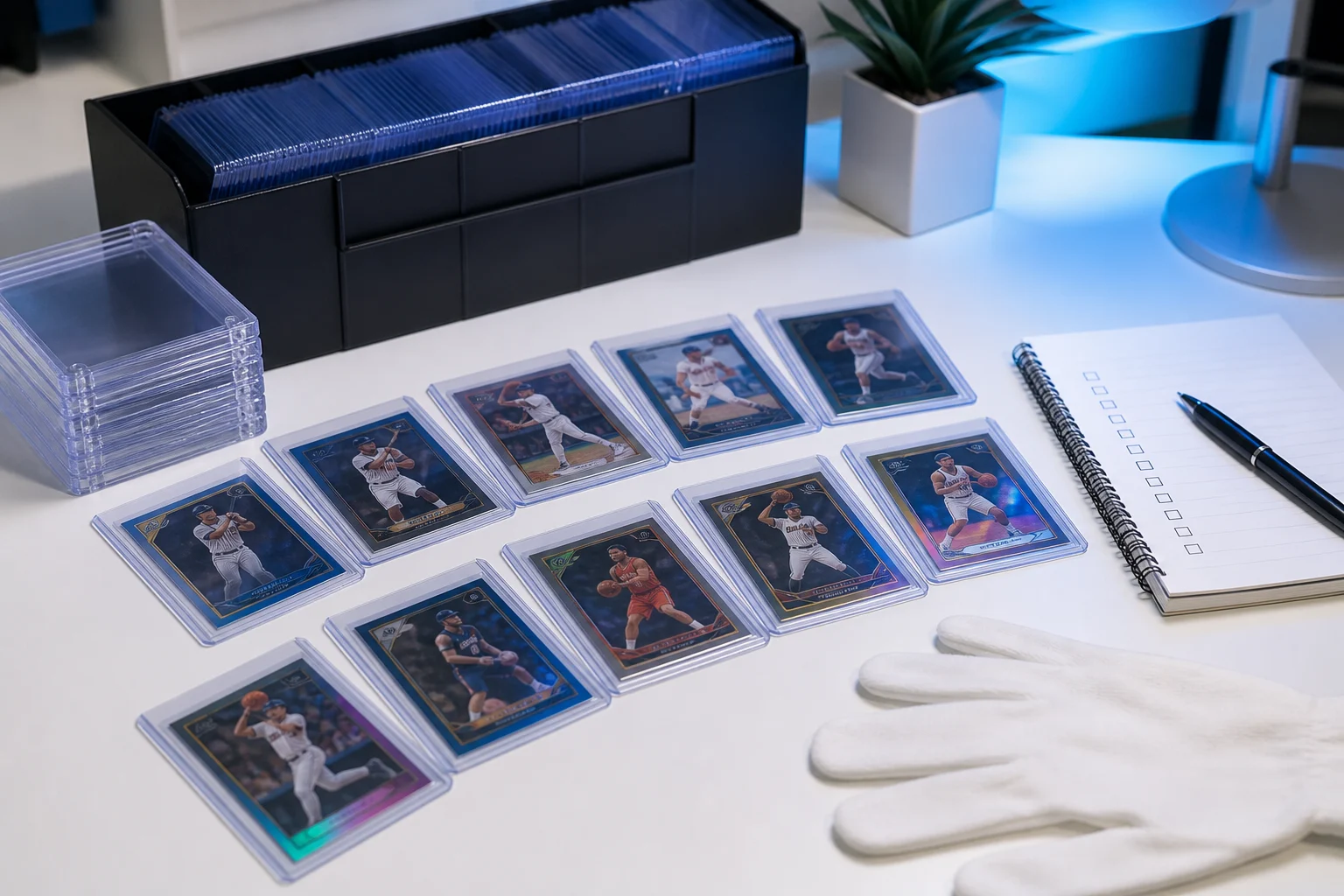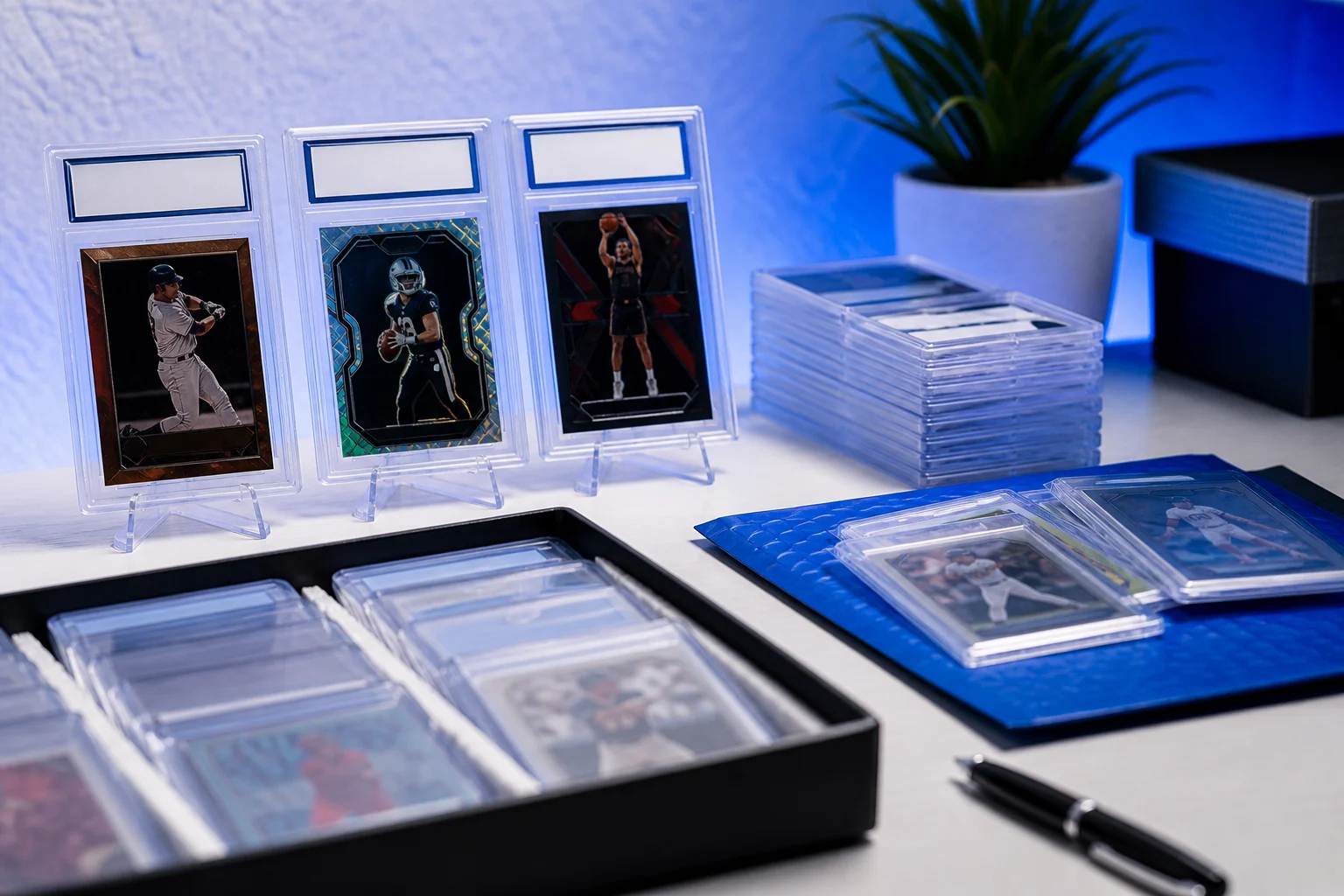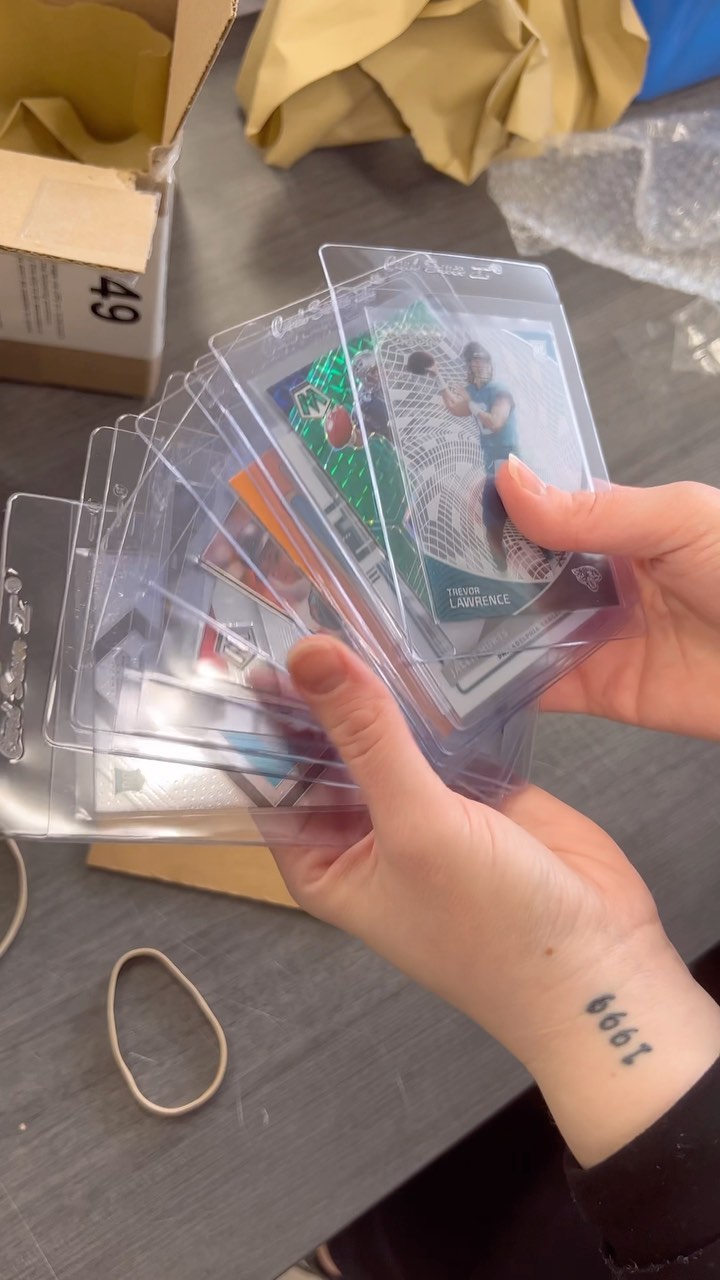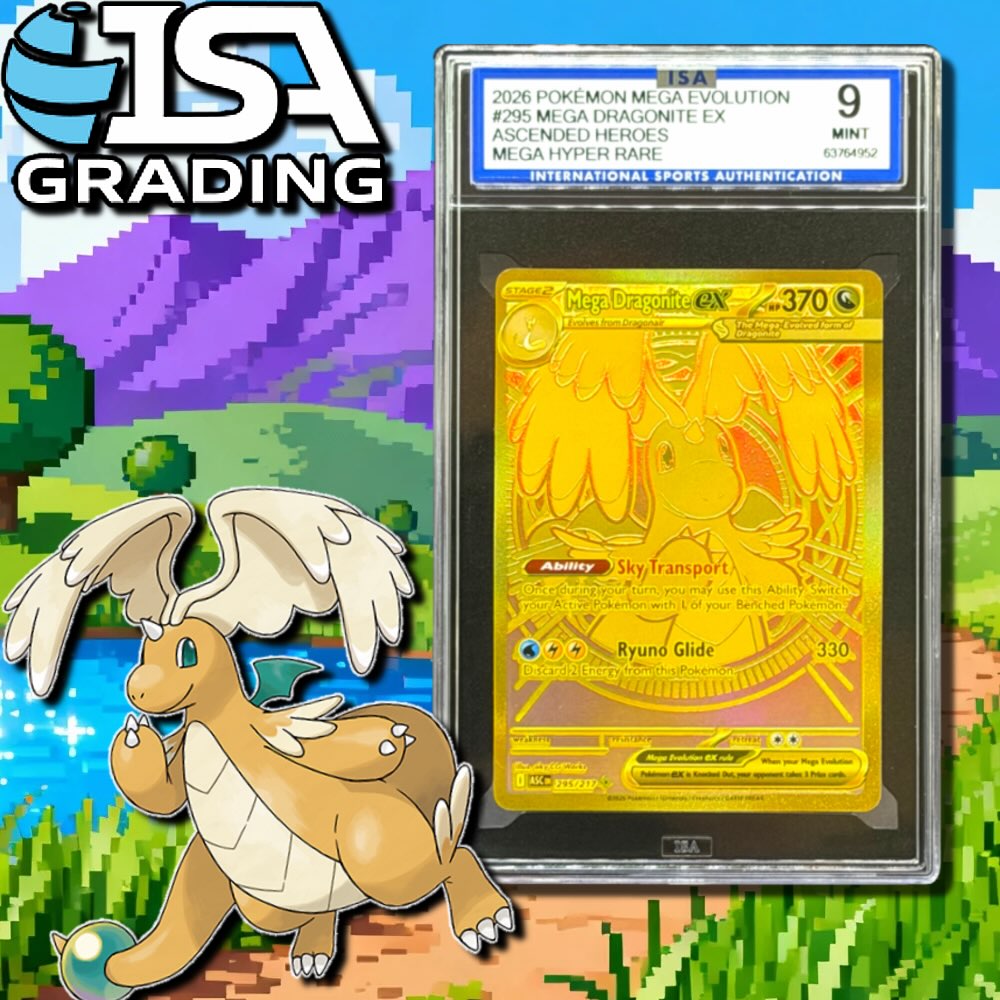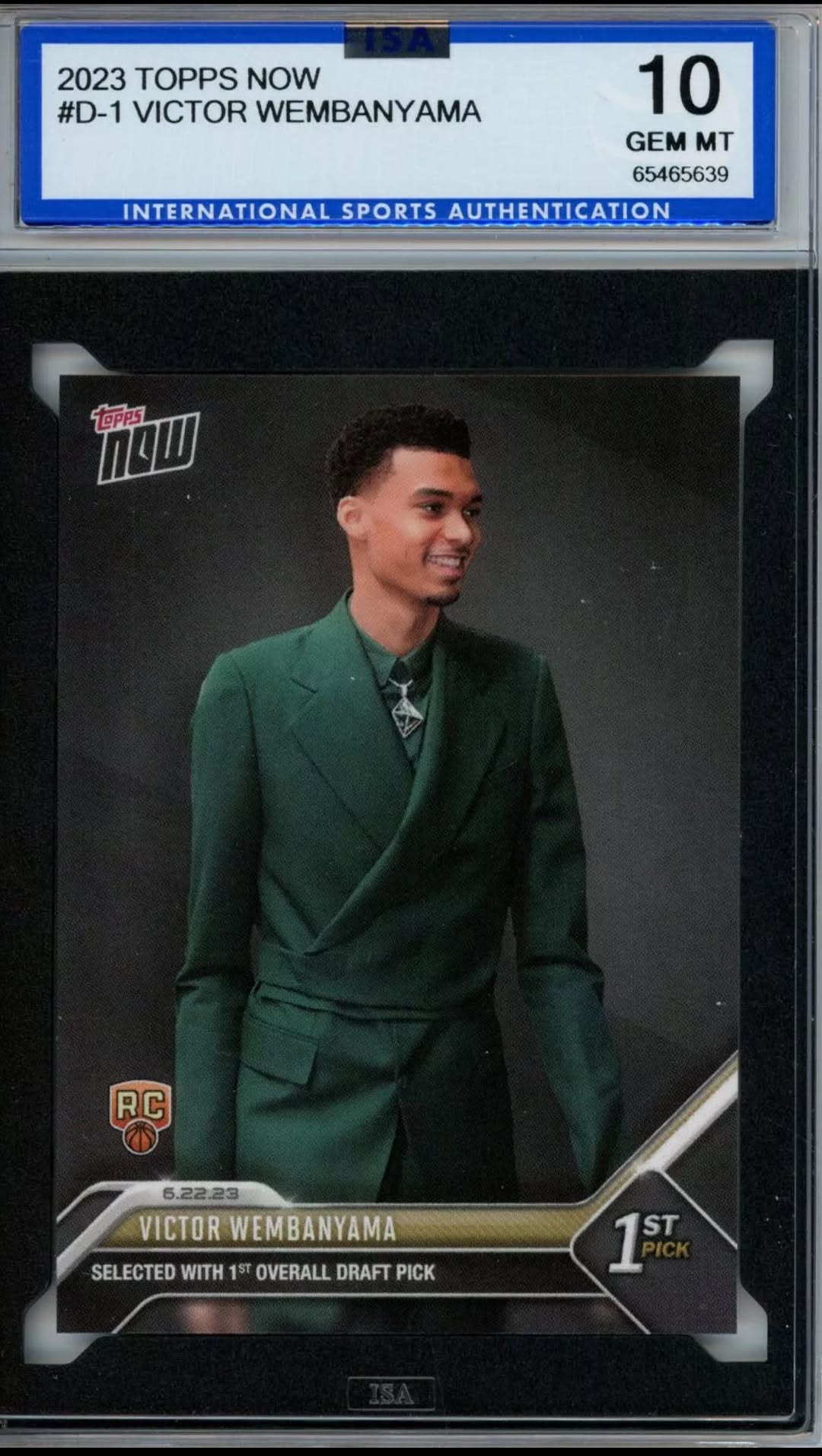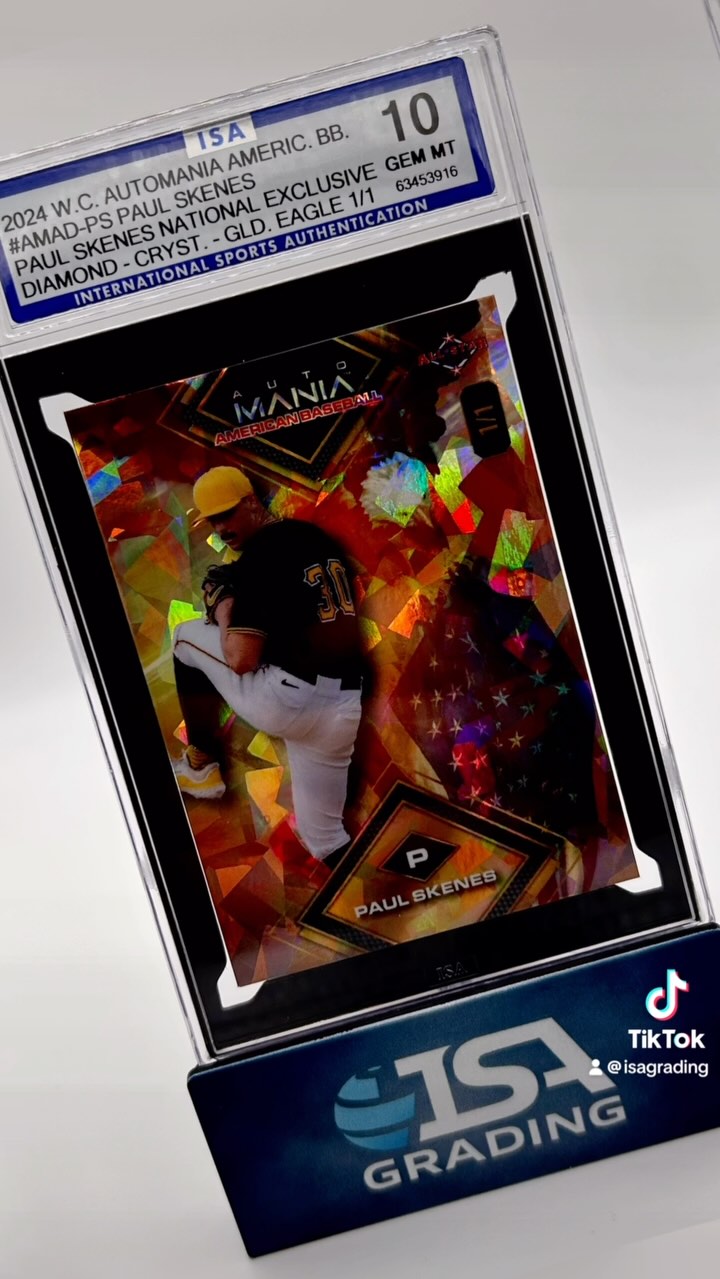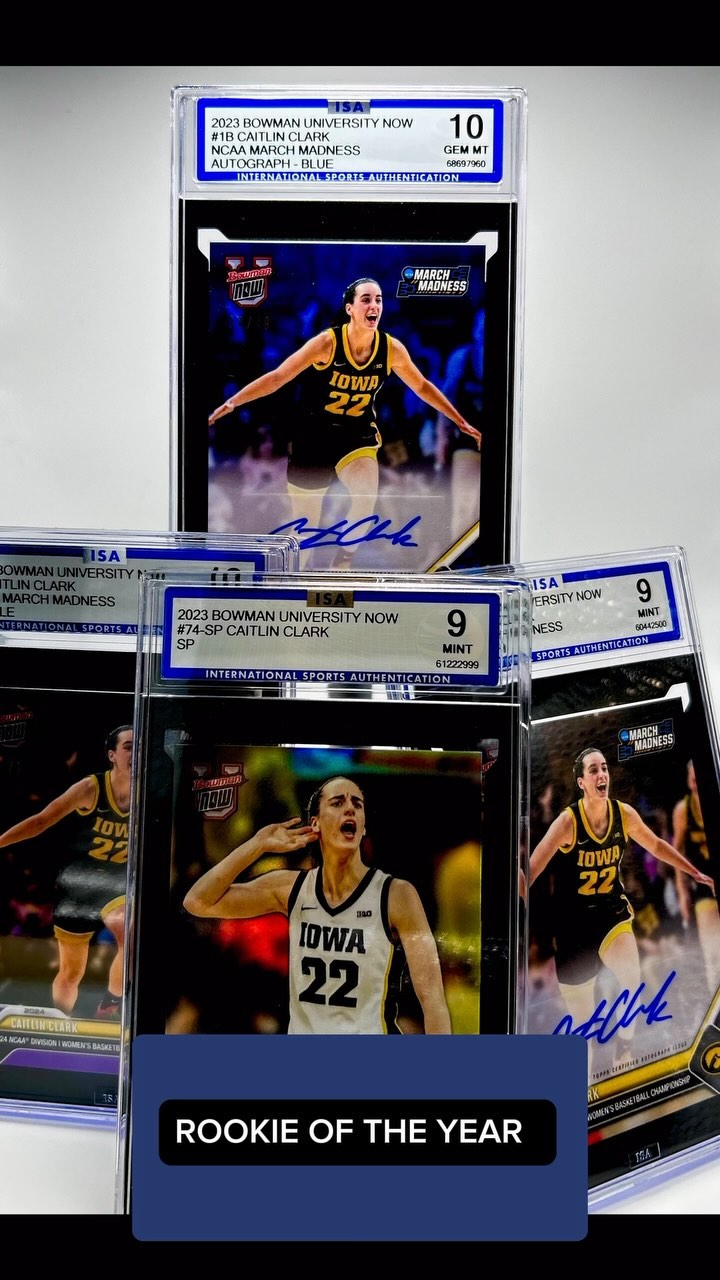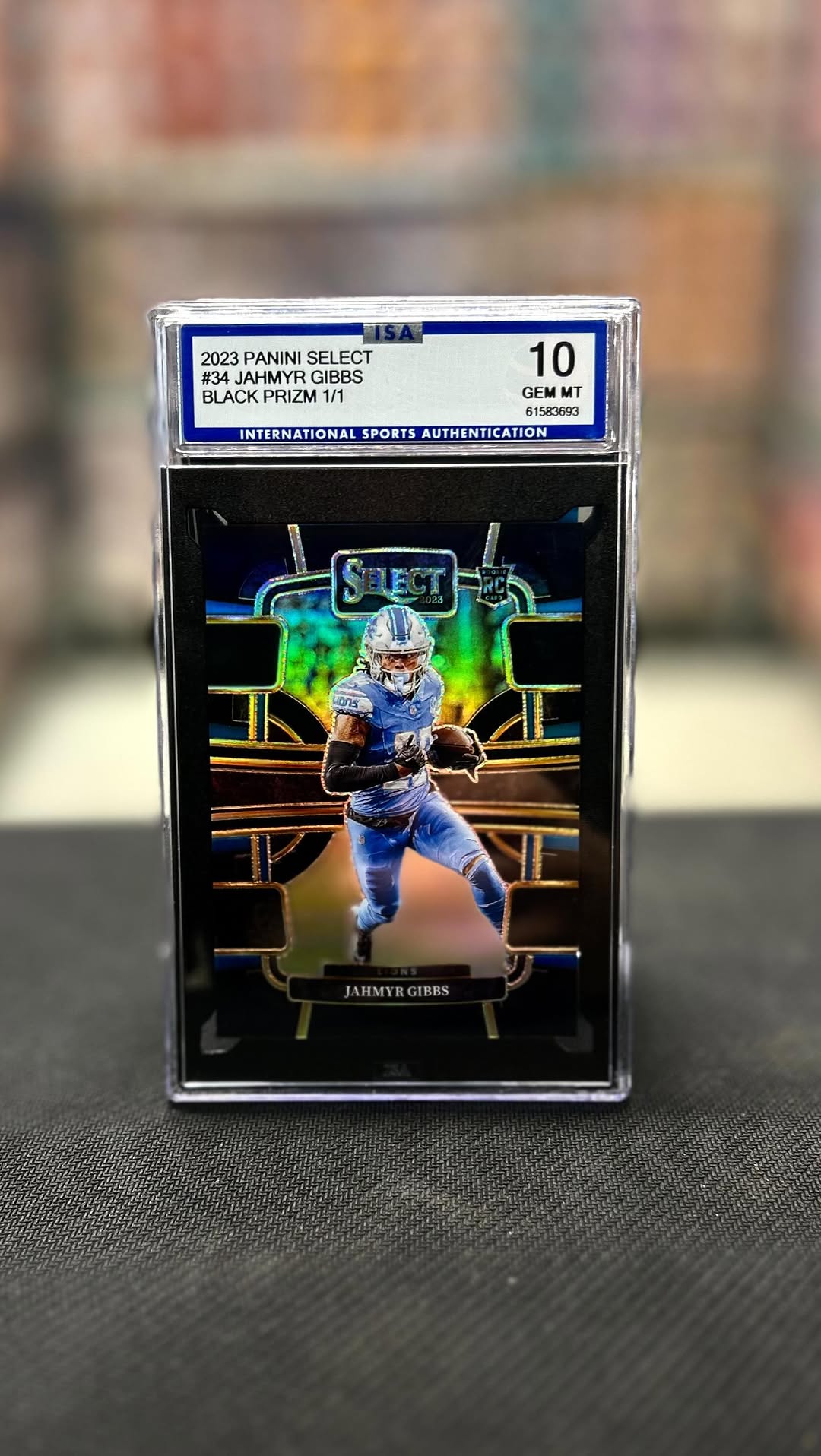
Fast card grading starts before a package leaves your desk. Choosing the right cards, recording their details, and protecting them during shipping can help you avoid preventable submission problems. For collectors and dealers, the goal is straightforward: understand the cost, follow the submission instructions, and know what to expect when the cards return.
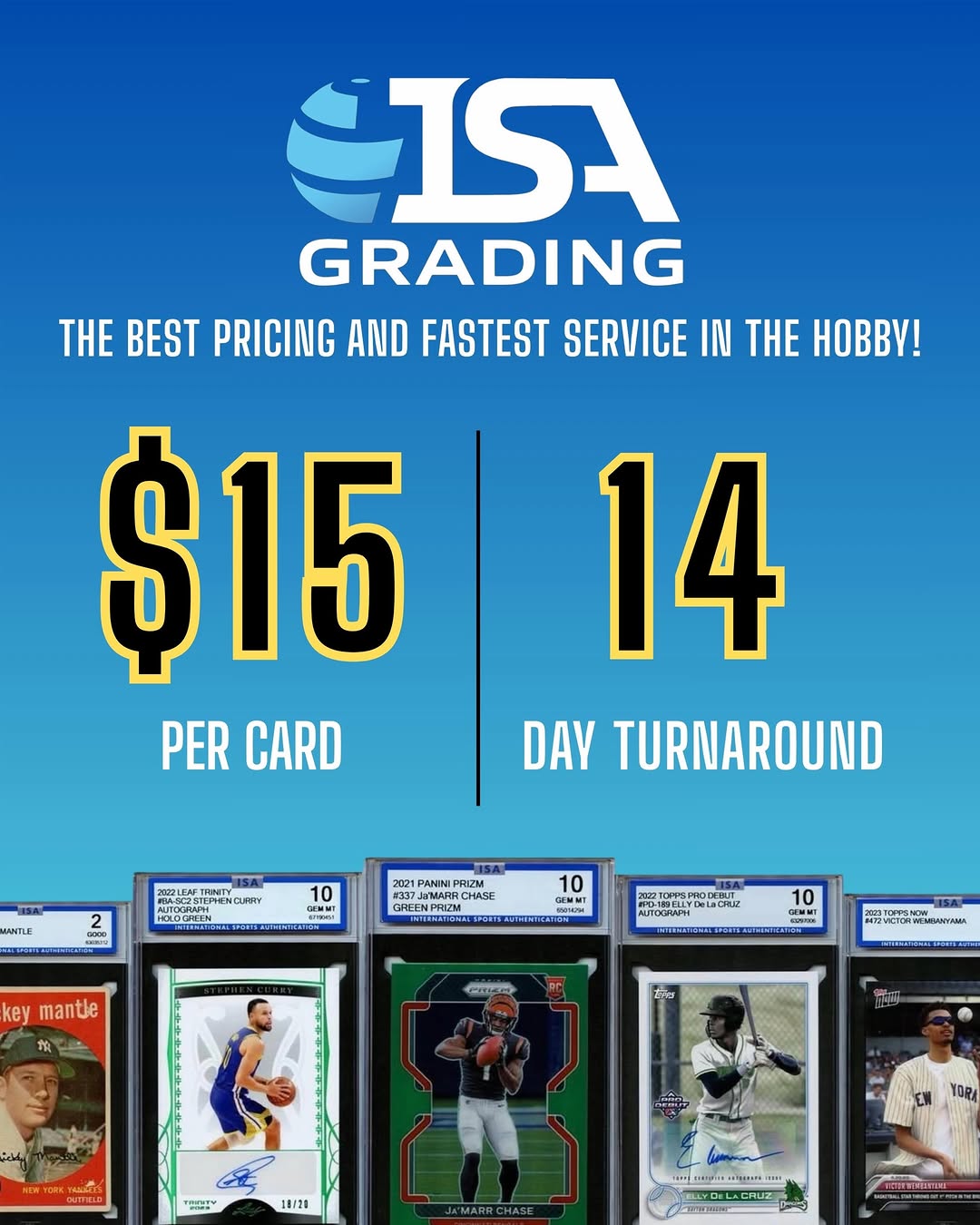
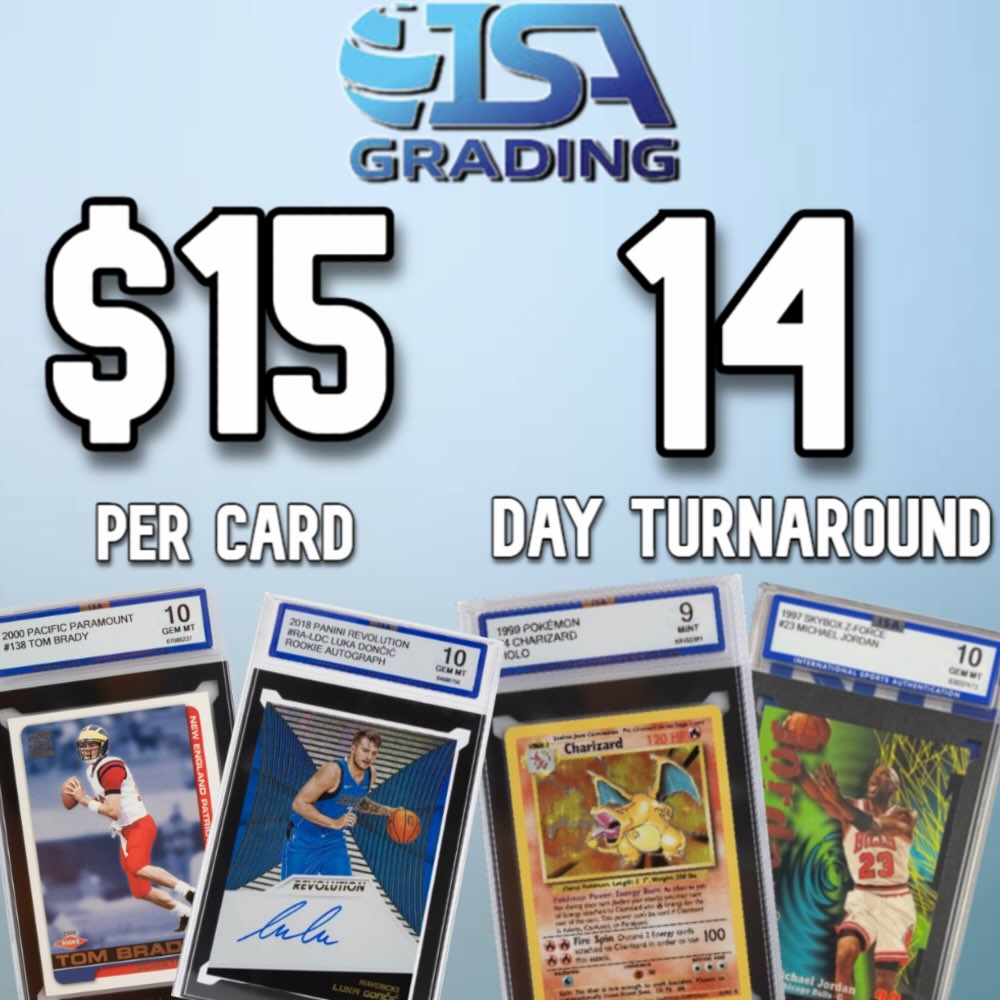
ISA Grading, also known as International Sports Authentication, provides sports card grading and authentication. Its current active service is $15 per card, with a 14 day turnaround, a 10 card minimum, and no upcharges. This guide explains how to prepare a submission around those terms while keeping card condition, shipping protection, and future buyer confidence in mind.
Understand ISA’s Current Grading Service Before You Submit
Pricing clarity matters whether you are sending personal collection favorites or inventory for your next card show. At the current rate, a minimum submission of 10 cards has a grading service cost of $150. A 20 card submission has a grading service cost of $300. Those calculations cover grading fees only; confirm any shipping, insurance, taxes, or other applicable charges before completing your order.
ISA’s no-upcharge policy makes the grading fee easier to budget. Still, separate that policy from your total submission expenses. Packaging supplies and transportation costs can affect what you ultimately spend per card, especially on a smaller order.
Use the ISA card submission page as your starting point for current instructions and the submission process. Check the information there before every order rather than relying on an old saved form or another collector’s previous experience.
Choose Cards That Fit Your Collecting or Selling Goals
A 10 card minimum is easier to manage when you start with a clear purpose. You might want consistent presentation for a player collection, protection for meaningful cards, or third-party condition assessments for cards you plan to sell. Those goals can produce very different submission lists.
For baseball card grading, compare the specific year, set, card number, player, and parallel before making a selection. For basketball card grading, the same attention to identification matters, particularly when several similar-looking versions exist. A valuable player name alone does not establish whether grading makes financial sense.
If resale is your goal, look at recent completed sales for the same card in several conditions. Asking prices are not the same as completed transactions. Account for selling fees, shipping, acquisition cost, and grading expenses, and avoid assuming that every raw card will receive a top grade.
Collectors researching trading card grading may also have questions about unusual formats or sets. If your order includes TCG card grading requests or cards intended for vintage card grading, confirm eligibility and any special requirements with ISA before shipping. Do not assume every card type, size, or category is accepted.
Review Condition Without Trying to Improve It
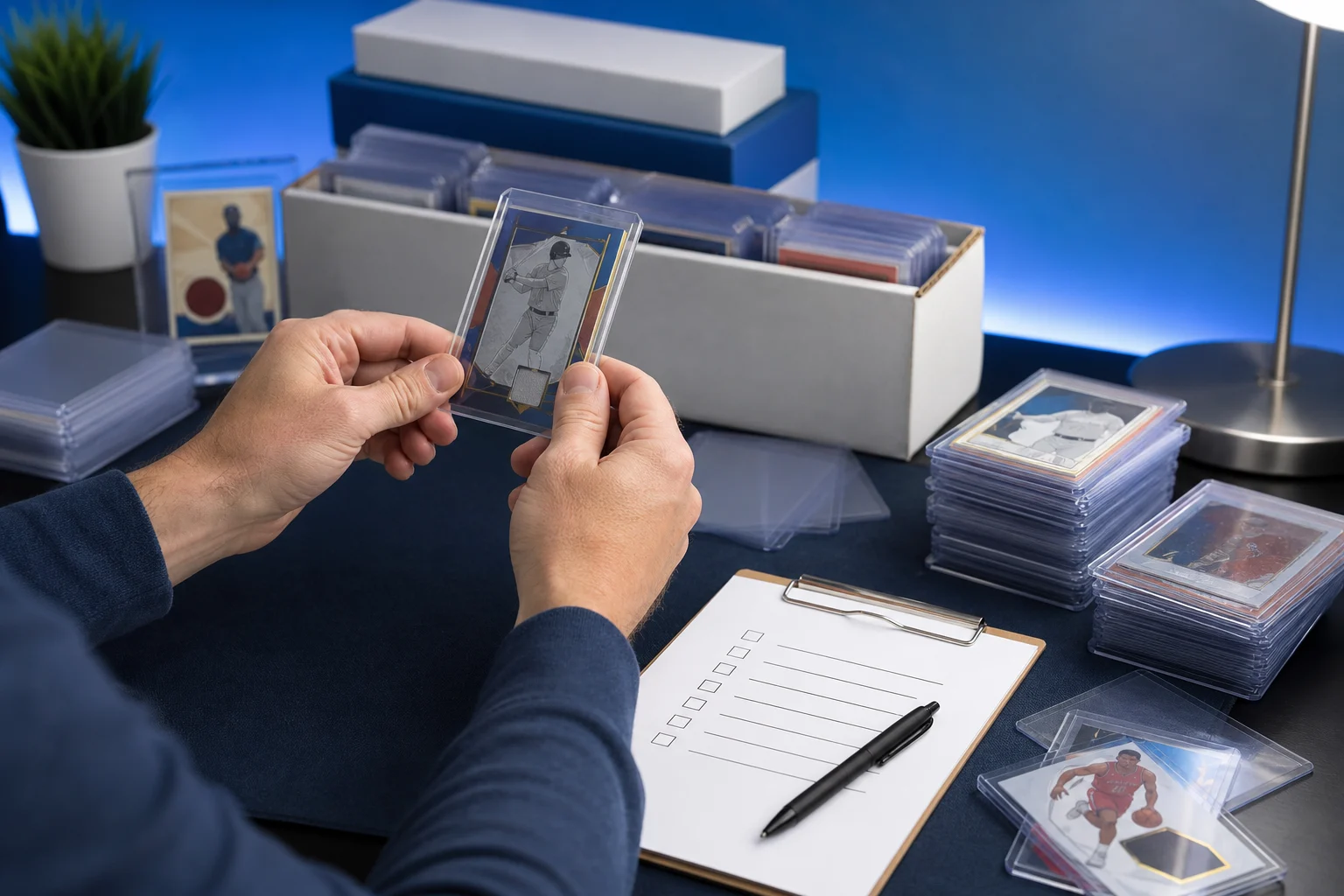
Careful inspection helps you set realistic expectations. Work on a clean, uncluttered surface with good lighting, handle cards by their edges, and avoid touching the front or back unnecessarily. Examine each card outside a holder only when you can do so safely.
- Card centering: Compare the placement of borders or design elements from side to side and top to bottom. Some designs require closer inspection than others.
- Corners: Look for bends, softness, whitening, or separation. Check the back as well as the front.
- Card edges: Inspect for chipping, roughness, dents, and other visible wear.
- Card surface: Use angled light to look for scratches, print lines, indentations, stains, and surface damage.
Read ISA’s grading scale to understand the framework used to describe condition. Your own inspection is a screening step, not a guarantee of the assigned grade. Some flaws are difficult to see through sleeves or under ordinary room lighting.
Avoid erasing marks, applying chemicals, pressing creases, trimming edges, or attempting repairs. These actions can alter a card rather than simply prepare it for submission. If you suspect a card has already been altered, disclose your concern and ask for guidance instead of trying to hide it.
Create an Accurate Submission Inventory
Before packing, make a simple inventory that follows the order of the cards in your submission. Include the year, manufacturer or set, player, card number, and relevant variation details. Record serial numbering when present, and take care with parallels that share the same photograph or layout.
Photograph the front and back of each card for your own records. These images can help you remember what you sent and document visible condition before shipping. They do not replace carrier requirements, insurance terms, or ISA’s submission documentation.
Keep your personal inventory consistent with the information you enter during submission. An easily understood card list can reduce confusion when you review the returned order or prepare sales listings later. Save a copy of any confirmation and the final card count.
If you are organizing your first minimum-size order, this guide to preparing a 10 card ISA submission offers a useful companion to your checklist. Keep separate batches clearly identified if you are preparing cards for different owners.
Protect Cards for the Trip to ISA
Follow ISA’s current packaging instructions, including any specified holder type. As a general handling principle, each card should have appropriate individual protection, and the shipment should prevent bending, crushing, and excessive movement. Never force a card into a sleeve or holder that is too tight.
Choose clean supplies that fit the card’s dimensions and thickness. Thick memorabilia cards, delicate vintage stock, and standard modern cards may have different handling needs. When the correct packaging method is uncertain, ask before improvising.
- Keep cards in the same sequence as your submission inventory.
- Keep adhesive away from card surfaces and openings where it could make contact with a card.
- Use protective outer materials without applying pressure that bends the cards.
- Fill empty space so the protected contents do not shift freely inside the shipping box.
- Include the documentation required by the current submission instructions.
Use a sturdy shipping container and keep the tracking information. Consider insurance based on the cards’ value and the carrier’s terms, including any limits or exclusions for collectibles. Photographing the packed contents can supplement your records, but it does not guarantee coverage or claim approval.
Complete the Submission and Confirm the Details
Before finalizing your order, check the card count, contact information, return address, and service selection. Compare the cards against your inventory one last time. A missing apartment number or an inconsistent card list can create avoidable questions.
Read the available instructions for payment, shipping destination, and required paperwork. Do not use an address copied from an old social media post or an unrelated directory. Submission procedures can change, so the current website instructions should guide your shipment.
The ISA FAQ page is a useful place to review common submission questions. If you need clarification about accepted cards, packaging, or order-specific requirements, use the contact page before sending the package. Asking one precise question in advance is better than making an assumption about a valuable card.
Plan Around the 14 Day Turnaround
ISA currently lists a 14 day card grading turnaround. For a collector, that provides a useful planning reference. For a dealer, it can help organize inventory preparation, photography, and listing work around an upcoming sales cycle.
Do not automatically treat that timeframe as the total time from your shipping date to the cards arriving back at your address. Outbound and return transit also take time. Confirm how ISA counts the turnaround period, when it begins, and whether any current qualifications apply before planning around a firm deadline.
If you need cards for a show, auction, or customer commitment, allow additional room in your schedule. Fast grading is useful, but avoid promising a buyer a specific delivery date based only on the grading timeframe.
Understand Slabs, Authentication, and Certificate Checks
A card grading service provides a condition assessment, while card authentication addresses questions about genuineness. Sports card authentication and grading serve related purposes, but neither should be confused with a promise of future market value.
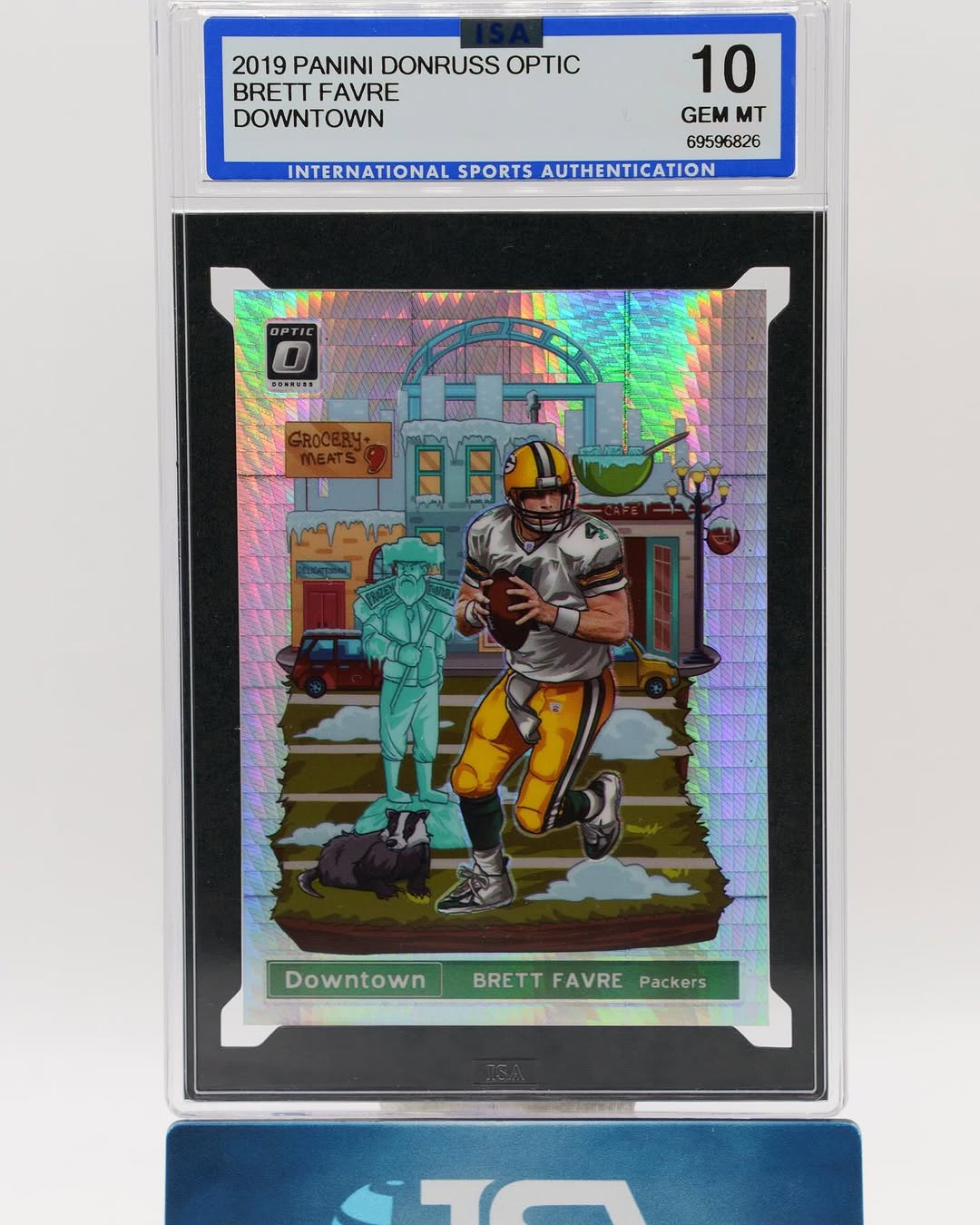
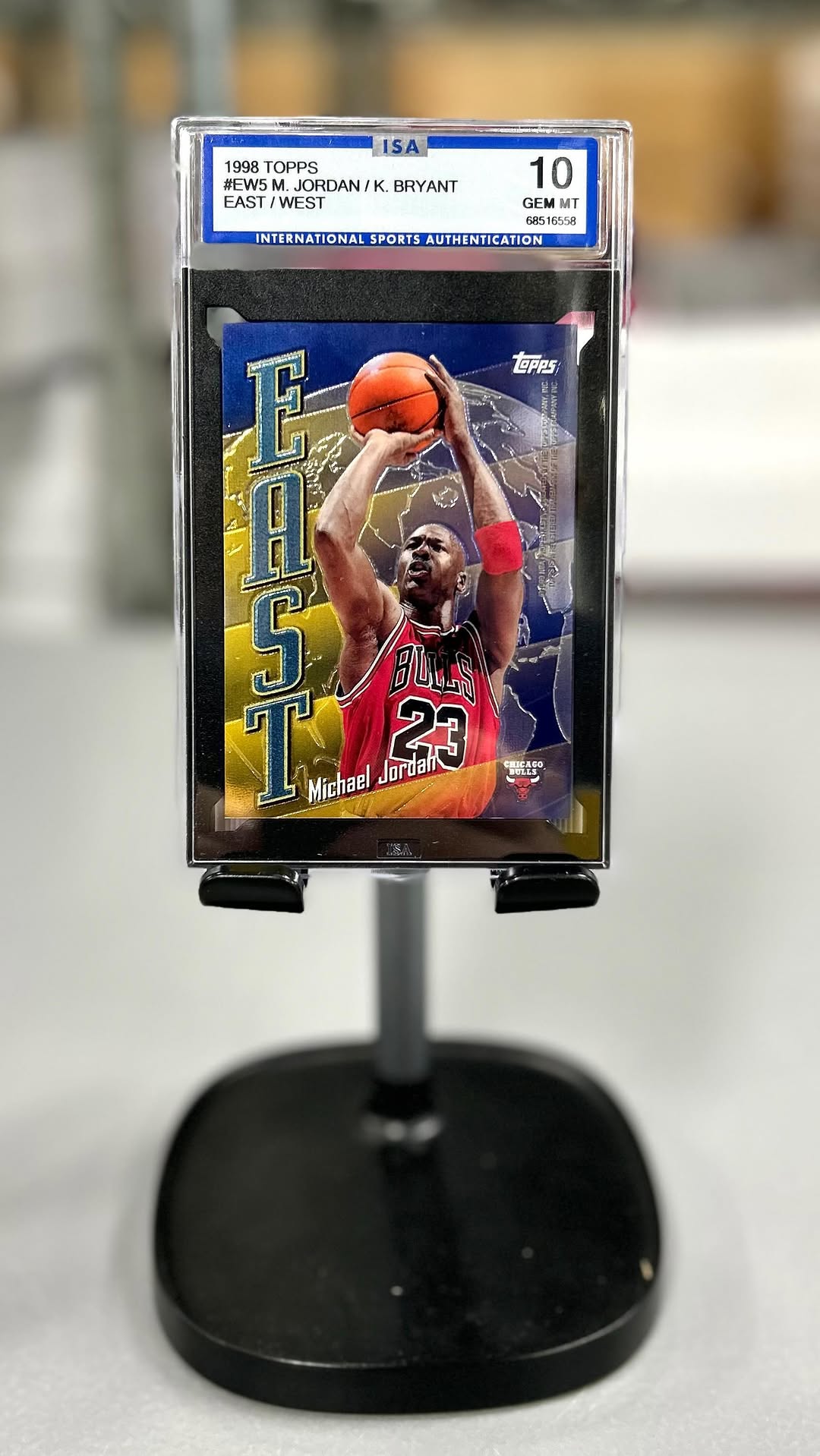
Card encapsulation places a graded card in a protective holder, commonly called a slab. The holder supports handling and presentation, but sensible storage still matters. Keep slabs away from excessive heat, moisture, direct sunlight, and conditions that could damage the holder or its contents.
When your submission returns, compare the cards and labels with your records. Review identifying details and retain your submission documentation. If you see a discrepancy, contact ISA with clear photographs and the relevant order information.
Certificate verification is available through ISA’s online certificate verification page. Buyers and owners can use it to check the available certificate record against the slab they are examining. A certificate lookup is a useful check, but it should accompany inspection of the actual card, holder, label, and seller information rather than replace those checks.
Prepare Graded Cards for Confident Selling
If you plan to sell graded cards, make the listing specific and easy to evaluate. Photograph the slab’s front and back clearly, avoid glare over the label, and describe the card’s year, set, player, number, and grade accurately. Disclose visible holder damage instead of photographing around it.
Provide enough certificate information for a buyer to perform an independent lookup. Clear images and verifiable details help buyers assess what is being offered, but grading does not guarantee a sale, a price premium, or a particular selling speed.
Compare relevant completed sales and distinguish between different cards, parallels, grades, and grading companies. A sale involving a different version or condition may be a poor pricing reference. Calculate your net proceeds after marketplace fees, shipping, and your total card costs.
A Practical Checklist Before You Ship
If your search began with “card grading near me,” focus on the details that matter for a shipped submission: current service terms, safe packaging, clear records, and a verifiable grading certificate. Location alone does not answer those questions.
- Select at least 10 eligible cards that fit your goals.
- Inspect condition and record accurate card details.
- Budget for $15 card grading per card, plus applicable submission expenses.
- Follow current holder, paperwork, and shipping instructions.
- Save your inventory, photographs, confirmation, and tracking details.
- Allow shipping time around the stated 14 day turnaround.
A well-prepared sports card grading submission begins with informed choices rather than hurried packing. Confirm ISA’s current instructions, protect each card carefully, and keep organized records from selection through return. Those habits make the process easier to manage whether the finished slabs belong in your collection or your next sales listing.
Submit Cards to ISA Grading
Collectors ready to use ISA Grading can start on the submission page. The current active service is $15 per card with a 14 day turnaround, no upcharges, and a 10 card minimum.
Frequently Asked Questions
How much does ISA Grading currently charge per card?
ISA’s current active service costs $15 per card with no upcharges. The 10 card minimum makes the minimum grading service cost $150. Confirm shipping, insurance, taxes, and any other applicable charges separately before submitting.
What is ISA’s current card grading turnaround?
ISA currently lists a 14 day turnaround. Confirm when that period begins, how days are counted, and any current qualifications before submitting. Allow additional time for shipping to ISA and return transit.
How many cards do I need to submit to ISA?
ISA currently requires a minimum of 10 cards per submission. Build an accurate inventory and check eligibility for any unusual card types or sizes before shipping.
How should I protect cards when submitting them for grading?
Follow ISA’s current packaging and holder instructions. Use appropriate individual card protection, avoid adhesive contact with cards, and pack the shipment to prevent bending and movement. Keep your inventory and tracking information.
How can a buyer verify an ISA graded card?
Certificate verification is available on ISA’s website at /certificate-verification. Compare the available record with the slab’s details, and inspect the card, holder, label, and seller information as additional checks.