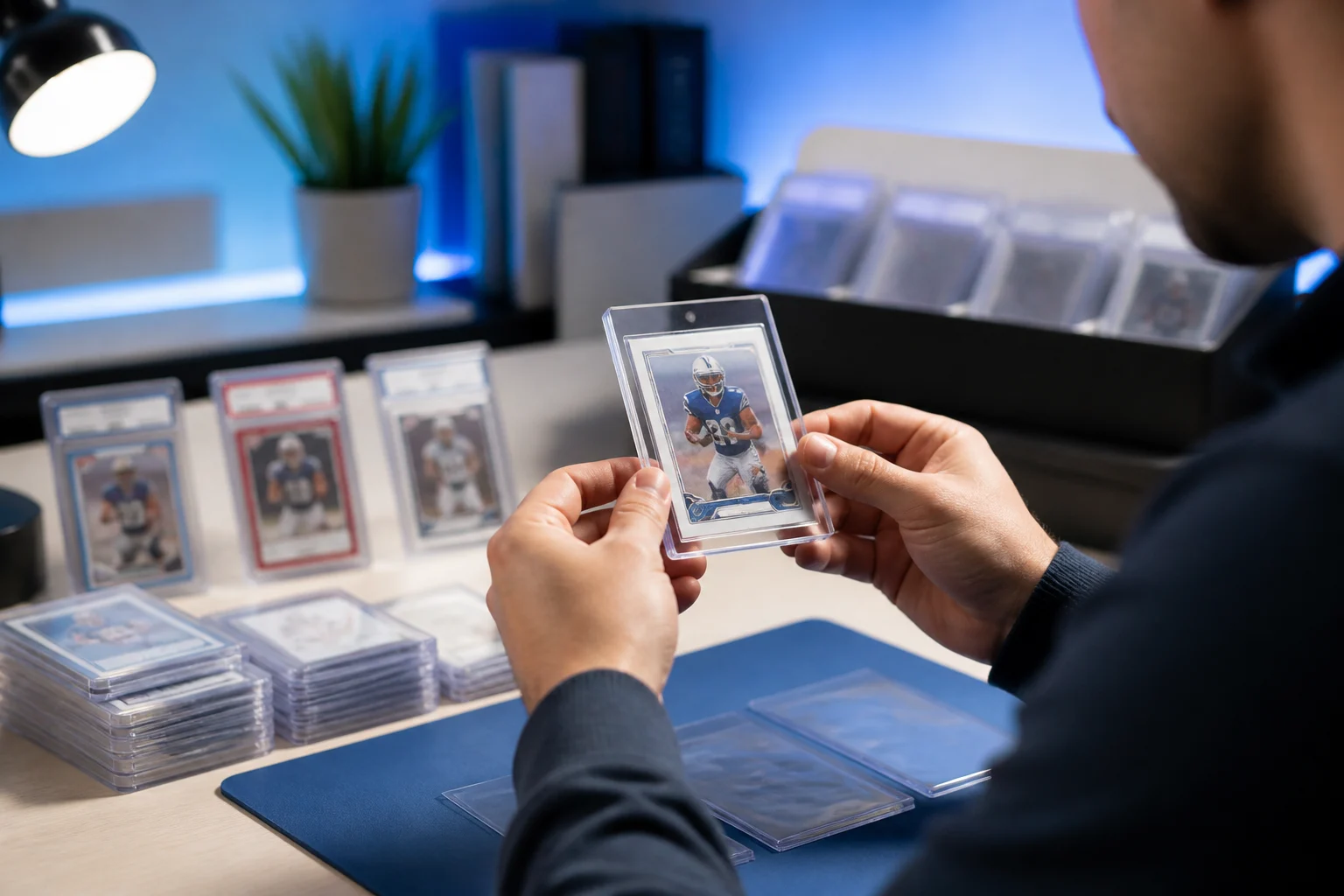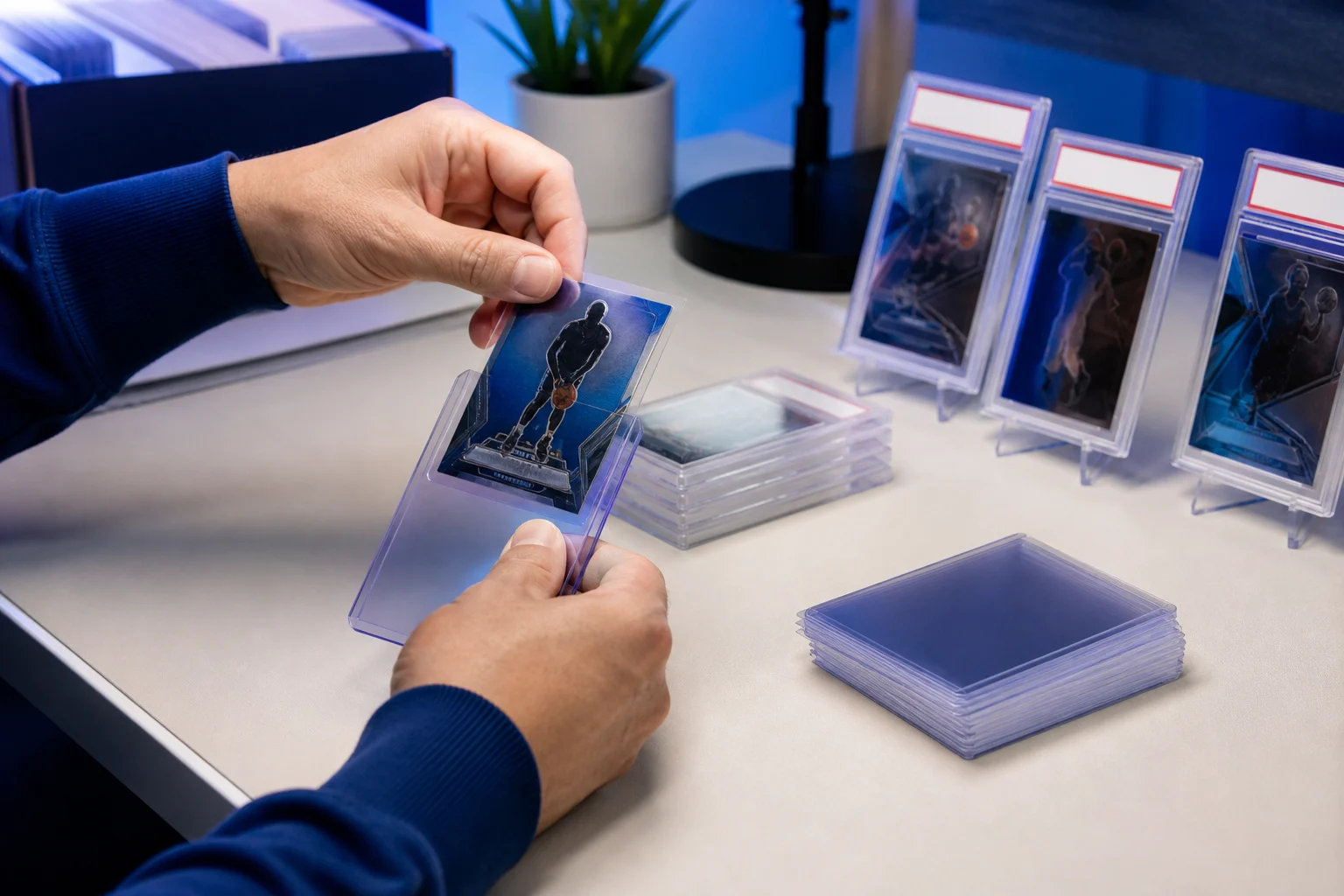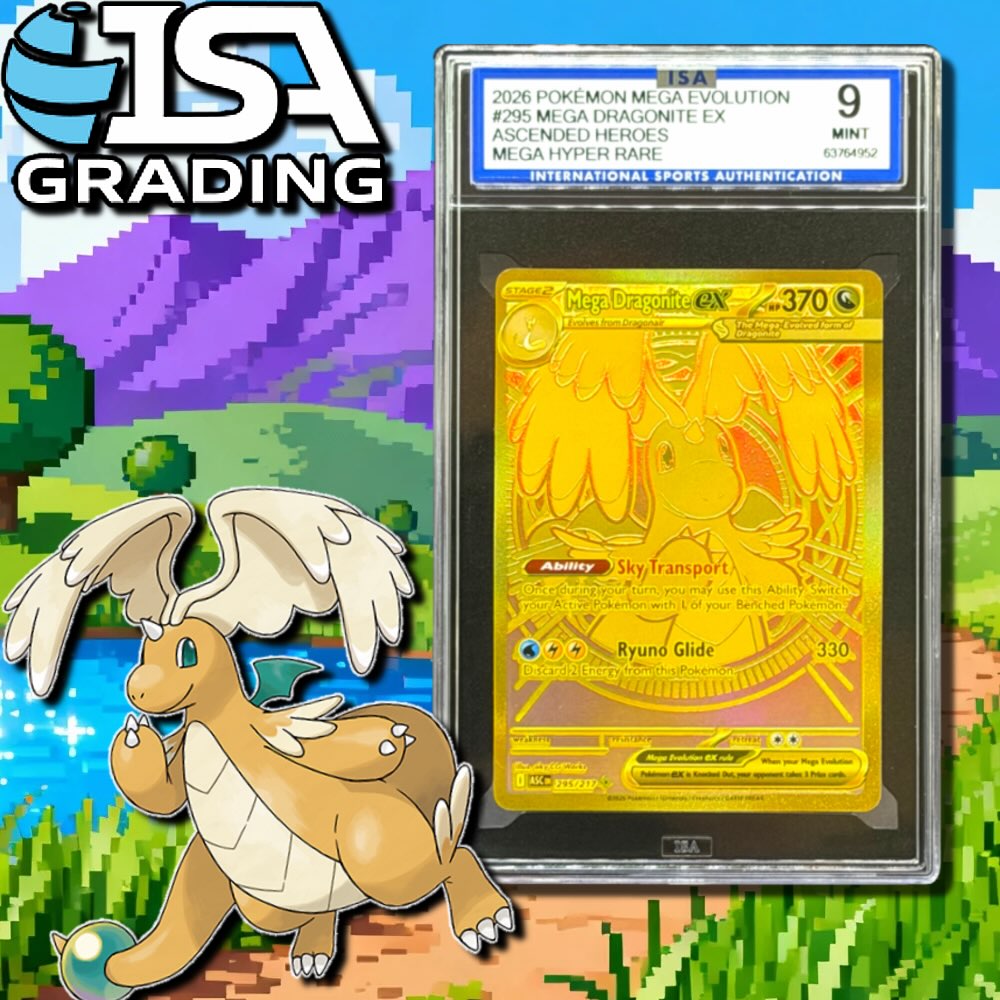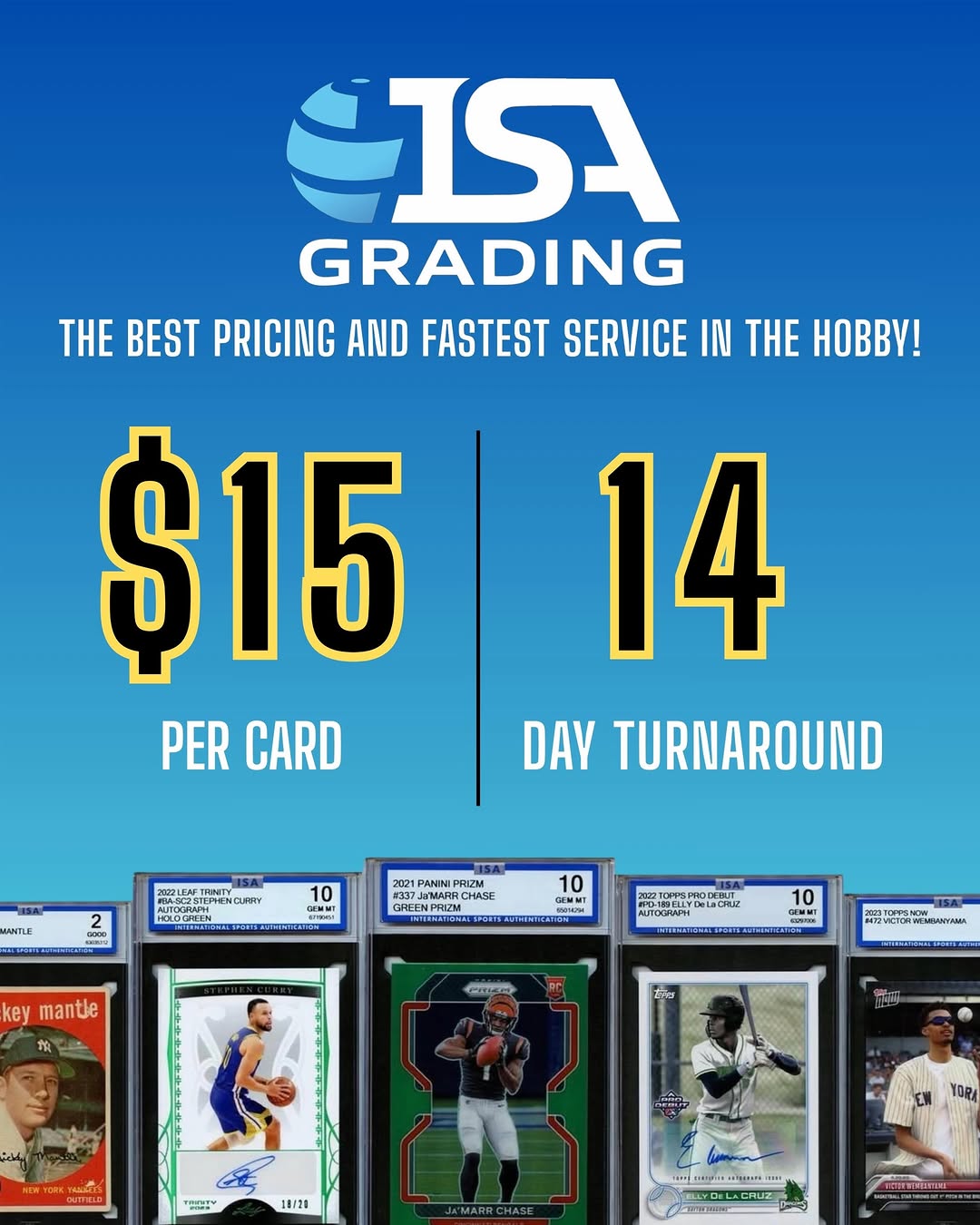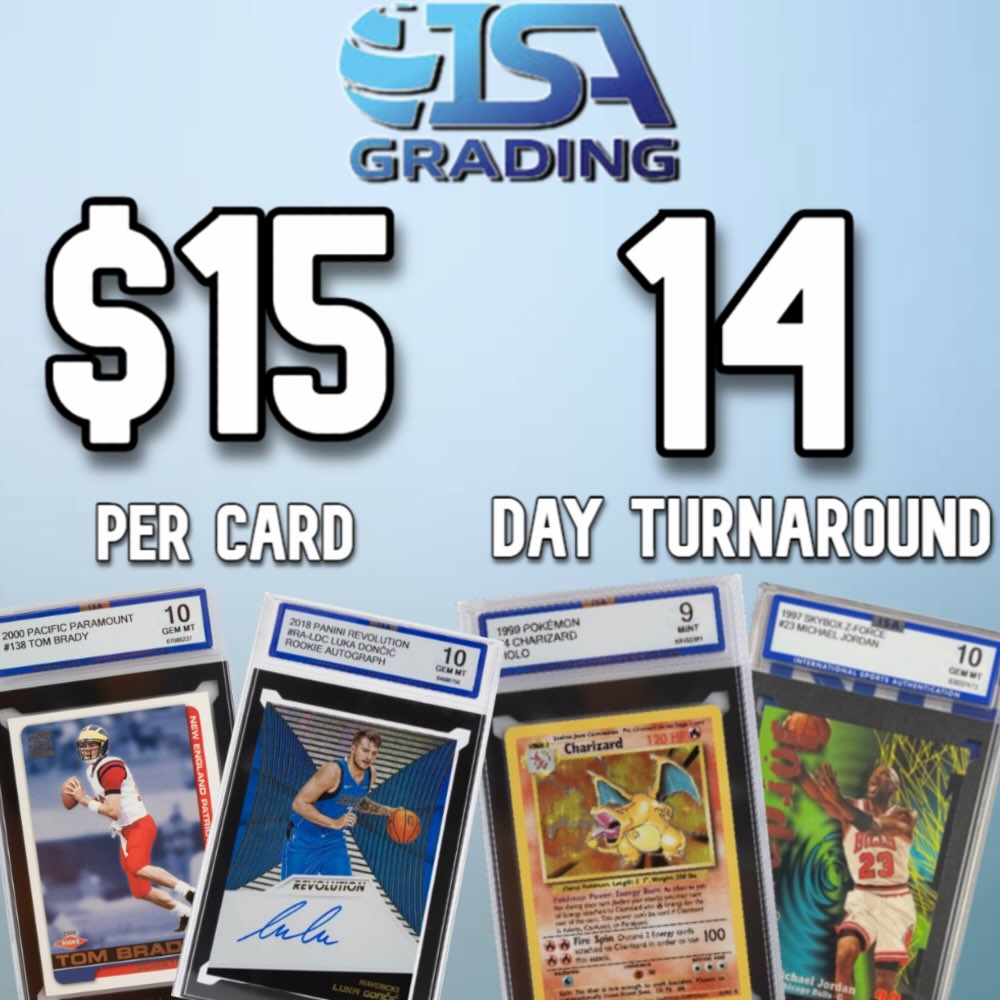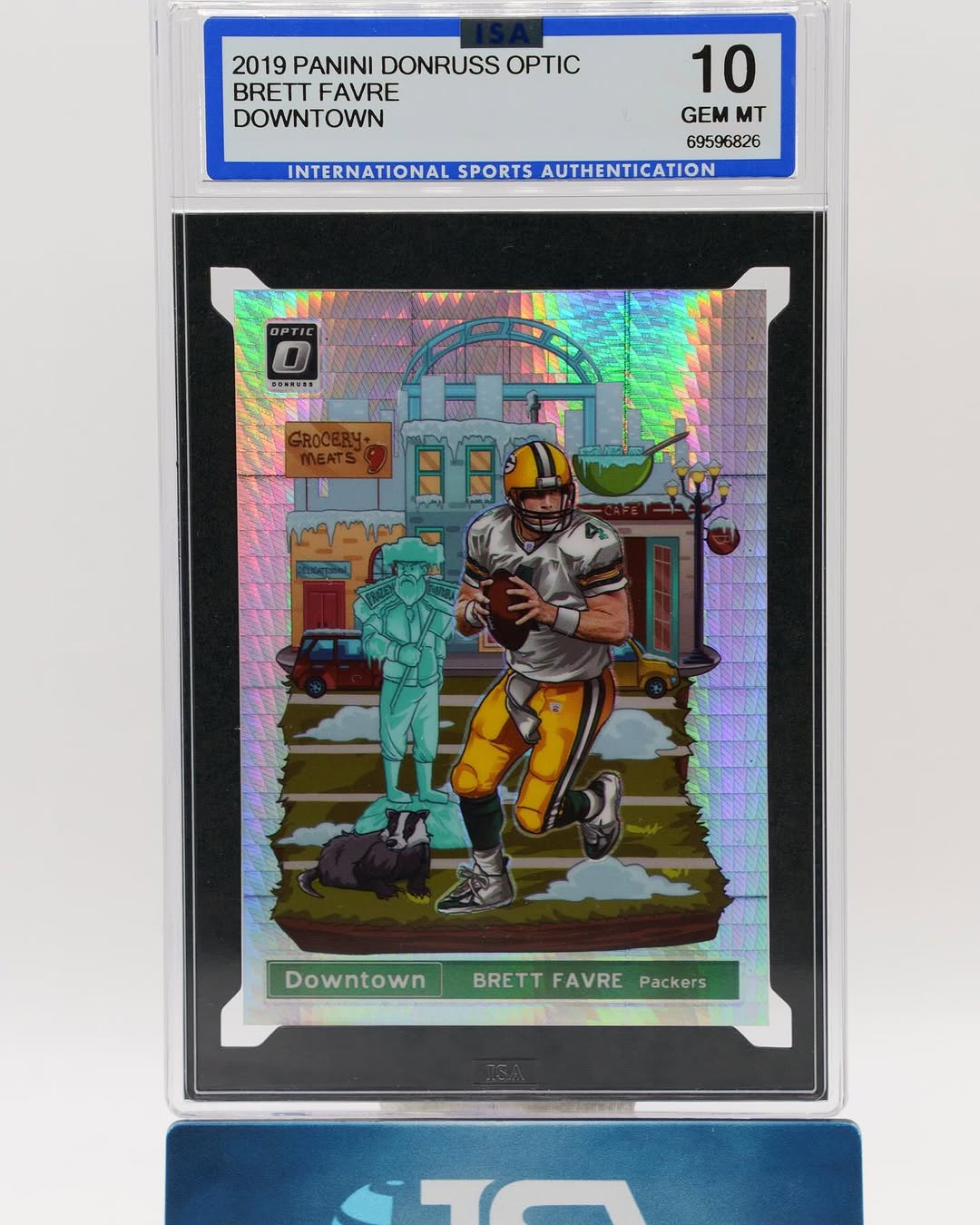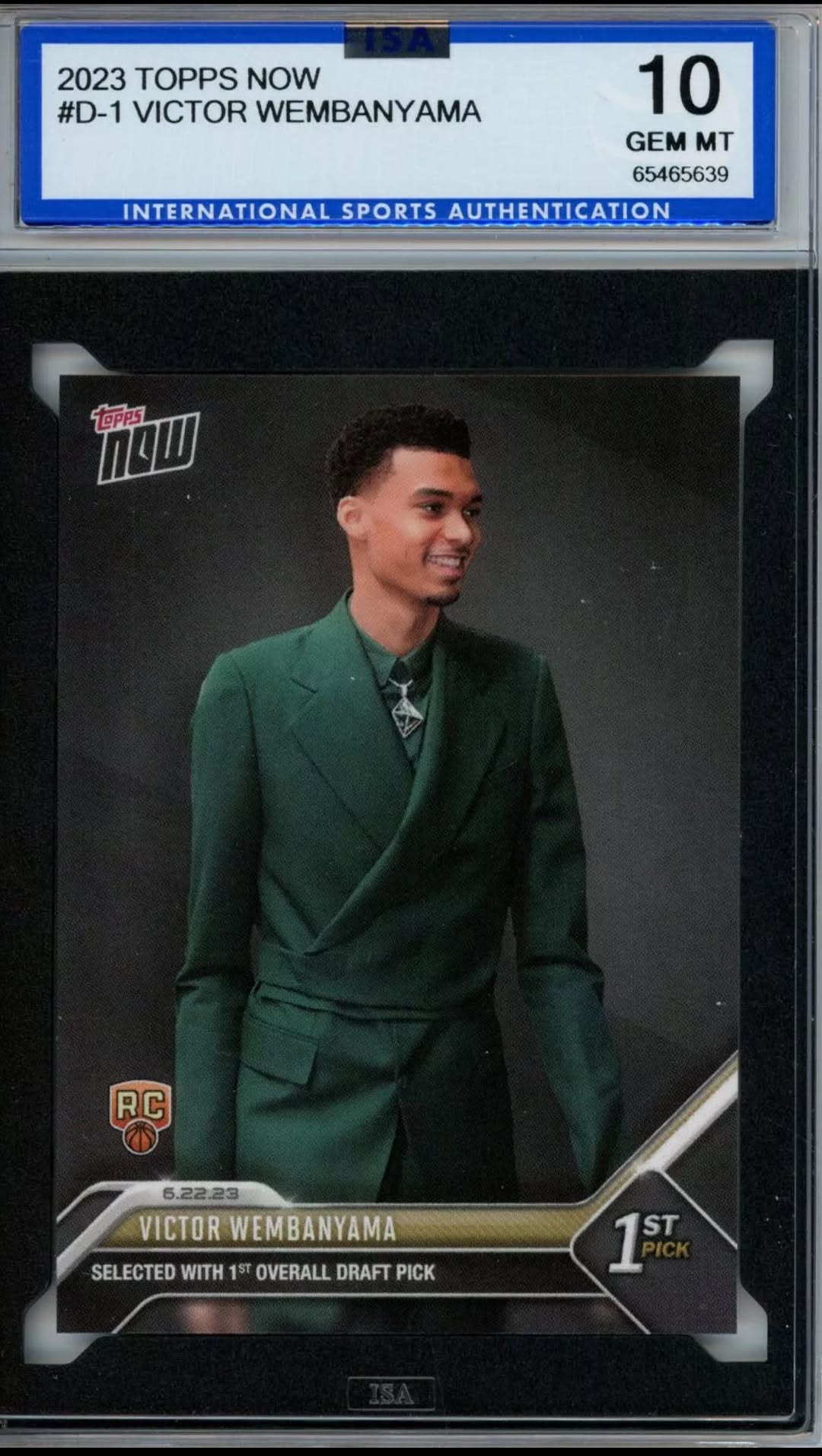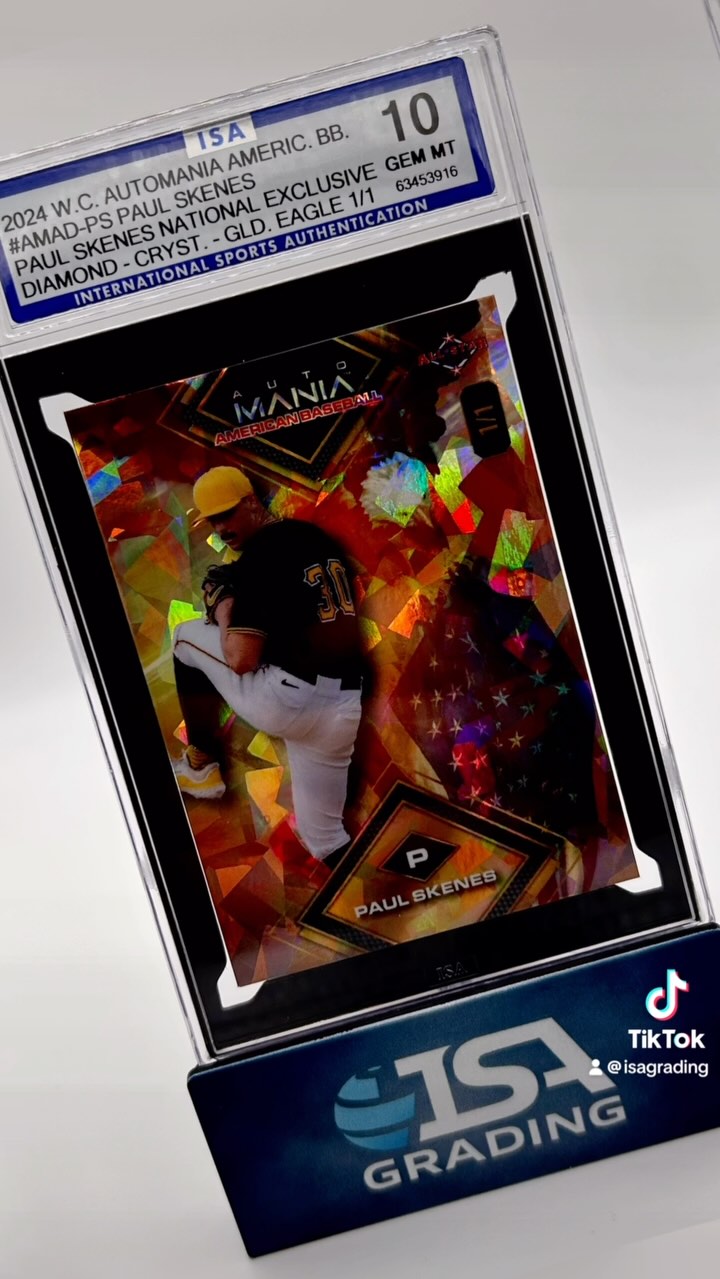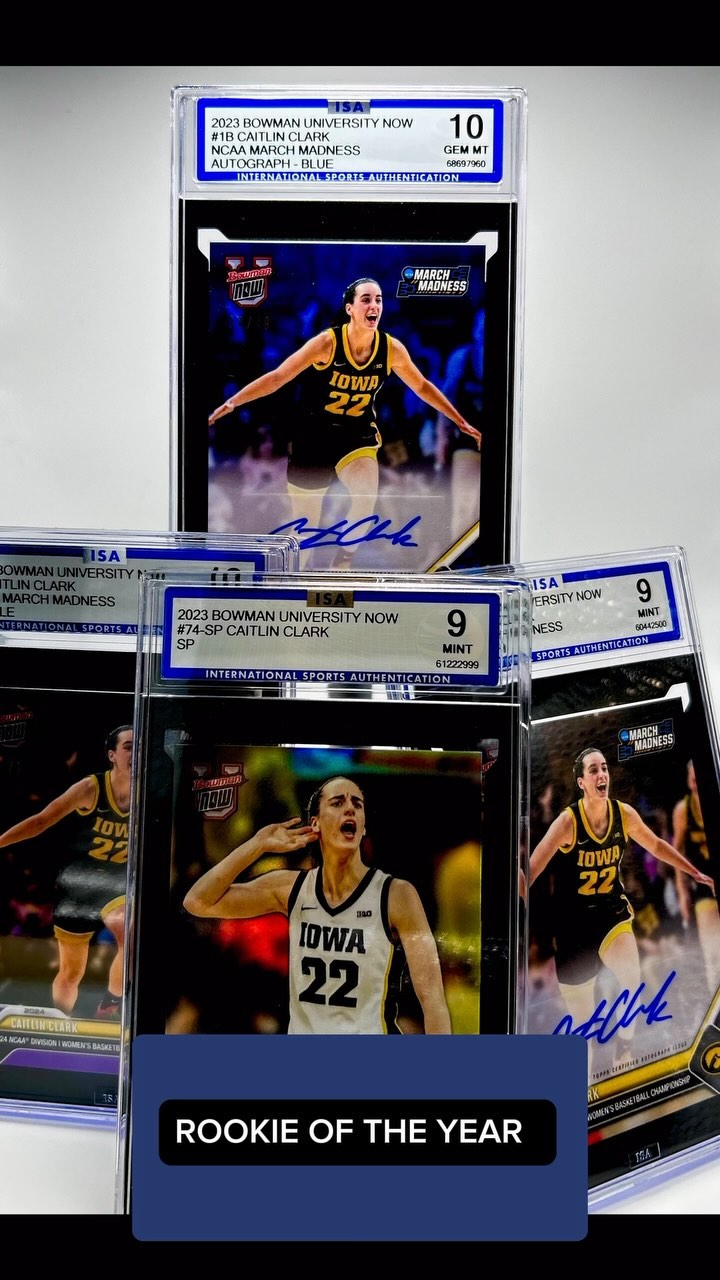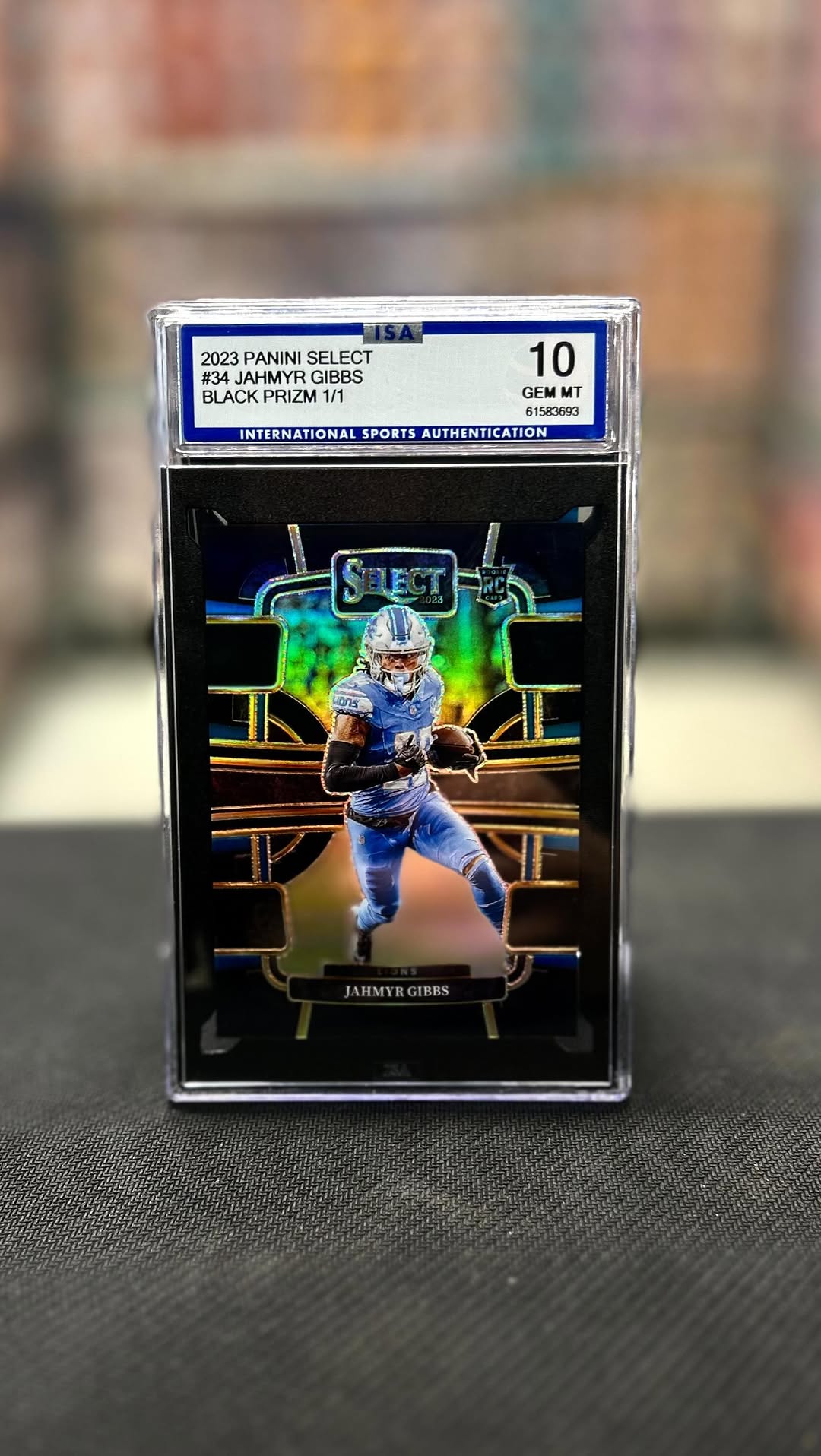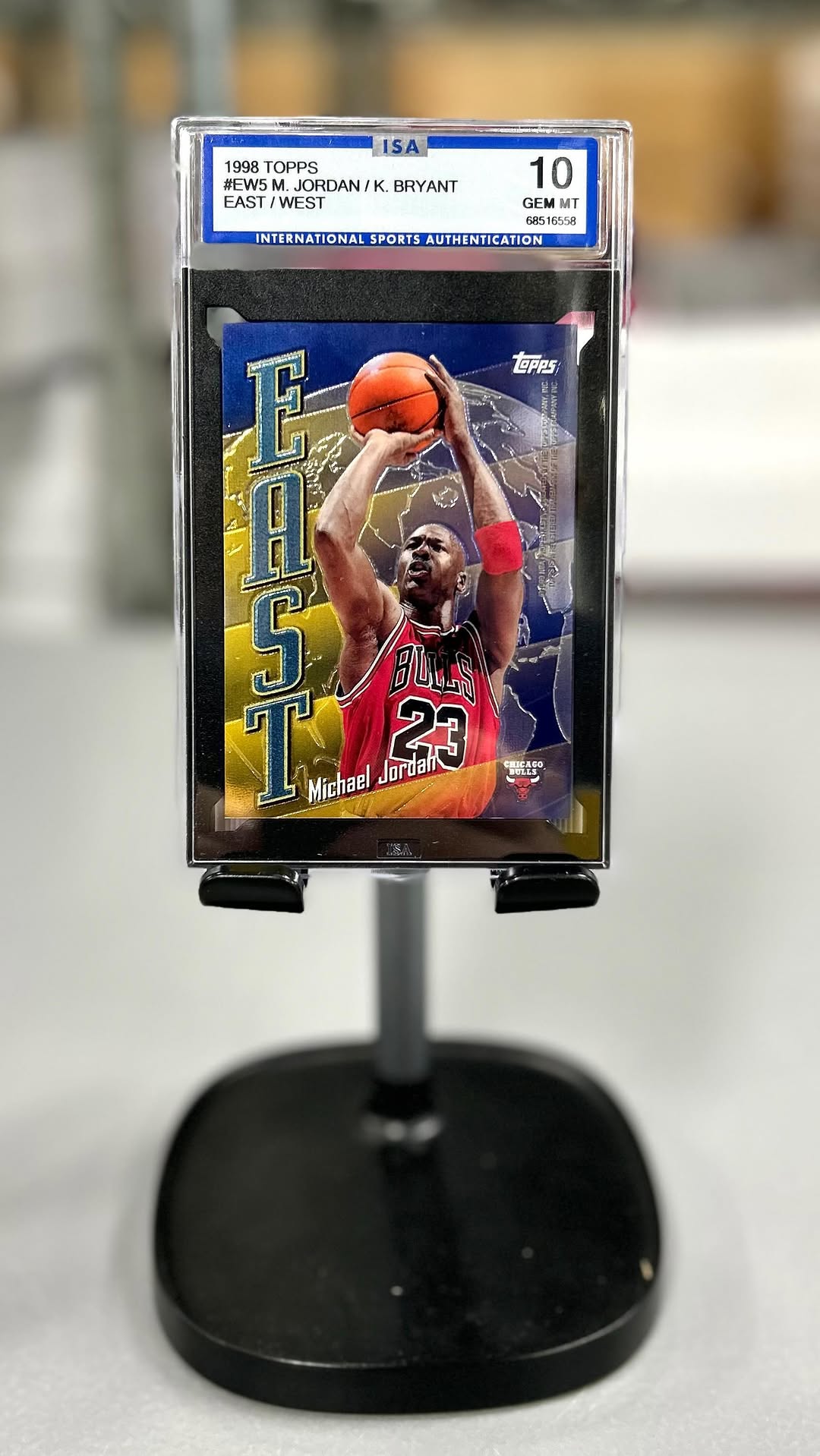
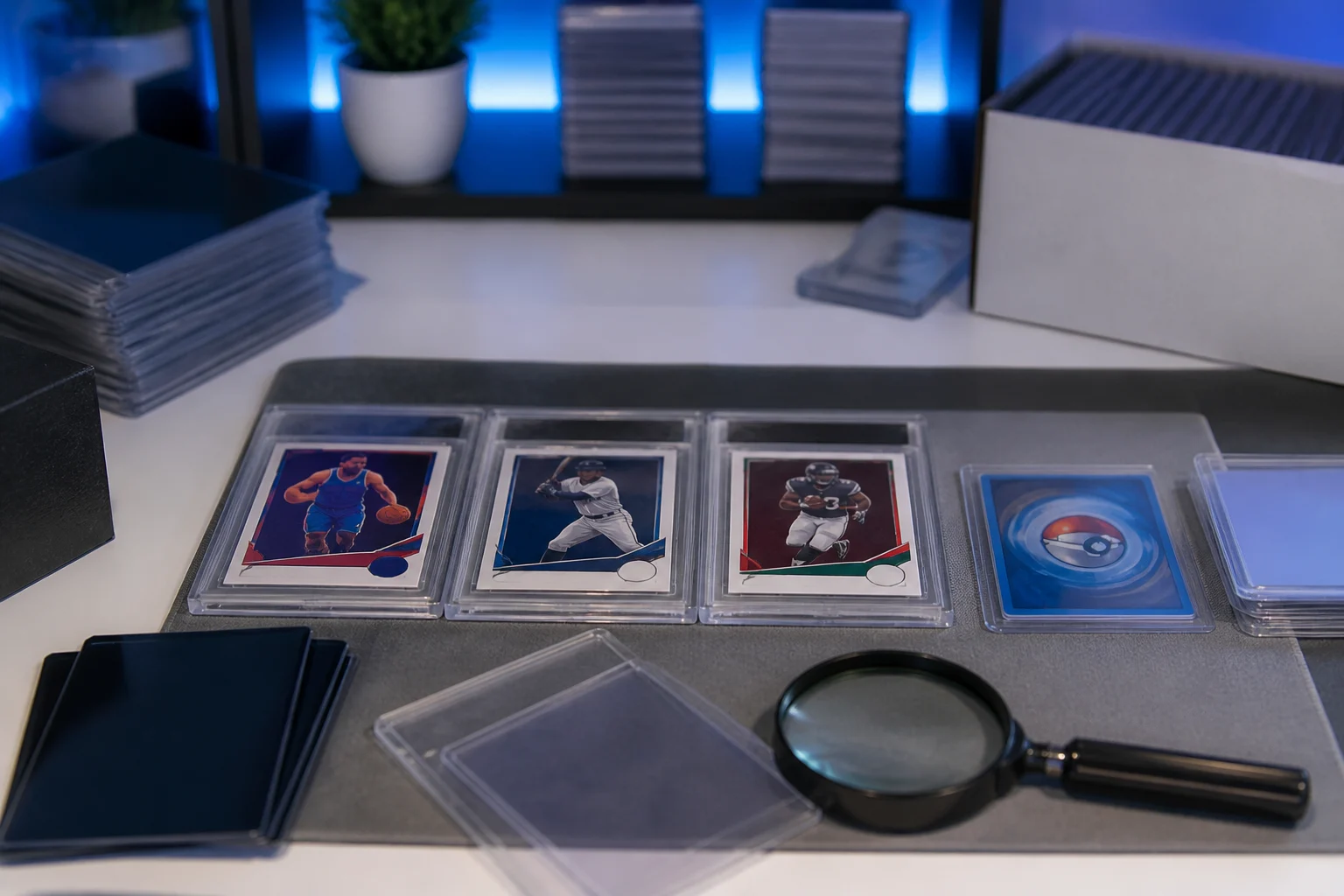
A basketball rookie, a vintage baseball card, a modern football parallel, and a Pokémon holographic card can belong in the same collection, but each deserves a careful inspection before grading. Different designs, finishes, and production eras create different condition challenges. The smartest submission starts with understanding the cards, not assuming that every attractive example will earn a top grade.
This guide covers practical sports card grading and trading card grading decisions for collectors, dealers, and hobby sellers. ISA Grading, also known as International Sports Authentication, currently offers service at $15 per card, with a 14 day turnaround, a 10 card minimum, and no upcharges. Those terms provide a starting point for planning, while condition and collecting goals should guide which cards you submit.
Start With a Reason to Grade Each Card
Before asking, “Should I grade my cards?” decide what grading needs to accomplish. You might want an independent condition assessment, card authentication, protection for a favorite collectible, or more consistent presentation when selling. A personal collection submission can make sense even when immediate resale profit is not the priority.
For resale, compare recent completed sales of the same card in ungraded and graded condition. Match the year, set, card number, parallel, language, and variation. Asking prices show seller expectations, not necessarily what buyers will pay. Consider several plausible grades rather than building the entire calculation around the highest possible result.
- Collectors: Prioritize cards with personal importance, long-term collecting value, or a clear need for condition documentation.
- Dealers: Consider acquisition cost, grading expenses, likely selling fees, shipping, and the time inventory will be unavailable.
- Hobby sellers: Start with cards you can identify confidently and inspect carefully before committing to a larger batch.
Inspect the Four Main Condition Areas
Good card condition grading begins with consistent observation. Work on a clean, dry table under bright, indirect light. A second light source at a low angle can reveal surface issues that disappear when viewed straight on. Hold cards gently by the edges and avoid unnecessary handling.
Card centering
Compare the borders from left to right and top to bottom on both sides. For borderless designs, use repeatable design elements as reference points rather than guessing from the player image. Card centering can be harder to judge on tilted layouts, full-art cards, and cards with intentionally uneven graphics.
Card corners and edges
Inspect all four card corners for whitening, fraying, bends, and compression. Then examine the edges, especially where dark ink makes small chips visible. A card can look sharp inside a sleeve while hiding a softened corner or a small edge defect. Remove it carefully when inspection requires an unobstructed view.
Card surface
Tilt the card slowly to look for scratches, indentations, print lines, staining, and changes in gloss. Check the back as closely as the front. A clean-looking card surface may still have a small pressure mark that affects the overall assessment. Manufacturing flaws can matter even when the card went directly from a pack into protection.
Use ISA's grading scale to understand its condition categories before submitting. A home inspection helps set expectations, but it cannot establish a guaranteed final grade.
Basketball Card Grading: Watch Gloss and Dark Borders
Basketball card grading often involves glossy rookie cards, reflective parallels, and designs with large areas of dark color. These features can make a card visually striking while also making scratches, edge wear, and corner whitening easier to notice.
On chromium-style cards, inspect the reflective finish from several angles. Look for fine scratches and printing lines without rubbing the surface. On thicker memorabilia cards, examine corners and edges for compression or separation. Do not force a thick card into a holder designed for standard stock.
Identify the exact version before evaluating potential resale value. A base rookie, a numbered parallel, and a visually similar insert can have very different markets. Grading does not remove the need for accurate identification, and popularity alone does not make every card a sensible submission.
Baseball Card Grading: Separate Vintage Expectations From Modern Ones
Baseball collections often span decades, making production context especially useful. Vintage card grading requires attention to creases, stains, rounded corners, paper loss, and possible alterations. Look for faint wrinkles under angled light, including on the back, where they may be easier to see.
A lower-grade vintage card may still be worth submitting because of its player, issue, scarcity, or personal importance. That differs from submitting a readily available modern base card, where grading expenses may represent a larger share of its likely selling price.
For modern baseball, inspect foil areas, glossy finishes, and border alignment. Verify whether a card is a standard issue, image variation, refractor-style parallel, or another distinct version. If you suspect trimming, recoloring, or another alteration, do not try to correct it. Ask the grading service about eligibility and authentication procedures before submitting.
Football Card Grading: Match the Card to the Right Holder
Football products can combine standard cards, thick patch cards, textured stock, foil, and acetate within a single release. Each construction creates handling concerns. Thick cards may show corner compression, while clear materials can reveal fingerprints and scratches particularly clearly.
Check die-cut points and narrow edges carefully if your card has an unusual shape. For patch cards, inspect the surrounding window without touching or manipulating the material. Avoid pressing down on raised elements to make a card fit its shipping holder.
Confirm service eligibility for unusual dimensions, very thick cards, and specialty formats before packing. Also distinguish condition grading from autograph authentication. Do not assume that submitting an autographed card automatically includes a separate opinion on the signature unless that service is expressly offered.
Pokémon Card Grading: Check the Holographic Areas and Back
Pokémon cards deserve the same careful condition review as sports cards, with additional attention to holographic finishes and identification details. Inspect the artwork, foil areas, texture, borders, and back. Small white spots along the back edges can be easier to notice against the blue border than against a busy front design.
Check the set number, language, rarity markings, and version before comparing sales. Similar artwork can appear across different releases, and those differences can affect collectibility. Centering should be considered on both sides, not just around the front illustration.
Card authentication also matters when buying unfamiliar cards or unusually inexpensive examples. Appearance alone may not settle authenticity questions. If you are uncertain about an issue or format, confirm that it is eligible for evaluation before including it in a submission.
Build a Grading Budget With Clear Costs
ISA's current $15 card grading service makes the grading portion of a standard 10 card submission $150. That figure is not an all-inclusive shipping estimate. Account for packaging, shipping, any applicable insurance, and other charges disclosed during submission when calculating your total cost.
For sellers, use a conservative worksheet: expected selling proceeds minus acquisition cost, grading expenses, shipping, and marketplace fees. If the result only works at the highest grade, reconsider the submission or treat it as a collecting expense rather than expected profit.
ISA offers no upcharge card grading, so a more valuable card does not trigger a grading upcharge. For more context on the current pricing approach, read how ISA keeps grading at $15 per card. Clear pricing helps planning, but no grading service can promise a particular resale price.
Plan Around Turnaround Without Cutting It Too Close
A 14 day card grading turnaround can be useful when organizing inventory or preparing for a selling event. However, the grading timeline is not the same as the entire door-to-door schedule. Allow additional time for transportation and review the current submission terms for how turnaround is measured.
If a show or sale has a firm deadline, leave a buffer rather than assuming every step will align perfectly. Confirm timing questions through ISA's frequently asked questions before shipping. Fast card grading is most useful when paired with realistic planning.
Searching for “card grading near me” may help locate options, but proximity is only one consideration. Compare service terms, submission requirements, packaging instructions, and verification tools when choosing a card grading service.
Prepare and Pack Your Submission Carefully
Preparation should preserve the card as it is, not attempt to improve its appearance through alteration. Do not use solvents, polishing compounds, heat, pressure, or other treatments. Avoid rubbing away suspected marks, since an attempted fix can create additional damage.
- Confirm each card's identity. Record its year, set, subject, card number, and relevant parallel or variation.
- Document your submission. Keep a list and clear photographs for your own records.
- Follow holder instructions. Use clean sleeves and the protective holders specified by the service, with appropriate sizing for thicker cards.
- Prevent movement. Cushion the cards inside a sturdy box without placing adhesive directly on them.
- Check the paperwork. Make sure the card count and submission information match what you packed.
Review the current instructions on ISA's submission page before sending your cards. The 10 card minimum makes careful batch selection worthwhile, but it is not a reason to add unsuitable cards merely to reach the threshold.
Use Slabs and Verification Thoughtfully When Selling
Card encapsulation places an evaluated card in a protective holder for storage and handling. Trading card slabs do not make cards invulnerable. Store them away from direct sunlight, excessive heat, moisture, and pressure, and protect the holders from scratching during transport.
When listing a graded card, photograph the front, back, label, and any visible holder damage. State the exact card identification and assigned grade. Avoid describing a graded card as flawless unless that description is supported, and never imply that its future value is guaranteed.
Buyers can use ISA's certificate verification tool to check certificate information. Compare the available record with the card and label being offered. A matching certificate number is a useful check, but buyers should still examine the listing and seller carefully.
For event planning, From Submission to Sale: Grading Cards for Your Next Show offers a related starting point. Keep your buying costs and submission records organized so you can price inventory deliberately. The strongest grading decisions connect honest condition expectations, manageable expenses, suitable protection, and a clear purpose for each card.
Submit Cards to ISA Grading
Collectors ready to use ISA Grading can start on the submission page. The current active service is $15 per card with a 14 day turnaround, no upcharges, and a 10 card minimum.
Frequently Asked Questions
How much does ISA Grading currently charge per card?
ISA Grading currently charges $15 per card, with a 10 card minimum and no upcharges. The grading portion of a 10 card submission is $150. Review the submission terms for shipping and any other applicable charges.
What is ISA Grading's current turnaround time?
ISA currently offers a 14 day turnaround. Review the current submission terms for how that timeline is measured, and allow additional time for shipping when planning around a show or sale.
What should I inspect before submitting sports cards or Pokémon cards?
Check centering, corners, edges, and the surface on both sides. Look for scratches, whitening, creases, indentations, print defects, and possible alterations. Confirm the exact set, card number, parallel, variation, or language before comparing values.
Does grading guarantee that my card will sell for more?
No. Grading provides a condition assessment and can support clearer presentation, but resale results depend on the card, assigned grade, demand, selling costs, and market conditions. Compare completed sales and budget for more than one possible grade.
How can buyers verify an ISA-graded card?
Certificate verification is available on ISA's website at /certificate-verification. Compare the available certificate information with the card and label being offered, and review the seller's photographs and listing details before buying.