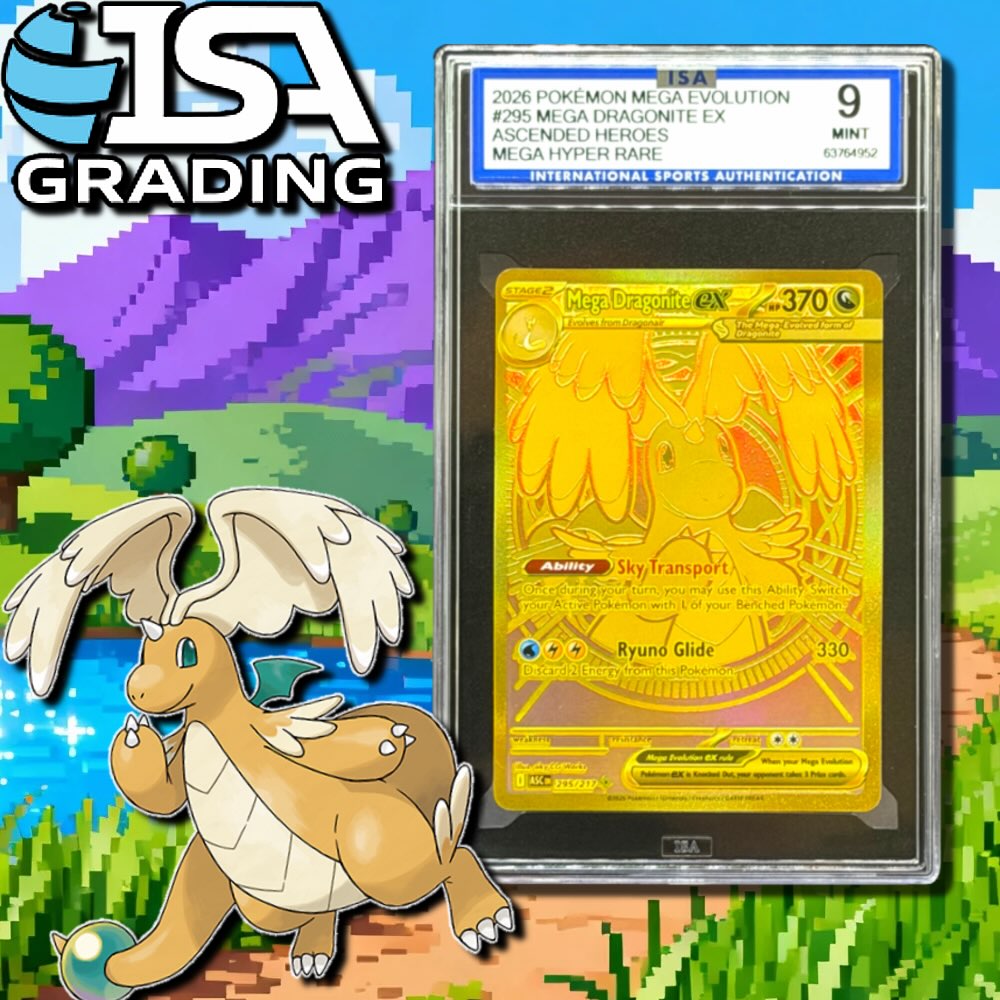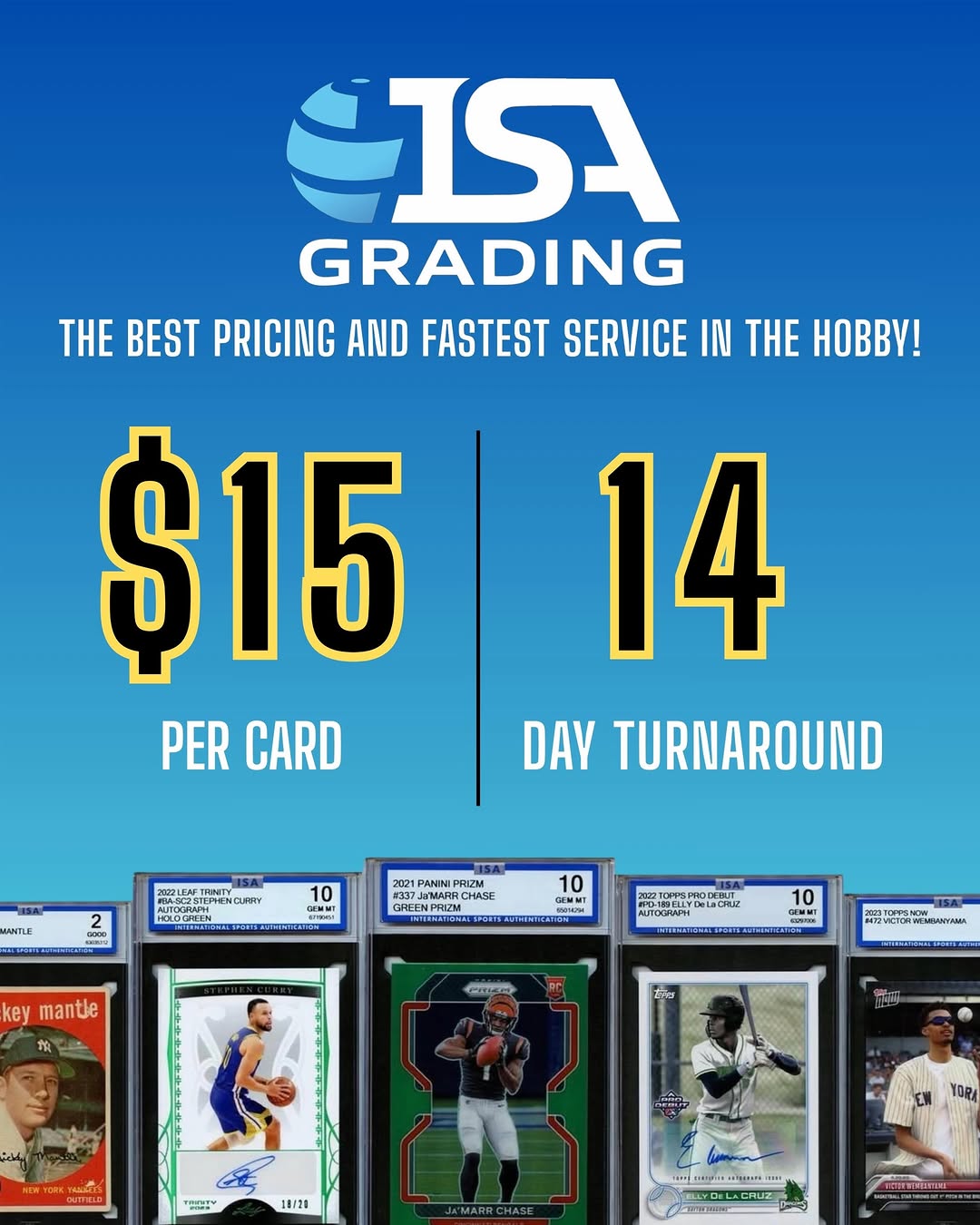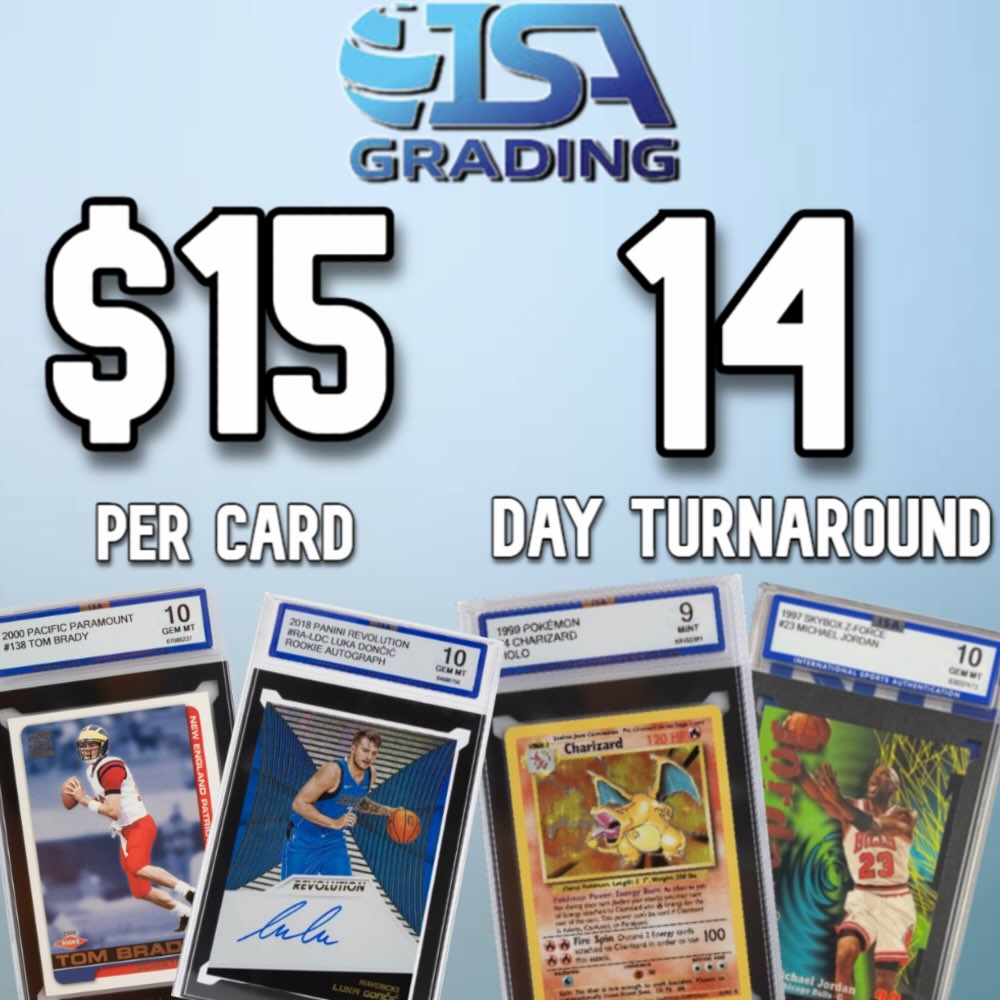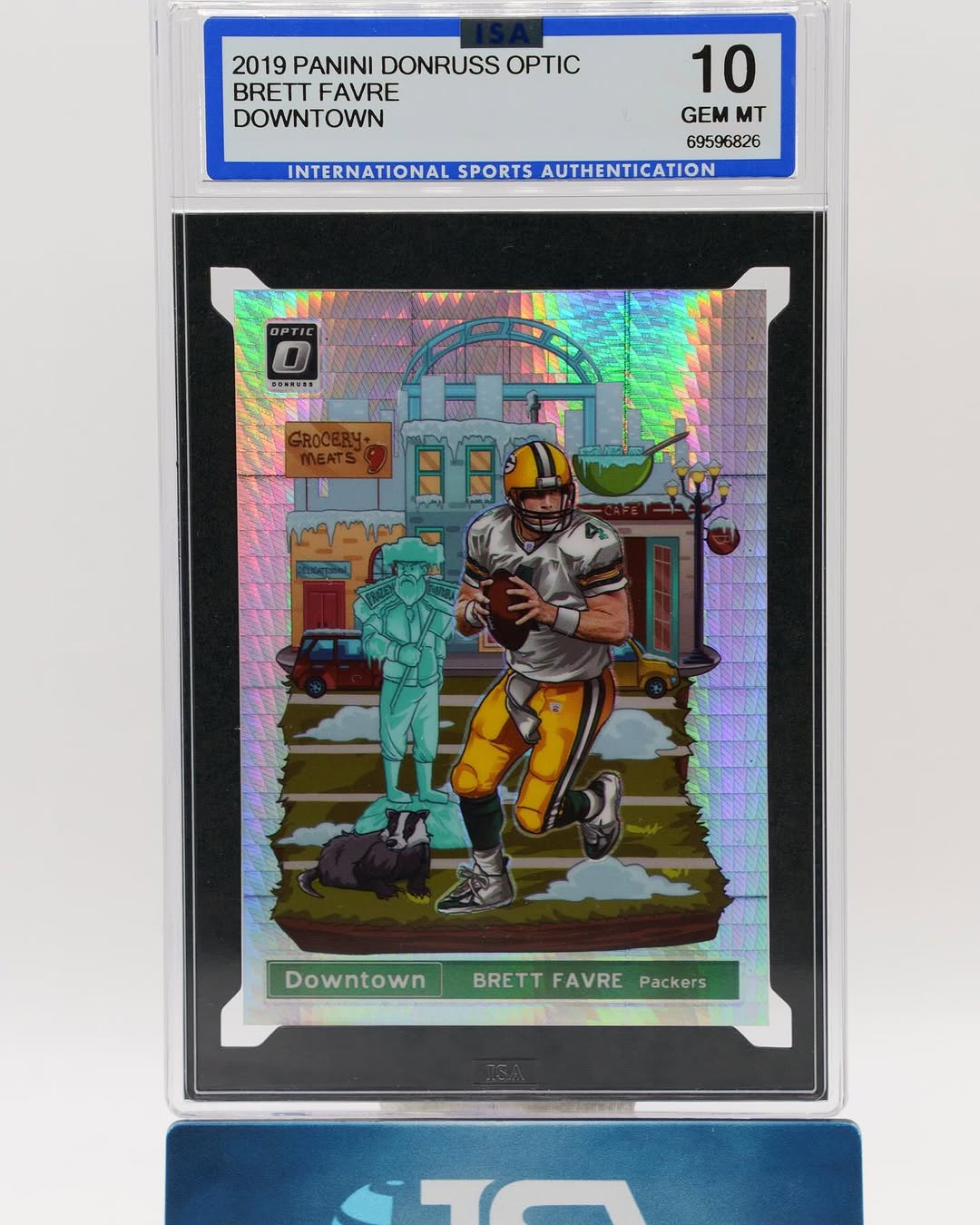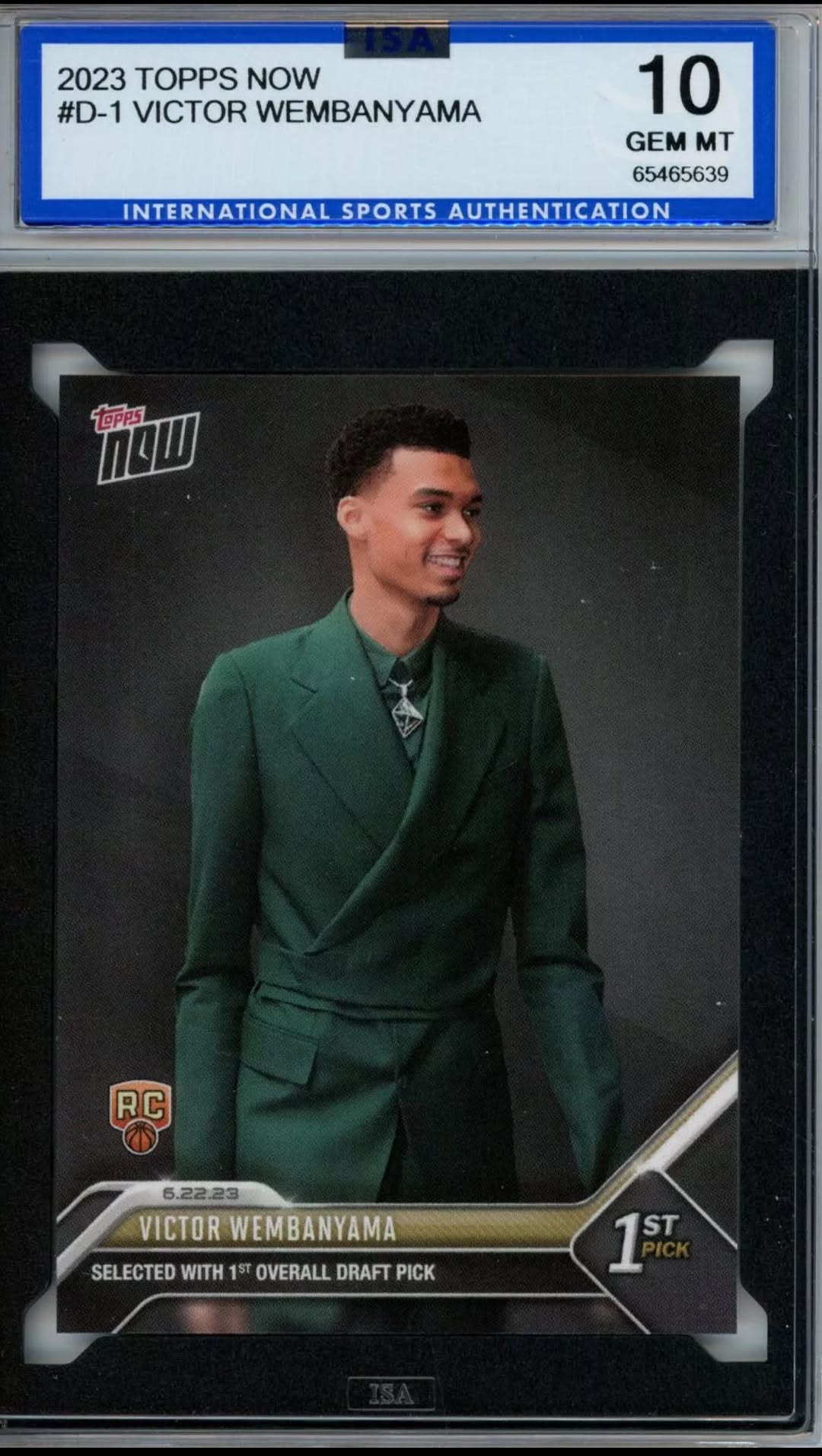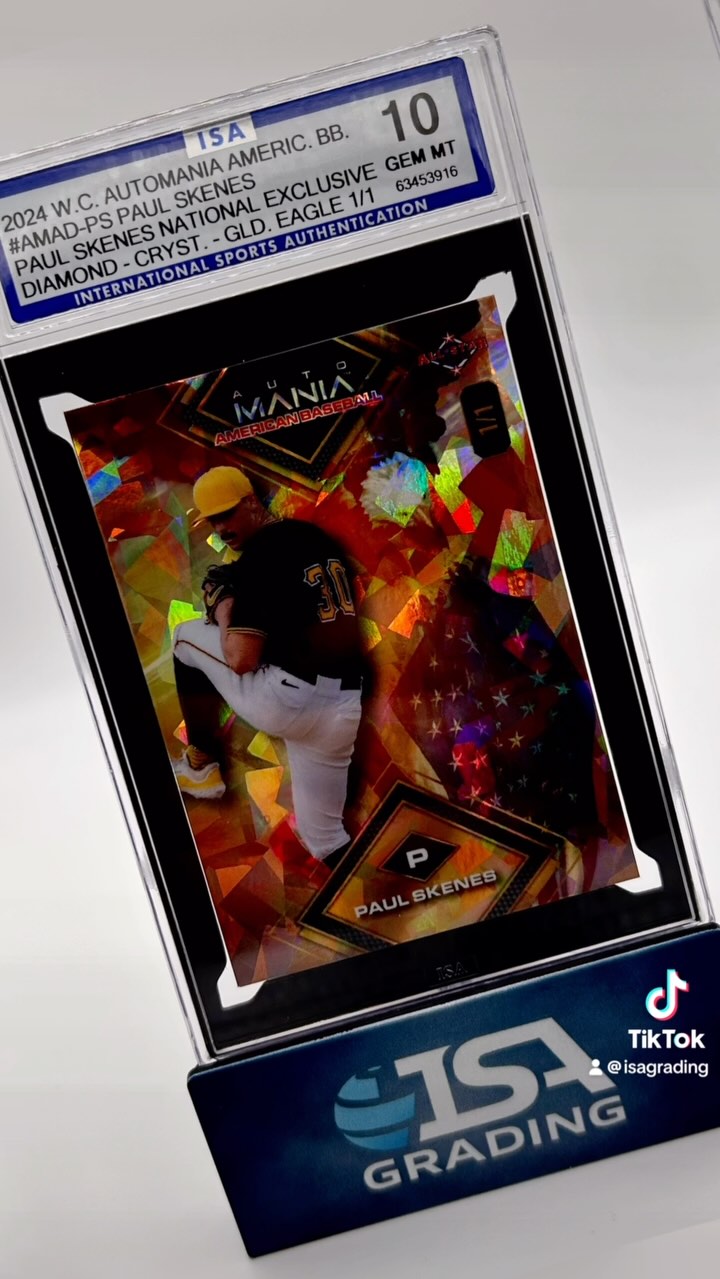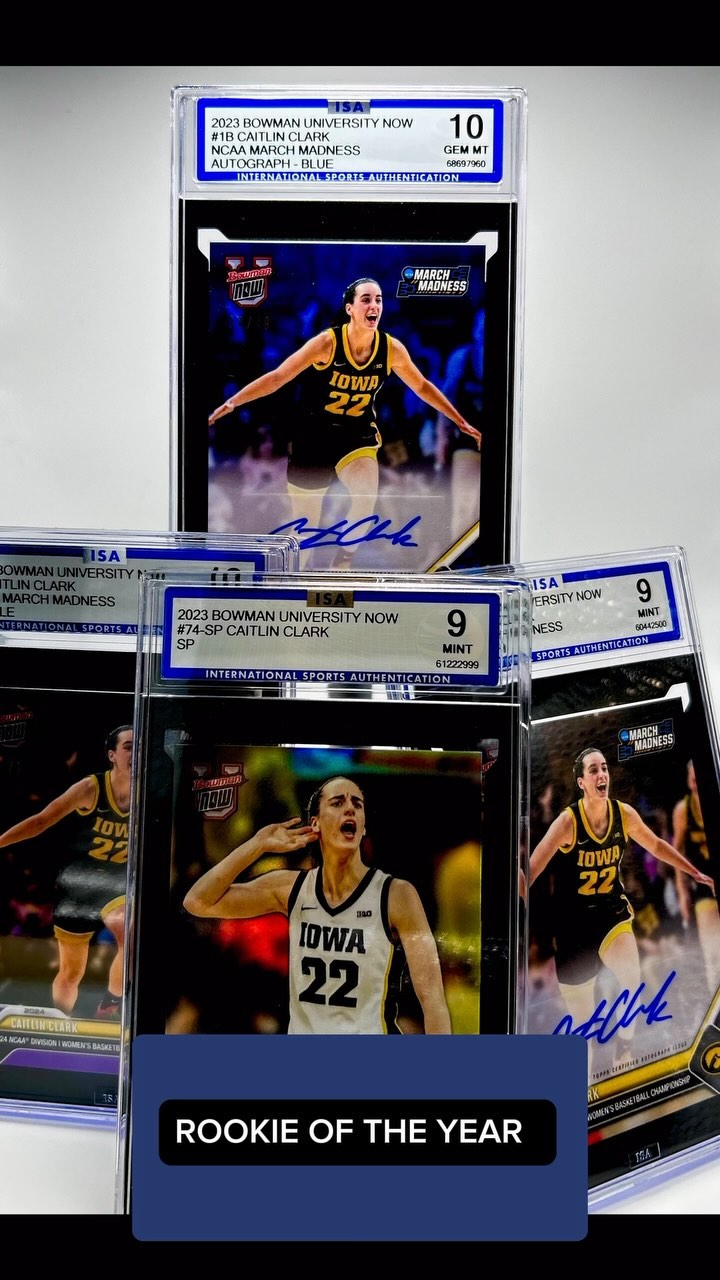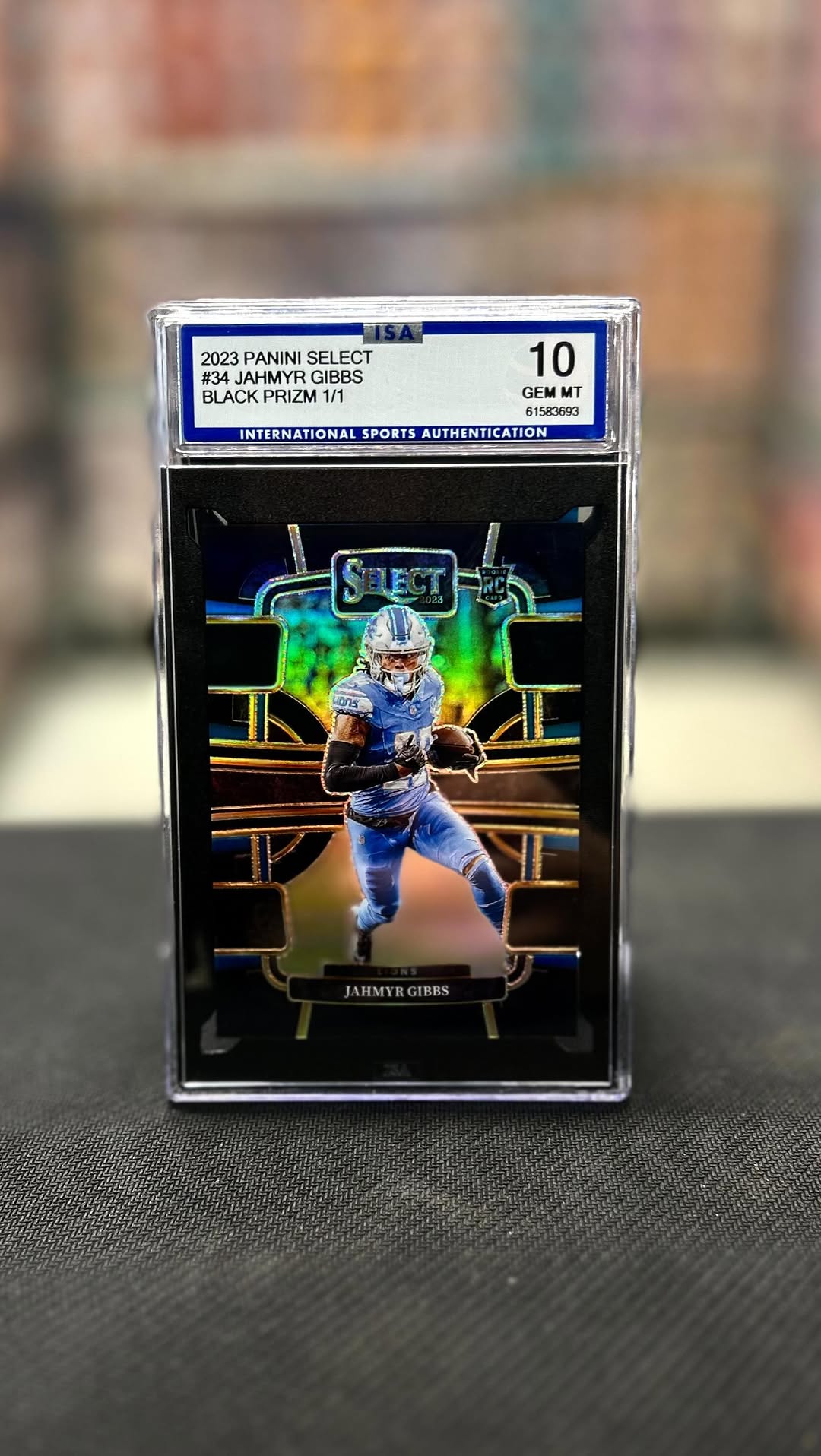
Submitting cards to ISA Grading starts with two decisions: which cards are worth grading, and whether you have at least 10 ready to send. ISA, short for International Sports Authentication, offers sports card grading and authentication at $15 per card with a 14 day turnaround, a 10 card submission minimum, and no upcharges. That makes the grading fee easy to calculate before you pack a box.
The steps below take you from sorting a stack of raw cards to checking the certificates on your returned slabs. If you are working toward a show or a sale, spend a few extra minutes on card identification and packing. A fast card grading service is most useful when your order is accurate and your cards arrive protected.
1. Set your grading budget and timeline
At $15 per card, an order of 10 cards costs $150 in grading fees. An order of 15 costs $225, and 20 costs $300. With no upcharge card grading, a strong grade or a higher card value does not add a grading surcharge. That is particularly useful when you are sending a mix of modest rookies and a few cards you would rather not price until they are graded.
The $15 card grading rate is the grading fee, not necessarily the entire cost of sending and selling the cards. Check the submission instructions for any applicable shipping costs. If you intend to sell, budget separately for marketplace fees, packing materials, and shipping to your buyer. For a card with a narrow profit margin, those costs can matter more than a small difference in the expected sale price.
ISA lists a 14 day card grading turnaround. Do not assume that means the slabs will be back in your hands 14 days after you mail the package. Allow time for shipping in both directions, and ask ISA how the turnaround applies to your order if you are planning around a show, consignment deadline, or scheduled sale. If you started by searching for card grading near me, compare the time you need to set aside for the entire process, not just the advertised grading window.
2. Choose at least 10 cards worth submitting
Give every card a reason to be in the order. A favorite player card might be worth encapsulating for your own collection regardless of its resale value. A dealer may have a different test: does a grade give buyers enough information about condition to justify the added cost? You do not need every card to serve the same purpose, but avoid filling the last few spots with cards you would not otherwise pay to grade.
For resale, look up completed sales for the exact year, set, card number, and variation. Compare the raw card with graded examples at more than one plausible grade. Where possible, use recent sales of cards graded by the same company rather than assuming that the same numerical grade commands the same price across grading companies. If an order only makes financial sense when every card earns your best case grade, set those cards aside and revisit the numbers.
The same selection process works for baseball card grading, basketball card grading, and football card grading. What changes is the identification work. A baseball rookie may have an image variation, a basketball parallel may look nearly identical to the base card, and a football insert may carry a serial number on the back. Check both sides before you build your list. For broader trading card grading questions, including TCG card grading, confirm that the specific card type is eligible before counting it toward the minimum. For help with that first sort, read what to check before grading rookie cards and Pokémon cards.
3. Inspect condition before you sleeve and pack
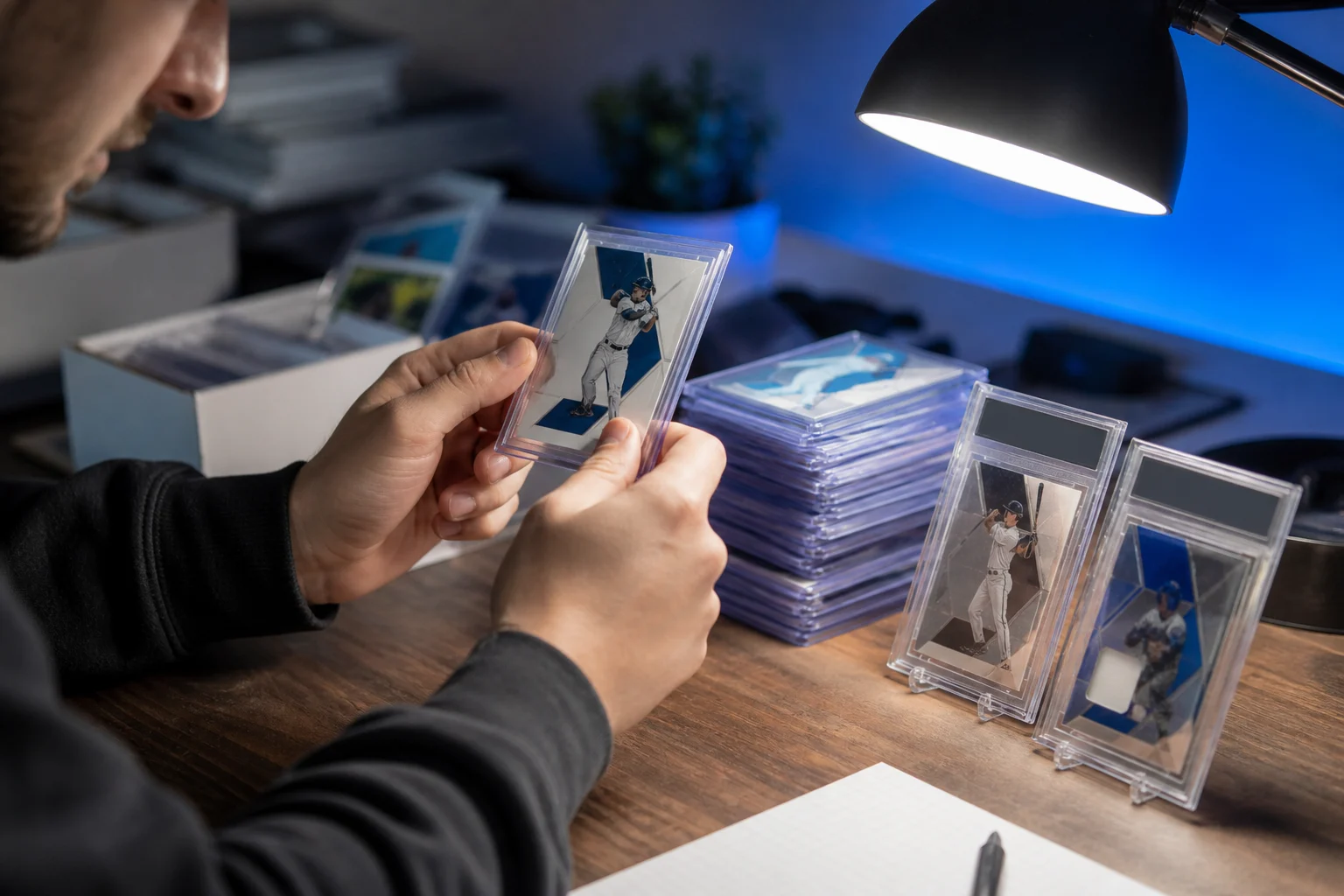
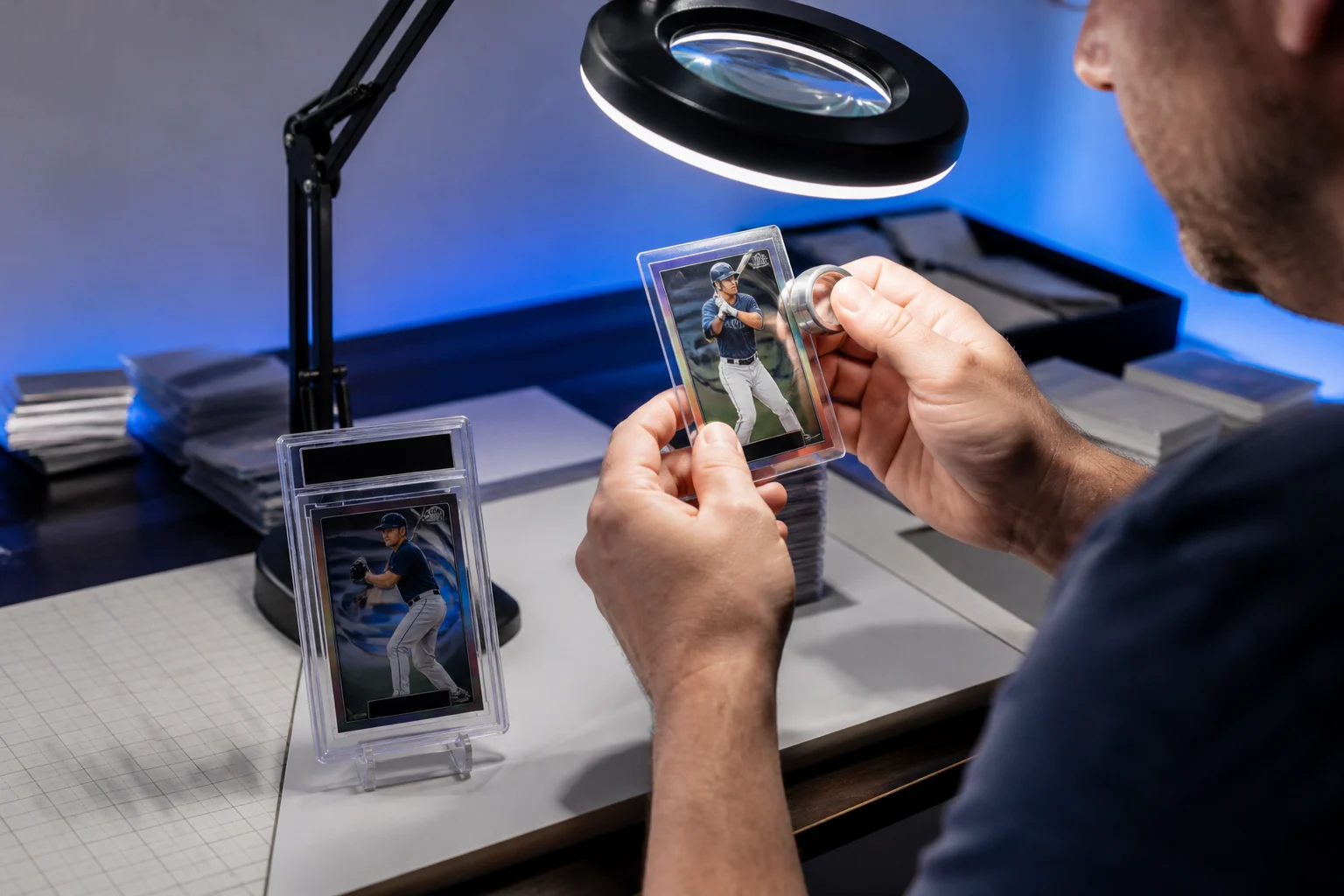
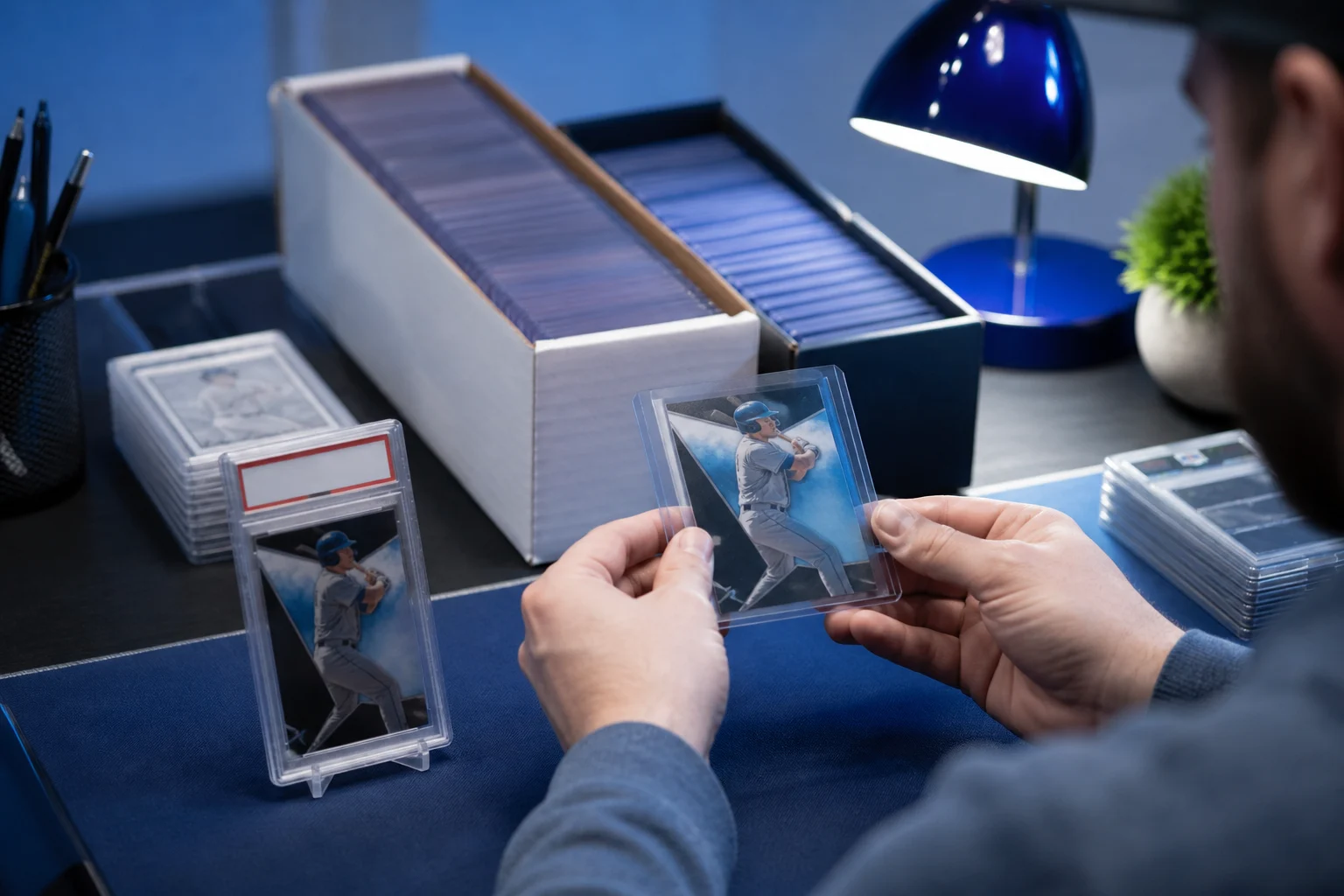
Use a clean, dry work surface and a bright light you can angle across the card. Handle raw cards by the edges with clean, dry hands. Look at the front and back, and change the angle as you inspect the surface. A card that looks clean straight on can show a shallow dent or print line when the light hits it from the side.
- Card corners: Check all four for rounding, bends, fraying, and exposed paper. A small white spot can be easier to see from the back.
- Edges: Look for chipping and wear, especially on dark borders and foil designs where small flaws can stand out.
- Surface: Tilt the card to look for dents, scratches, creases, and print lines. Check the reverse for stains, impressions, or paper loss.
- Card centering: Compare the left and right borders and the top and bottom borders where the design allows. If the design is intentionally uneven or borderless, compare it with a clearly identified example of the same card.
Use the ISA grading scale to understand what the grades mean, not to predict the result from a single feature. Card condition grading takes more than sharp corners or attractive centering. Keep your own notes general, such as “light back edge wear” or “possible surface impression,” and use them to decide whether the card still belongs in the batch. Do not try to rub out scratches, flatten creases, or apply cleaning products before submitting. If you see a flaw, leave it alone.
4. Complete your ISA submission and reconcile the list
Start your order on the ISA card submission page. Follow the current instructions there, and identify each item using the details the form requests. Use the card itself to confirm the year, set, player, card number, and parallel or variation where applicable. One easy mistake is to copy details from a seller listing and never compare them with the card in your hand.
- Lay out the cards and confirm the physical count meets the 10 card minimum.
- Check each card against its entry, paying particular attention to similar cards and numbered parallels.
- Keep the cards in submission order so you can audit the stack before packing.
- Save a copy of your submission details and include any paperwork requested in the current instructions.
For a higher value order, take clear photos of the front and back before shipping. These photos are useful inventory records, particularly if you have multiple copies of the same card or are preparing to sell some and keep others. Keep the photos with your submission record and shipping receipt so you can find them later.
5. Pack the cards so they cannot shift in transit
Use the sleeves, holders, and packing method specified in ISA's current instructions. If you are unsure whether an existing holder is acceptable or how to pack an unusually thick card, check the ISA FAQ before trying to make the card fit. A tight sleeve or holder can snag a corner, while a loose stack can slide around inside the shipping box.
Once each card is protected, stabilize the stack without squeezing it. Keep tape and other adhesives away from the cards and holder openings. Use a sturdy outer box with enough cushioning to prevent the contents from moving, then gently tilt the box before sealing it. If the stack shifts, add cushioning around it instead of compressing the cards. Keep any requested paperwork easy to find and separate from loose packing material.
Copy the shipping address from the current submission instructions rather than from an older order or a forum post. Choose a tracked shipping service and review the carrier's coverage terms, including whether collectible cards are covered and what documentation is required. If a packaging question remains or a deadline matters, contact ISA Grading before sending the box.
6. Check the slabs and verify the certificates after delivery
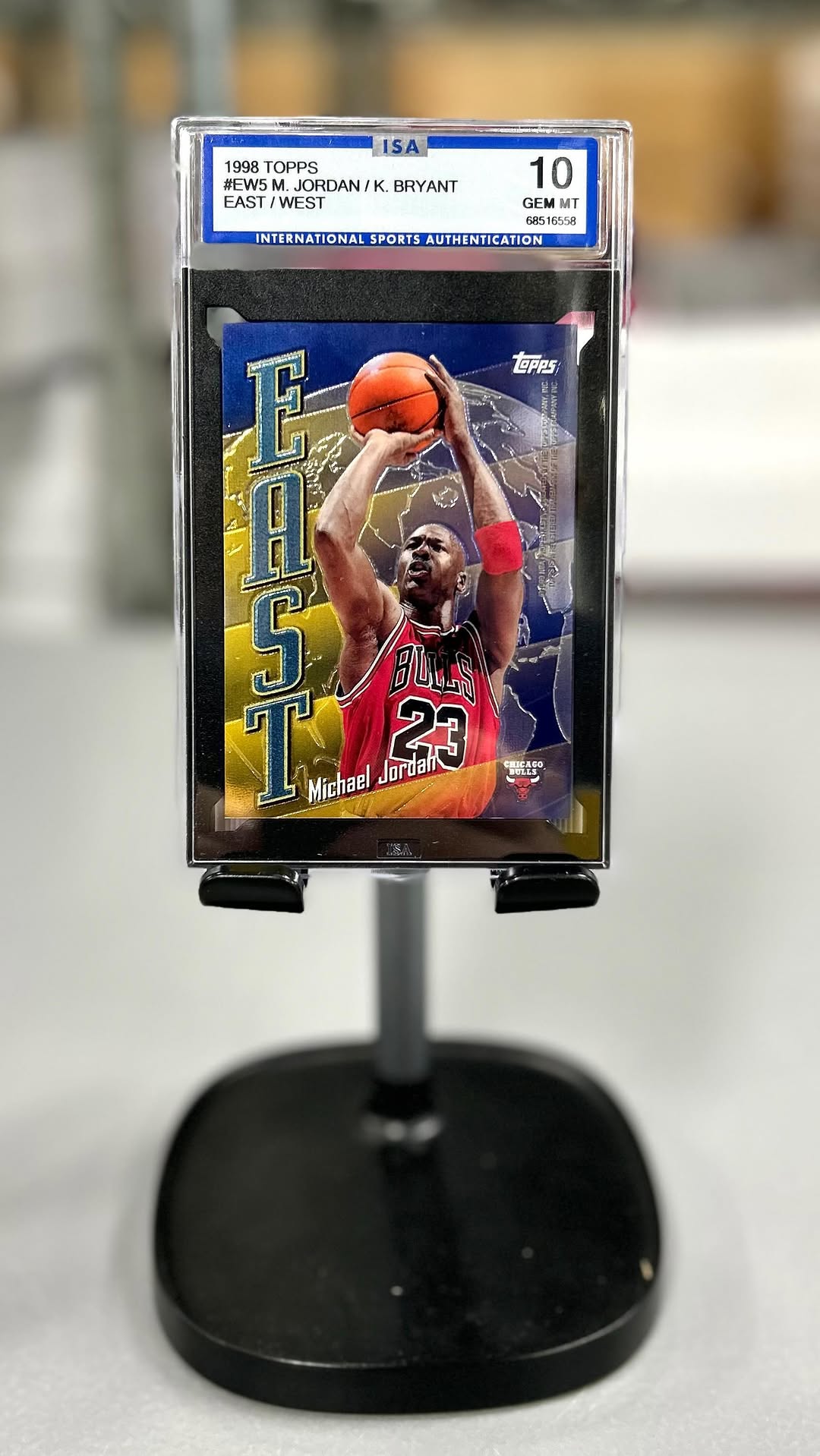
When the cards come back, count them against your saved submission record. Check the labels for the player, card number, variation, and other identifying details where shown. Inspect each holder for visible damage. Card encapsulation puts the graded card in a protective holder, commonly called a slab. Trading card slabs still need care: store them so they will not slide into one another, and protect the holders when shipping them to a buyer.
Use ISA certificate verification to look up the number on the label and compare the available record with the slab in front of you. Sports card authentication addresses whether a card is genuine. Certificate verification serves a different purpose: it lets you check the published grading record associated with the number. A matching result is useful, but a lookup alone is not proof that a slab in an online photo is genuine or that the seller has it in hand. If a number does not return a result, recheck the digits before asking ISA for help.
7. List graded cards with the details buyers need
For each listing, photograph the front and back of the actual slab and include a clear view of the label. State the year, set, player, card number, variation, ISA grade, and certificate number as applicable. Disclose visible scratches or scuffs on the holder, and distinguish them from marks on the card itself. Those details help buyers compare listings without guessing which version you are selling.
Revisit comparable sales once you know the actual grade. Use sold listings rather than relying on asking prices, and say so if your asking price is based on limited sales data. After the sale, sleeve or wrap the slab to protect the holder, cushion it inside the package, and keep tracking with the order record. Buyer confidence comes from a listing that matches what arrives, not just the number on the label.
If you are planning regular submissions, track what you paid for each raw card, its share of shipping, the grading fee, the grade, and any eventual net proceeds. Keep notes on cards you submitted for your collection as well, especially where the grade differed from your initial assessment. Your own results can help you choose the next 10 cards more confidently than a strategy built around the best grades you see in online listings.
Submit Cards to ISA Grading
Collectors ready to use ISA Grading can start on the submission page. The current active service is $15 per card with a 14 day turnaround, no upcharges, and a 10 card minimum.
Frequently Asked Questions
How much does it cost to submit 10 cards to ISA?
ISA charges $15 per card, so the grading fee for a 10 card submission is $150. There are no grading upcharges. Review the current submission instructions for any applicable shipping costs.
Does ISA accept submissions with fewer than 10 cards?
The current submission minimum is 10 cards. If you have fewer than 10 ready, wait until you have enough cards you actually want graded rather than adding cards just to fill the order.
Does ISA's 14 day turnaround include shipping?
ISA lists a 14 day grading turnaround. Allow additional time for transit in both directions when planning your submission. If the timing matters for a show or sale, contact ISA to confirm how the turnaround applies to your order.
How should I protect my cards before sending them to ISA?
Follow the current submission instructions for sleeves and holders. Pack the protected cards in a sturdy box with enough cushioning to prevent movement, and avoid placing tape where it could touch a card or block the holder opening.
How can I verify an ISA graded card's certificate?
Enter the certificate number from the slab label on ISA's certificate verification page. Compare the available record with the label and card. If the details do not match, double check the number and contact ISA if needed.