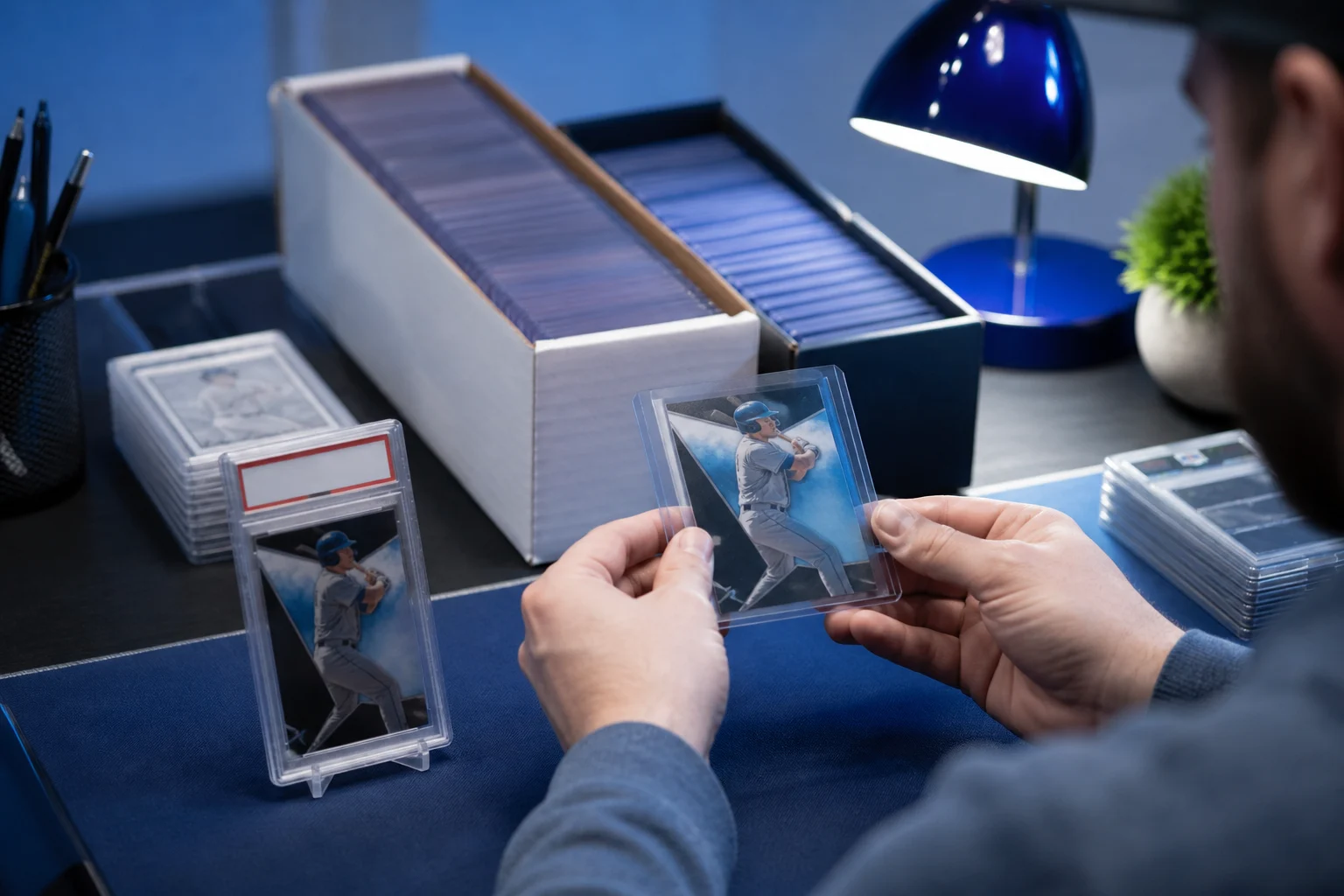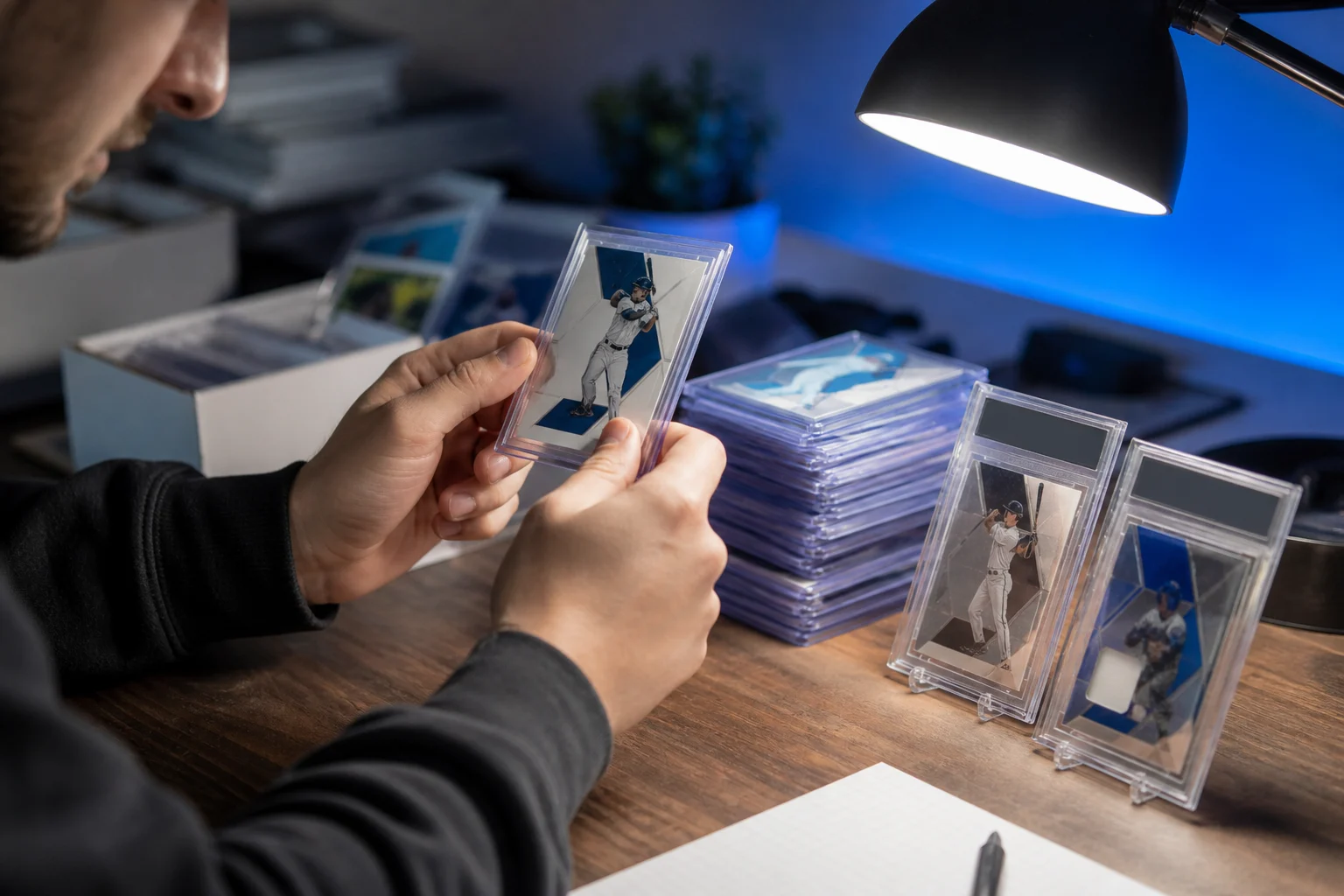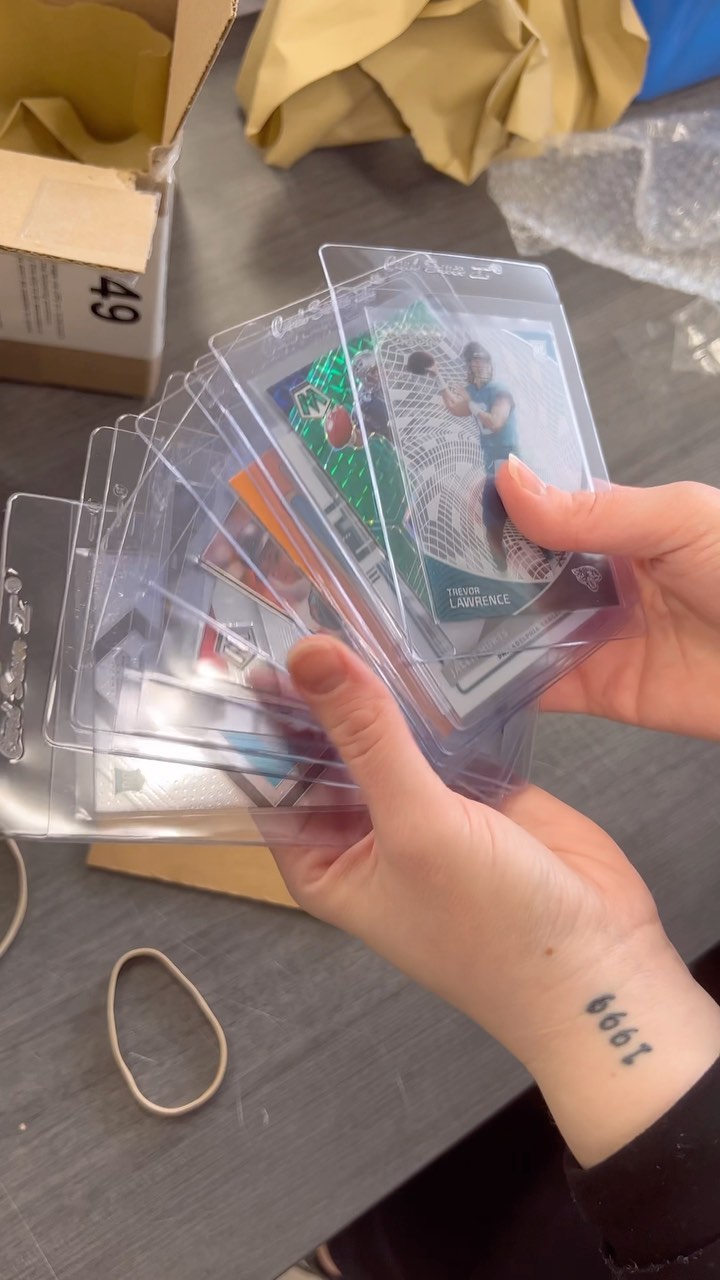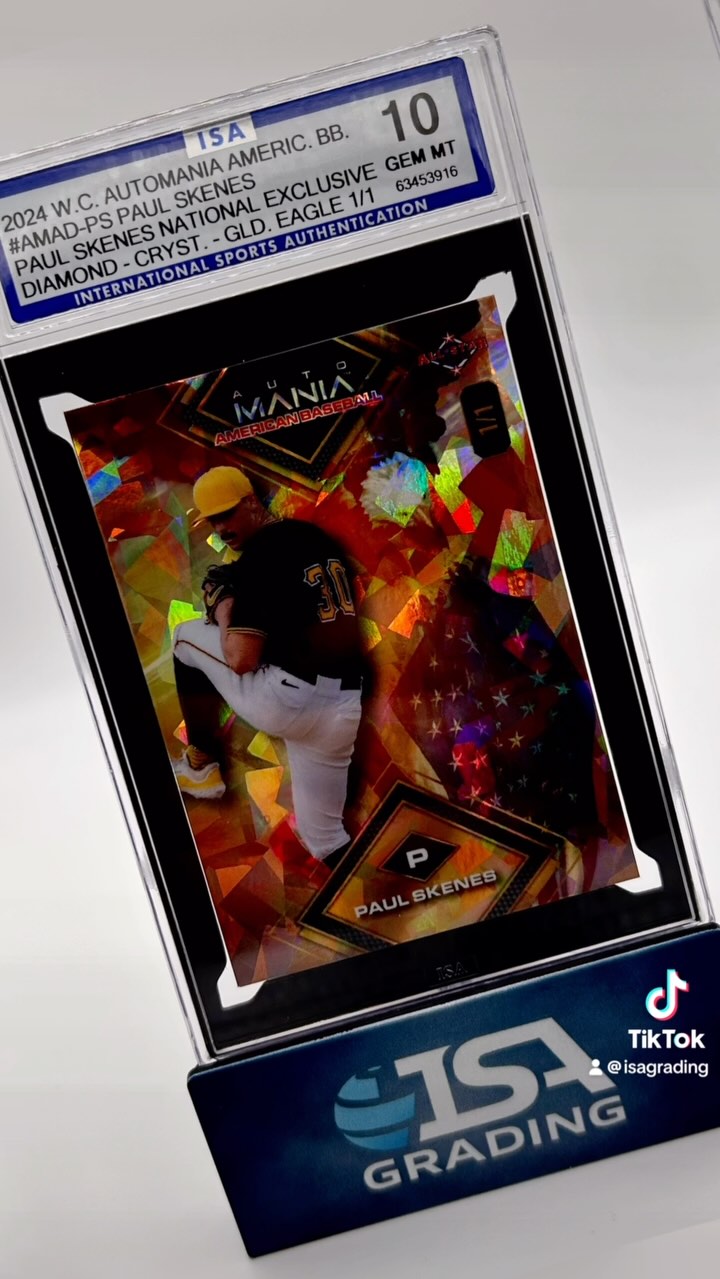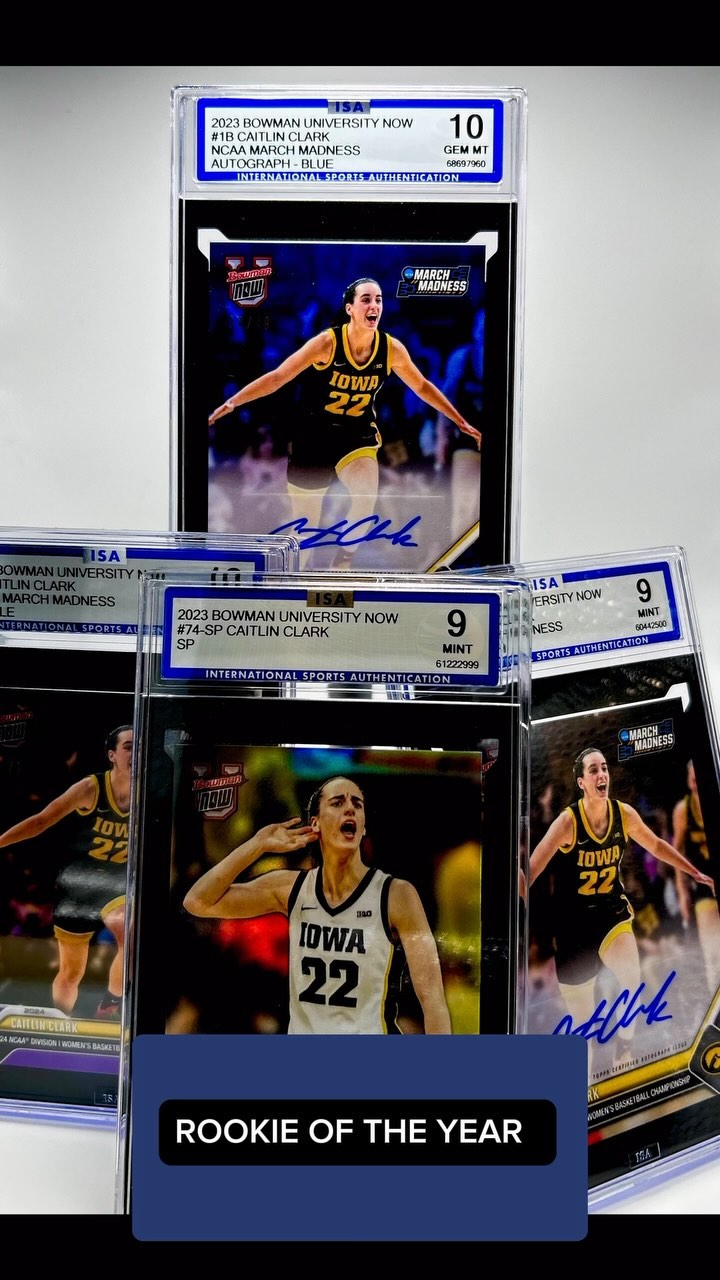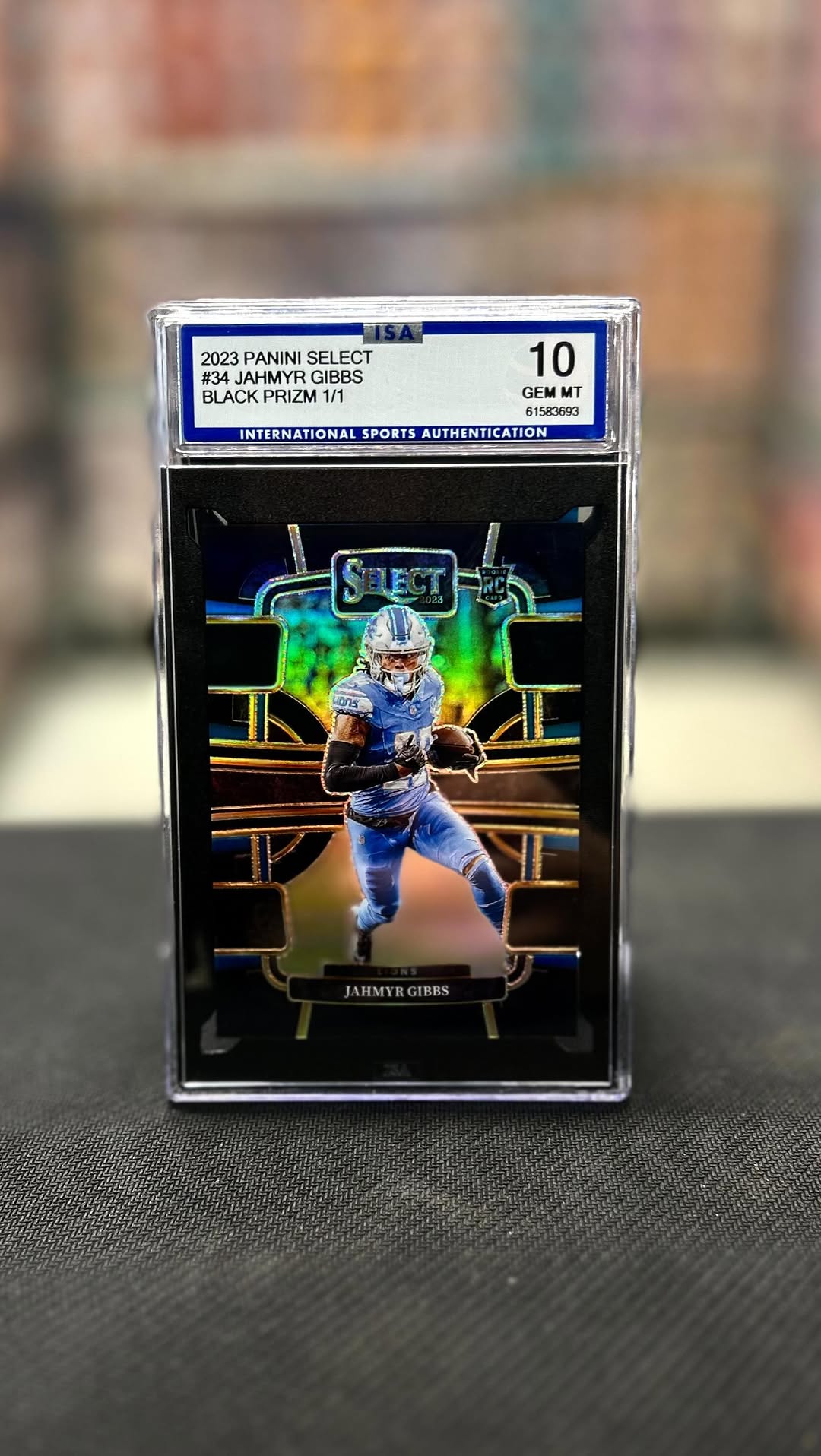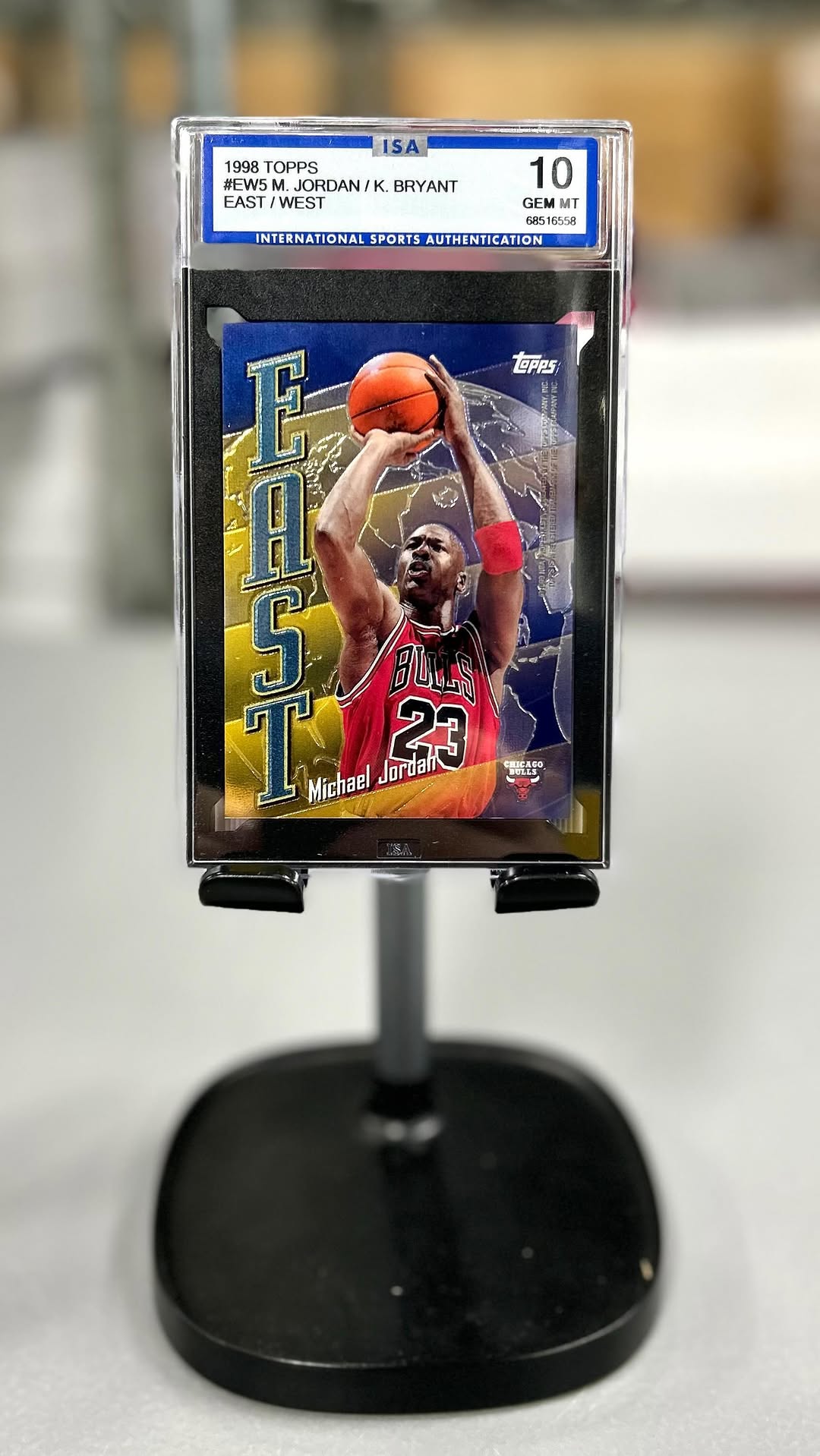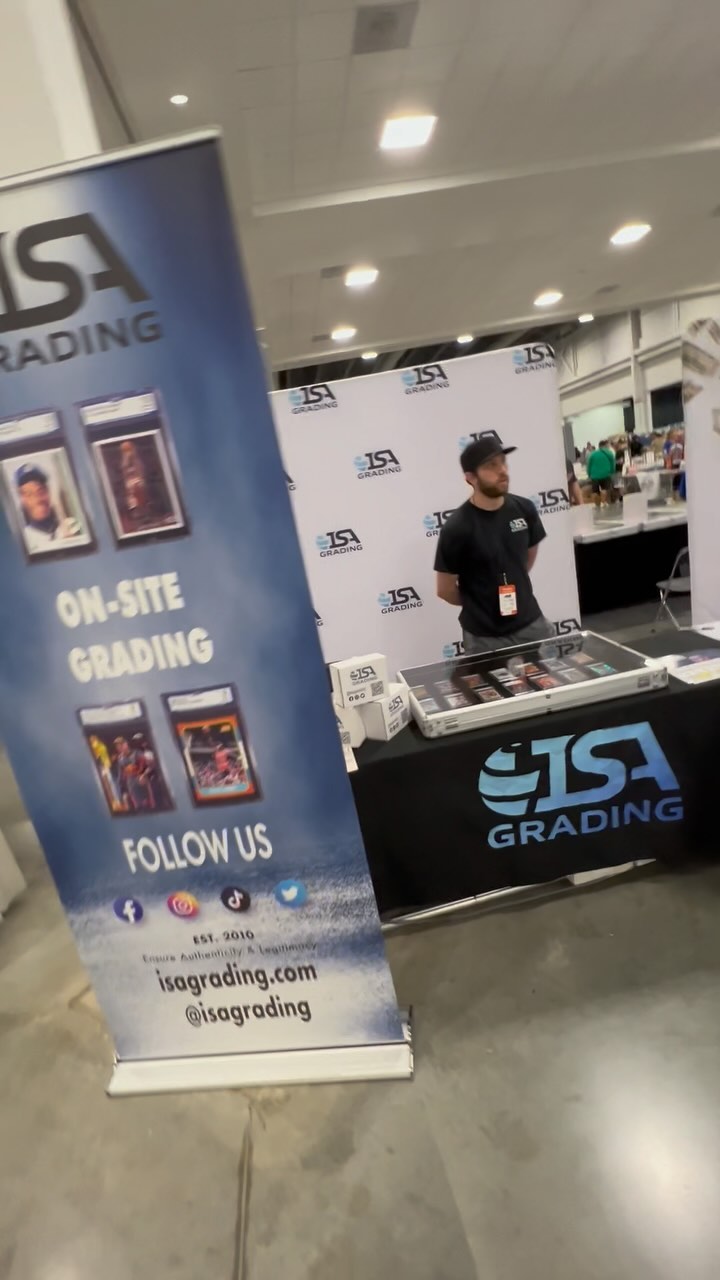
A rookie card you want to list before opening weekend and a vintage card you plan to keep for years can go in the same grading order. They do not have the same deadline. When the timing matters, knowing the sports card grading turnaround helps you decide which cards to send, when to ship, and whether there is enough time to photograph and list them after they come back.
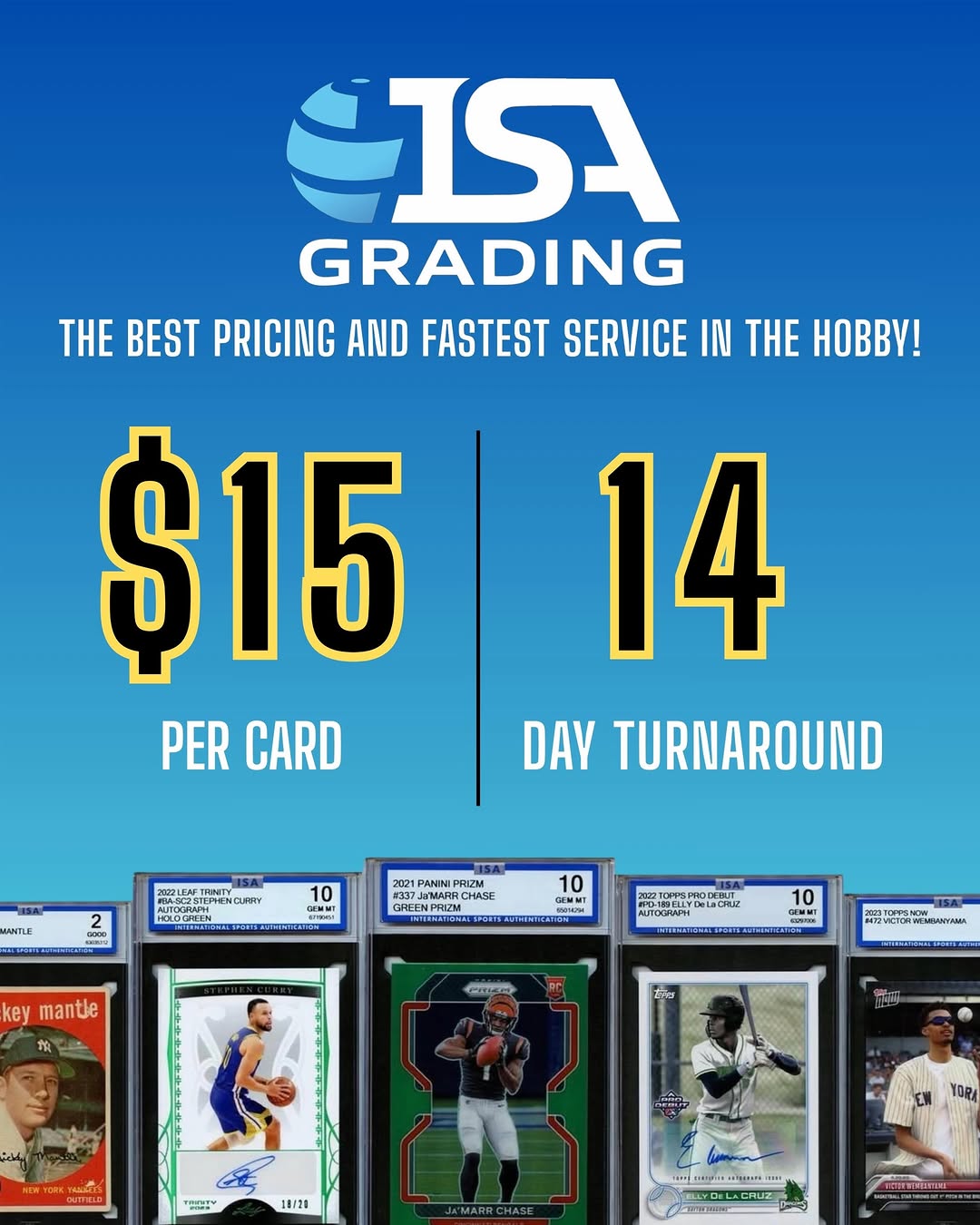
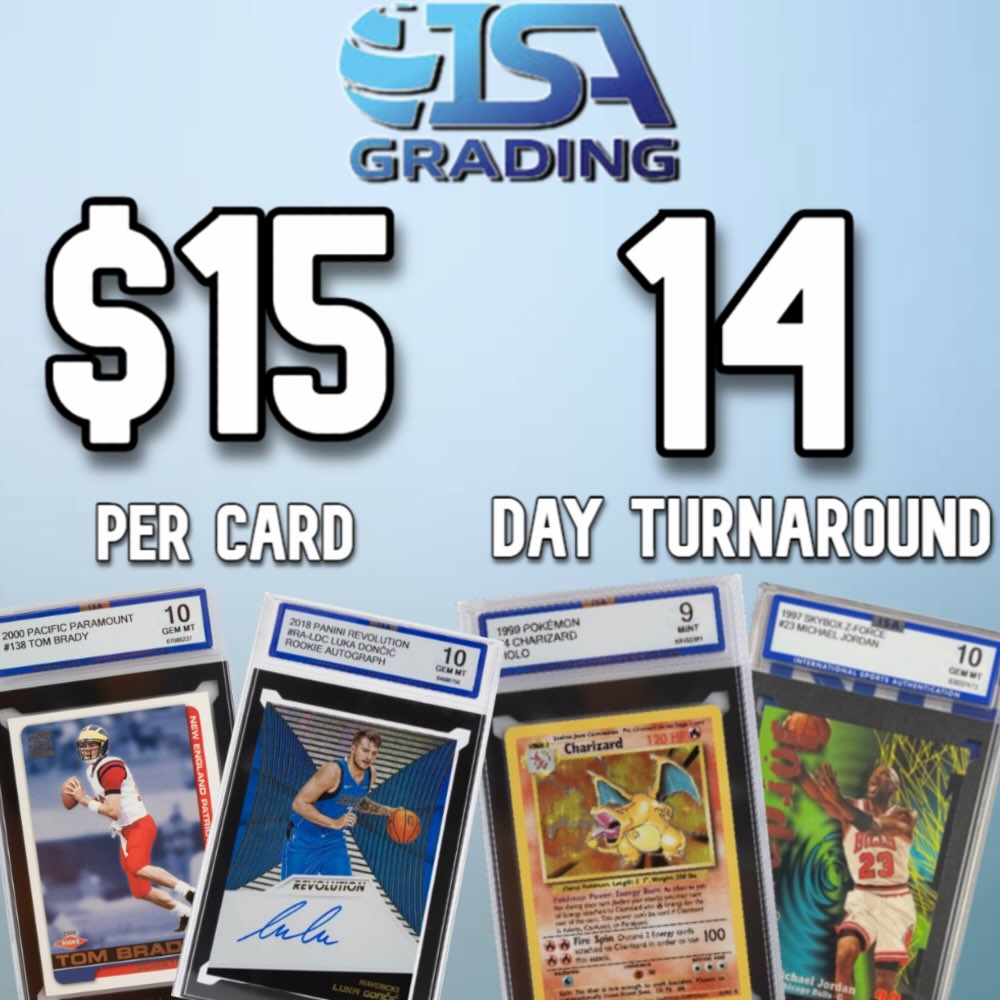
ISA Grading, also known as International Sports Authentication, currently offers sports card grading and authentication at $15 per card, with a 14 day turnaround, a 10 card minimum, and no upcharges. Use those terms to build your budget and calendar, then account for the steps that happen before and after grading.
What a 14 day grading turnaround means for your calendar
The advertised turnaround is one part of the trip from your desk to a finished slab. Your own timeline starts when you sort and pack the cards. It ends when you have checked the returned cards and can list, display, or deliver them. If you need a card in hand for a show, an auction intake deadline, or a gift, use the date you actually need it, not the date you hope grading will be finished.
Before relying on a deadline, confirm when the turnaround clock starts and how the days are counted. Do not assume the clock starts when you print a shipping label or that the estimate includes shipping in both directions. Check the ISA Grading FAQ for submission questions. If a specific date is critical, contact ISA Grading to clarify how the current turnaround applies before you ship.
Work backward from your real deadline
- Set an in hand date. For a Saturday show, set aside time earlier in the week to check the cards, set prices, and pack your display. For an auction, find out when the seller needs to receive the card, not just when bidding opens.
- Allow time after delivery. Inspect the slabs, check the labels, verify the certificates, and take photos. Dealers should also leave time to match each card to its inventory record.
- Budget for grading and transit separately. Start with the published service turnaround, then add time for shipping in both directions and a buffer for delays. Those steps do not all run at the same time.
- Set a cutoff for shipping. If you miss it, decide whether to target a later event, sell the card raw with an accurate condition description, or hold it. Avoid promising a buyer a graded card while it is still in transit.
Choose the cards that benefit from a quicker return
Fast card grading is most useful when getting the cards back sooner changes what you can do with them. A dealer restocking a case for a scheduled show has a different reason to watch the calendar than a collector organizing a personal set. Start with the cards that have a specific purpose, then ask whether the rest of the order makes sense on its own.
With rookie card grading, a player debut or the start of a season can give you a target listing date. It cannot tell you what buyers will pay when the card comes back. For basketball card grading, you might plan around a show during the playoffs. For football card grading, preseason may be a sensible time to get listings ready. In either case, grade cards you would still want to sell or keep if the event passes before your order returns.
Vintage card grading often serves a different purpose. If a card's identity or authenticity is a concern for buyers, sports card authentication may be more important than getting it listed this week. A written condition grade can also give buyers a reference point when they compare copies, though it does not erase wear or guarantee a sale. If the card is staying in your collection, there may be no reason to rush it into the next batch.
If your desk holds sports cards alongside cards you are considering for Pokemon card grading or other TCG card grading, confirm eligibility before mixing them in one order or counting them toward the minimum. The collector’s guide to sports and Pokemon cards can help you sort through what to inspect before submitting either type.
Calculate the cost of the whole batch
At ISA’s current rate, the 10 card minimum comes to $150 in grading fees. A batch of 20 cards comes to $300 in grading fees. Budget separately for any applicable shipping, insurance, and selling fees. That distinction matters if you are deciding whether a low value card is worth sending just to fill the order.
With no upcharge card grading, you do not need to budget for a separate grading surcharge if a card comes back with a higher grade than you expected. That pricing clarity makes it easier to compare the raw and graded paths before you ship. For more on the advertised rate, see how ISA keeps grading at $15 per card.
Say you have eight cards ready and two inexpensive cards on the table. Rather than adding the last two automatically, look at recent completed sales for comparable raw and graded copies. Use the same year, set, and parallel where possible. For the graded comparisons, look at more than the highest grade and note which grading company appears on each slab. If the math only works at the top grade, it may be better to wait until you have two cards you actually want graded.
Not every card has to justify its fee through a sale. A family keepsake or a favorite player card may be worth encapsulating for your collection. Separate those cards from resale inventory in your worksheet so that a personal collecting decision does not distort what you expect the sales batch to earn.
Prepare the cards before starting the clock
Before you ask a company to grade my cards, ask which cards you would be happy to get back at a lower grade than you hoped for. A careful review can save money and keep you from spending part of your turnaround window waiting on a card that did not fit your goal in the first place.
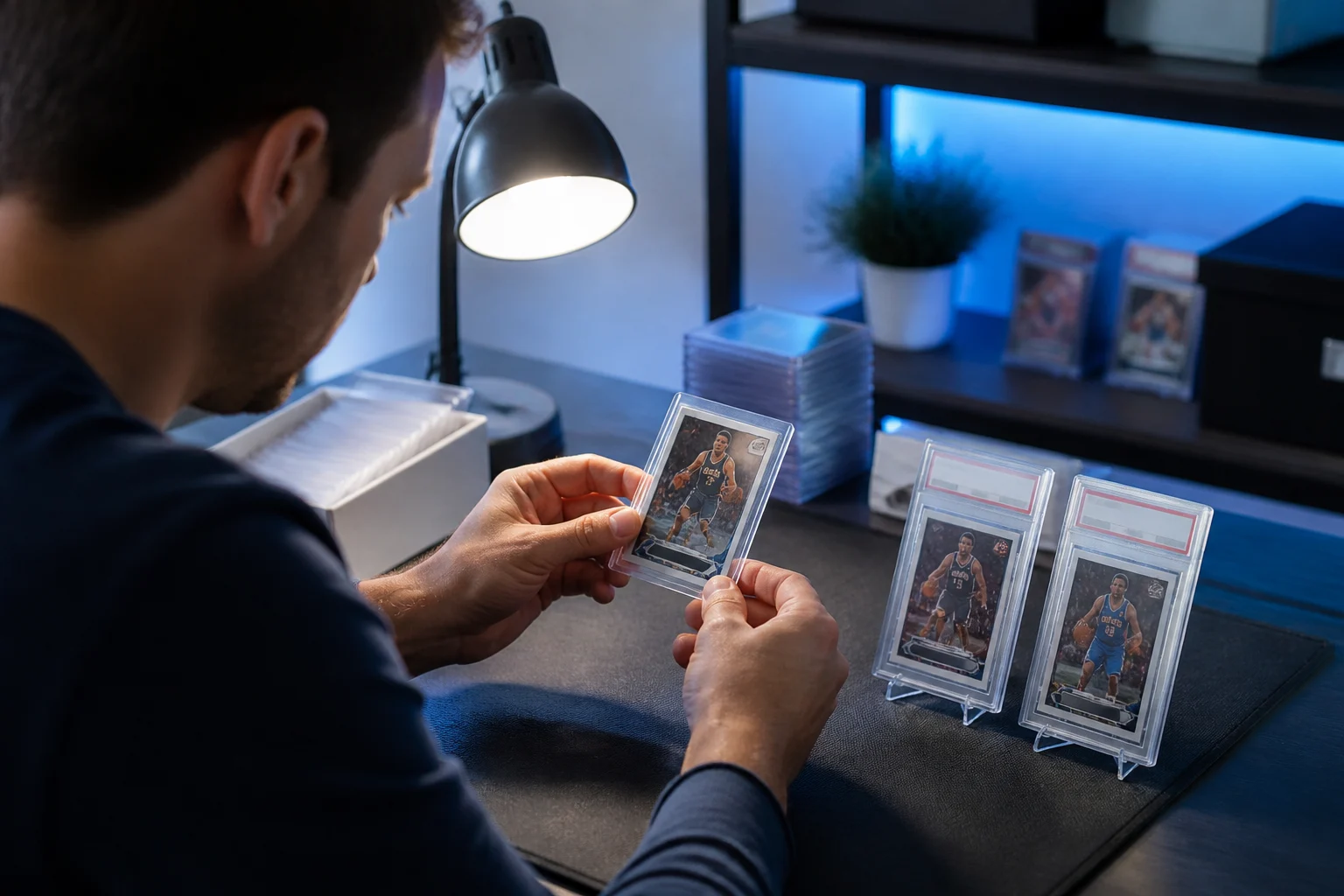
- Look at the fronts and backs in good light. Tilt each card to inspect the card surface for scratches, dents, print lines, or creases. Check the corners and card edges for whitening, chips, and wear. Pay attention to centering, too.
- Make a realistic condition estimate. Use the ISA grading scale to see how grades are described. Your own card condition grading is a way to sort the batch, not a prediction of the result.
- Record what goes into the package. Note the year, set, card number, and parallel or variation where applicable. Clear photos of both sides can help you match cards to records after they return, especially when you send several similar copies.
- Pack to keep cards from shifting. Follow the submission instructions for holders and packaging. Use a sturdy outer box, avoid loose cards in the package, and keep the tracking details with your submission records.
A search for card grading near me may be a starting point if shipping time worries you. But proximity alone does not tell you when a card grading service starts its clock, whether it offers local drop off, or whether its minimum fits your batch. Compare the full submission timeline and requirements rather than assuming the closest option gets the cards back sooner.
Leave time to inspect slabs and verify certificates
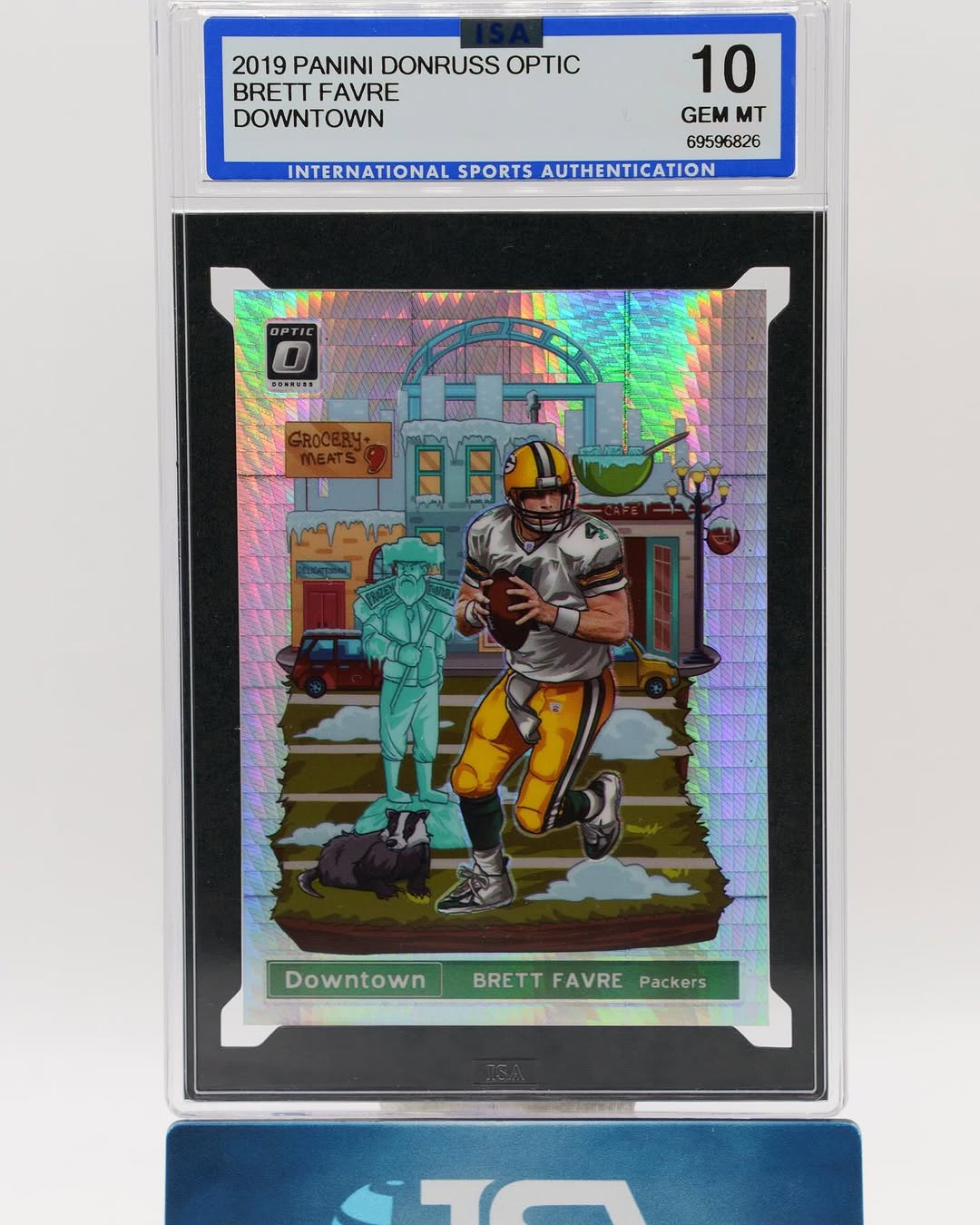
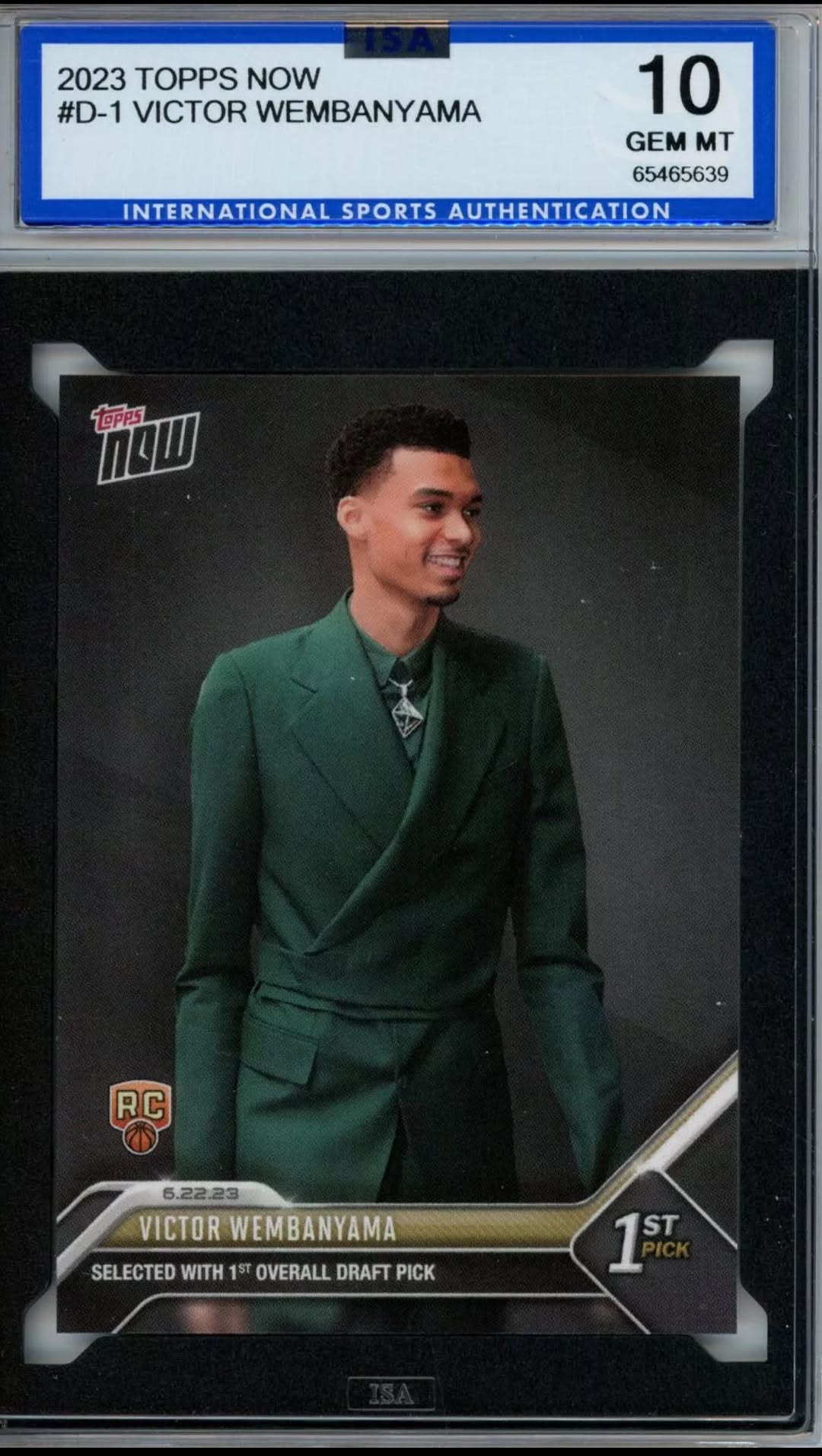
A slab helps protect an encapsulated card from direct handling, but it still needs careful storage and packing. The holder can get scratched, and it does not make the card immune to heat, moisture, or rough shipping. When the order comes back, check that each slab is in good condition and that the label matches the card you submitted. Pay particular attention to parallels and variations that look alike.
Use ISA’s certificate verification page to look up the certificate number and compare the record with the label and card in hand. For buyers, this is a practical way to check the grading record before purchasing. Certificate verification is not a substitute for inspecting the actual item, particularly when you are relying on online photos. Card authentication addresses the card itself, while a certificate lookup helps you check the information associated with the slab.
Get graded cards ready to sell
You can draft listing titles and pull comparable sales while the cards are away, but wait until the order is back to publish listings that depend on a specific grade. Use clear photos of the front and back of the actual slab, show the label, and describe any visible holder damage. Include the year, set, player, card number, variation, grading company, and grade where applicable. Accurate details do more for buyer confidence than describing every card as rare or investment worthy.
Once the cards are in hand, revisit the prices you saved before submission. A useful comparison from several weeks ago may no longer reflect what buyers are paying. Use recent completed sales where available, and treat asking prices as offers, not evidence of a sale. If comparable sales are scarce, avoid treating a single result as a reliable price.
For dealers, group submissions by the date you need the cards back, not just by sport. A batch for a show case can have a different shipping cutoff from a batch meant to replenish online inventory. Keep the submission list, cost per card, return status, and certificate numbers together. That makes it easier to see which cards are ready to list and which ones should stay off the sales calendar.
If you have a batch that fits the 10 card minimum, review the current $15 card grading terms and instructions on the ISA Grading submission page. Set your ship date using the 14 day turnaround plus time for transit and inspection. If you cannot leave that buffer, move the sale date or hold the cards for your next batch rather than counting on everything arriving at the last minute.
Submit Cards to ISA Grading
Collectors ready to use ISA Grading can start on the submission page. The current active service is $15 per card with a 14 day turnaround, no upcharges, and a 10 card minimum.
Frequently Asked Questions
What is ISA Grading's current sports card grading turnaround?
ISA Grading currently advertises a 14 day turnaround. If you have a firm deadline, confirm when the turnaround starts and how days are counted, then budget separately for shipping and time to check the returned cards.
How much does a 10 card submission cost at ISA Grading?
At $15 per card, a submission of 10 cards costs $150 in grading fees. ISA has a 10 card minimum and no upcharges. Budget separately for any applicable shipping and insurance costs.
When should I submit cards if I need them for a show?
Work backward from the day you need the cards in hand. Allow time for preparation, shipping both ways, grading, and a buffer. Leave at least enough time after delivery to inspect the slabs, verify the certificates, and price the cards.
Should I add low value cards just to meet the 10 card minimum?
Only if you have a reason to grade them. Compare the grading fee and expected selling costs with recent completed sales, or decide whether the cards are worth keeping in slabs. If neither case makes sense, wait until you have a stronger batch.
How can I verify an ISA graded card before buying or selling it?
Enter the certificate number on ISA's certificate verification page and compare the record with the card and slab label. For an online purchase, also review clear photos of the actual card and holder rather than relying on the lookup alone.